Highlight
The ESTIVAL trial represents the first large-scale, multicentre, double-blind investigation into transcutaneous auricular vagus nerve stimulation (taVNS) for erosive hand osteoarthritis. The study did not meet its primary endpoint, with no statistically significant difference in pain reduction between the taVNS group and the sham group at 12 weeks. However, post-hoc observations and secondary analyses suggest that taVNS is safe, well-tolerated, and may provide therapeutic benefit specifically in patients exhibiting higher levels of synovial inflammation.
Background: The Clinical Challenge of Erosive Hand Osteoarthritis
Erosive hand osteoarthritis (EHOA) is a distinct and particularly aggressive phenotype of hand osteoarthritis. Unlike the more common nodal hand OA, EHOA is characterized by recurrent inflammatory episodes, significant pain, and rapid joint destruction visible on imaging as subchondral erosions. Clinically, these patients present with gull-wing or saw-tooth deformities on X-ray, reflecting the collapse of the subchondral bone.
Currently, the management of EHOA remains a significant unmet medical need. Conventional pharmacological interventions, including non-steroidal anti-inflammatory drugs (NSAIDs) and intra-articular corticosteroids, often provide only transient relief and are associated with long-term safety concerns, particularly in the older populations typically affected by EHOA. Disease-modifying osteoarthritis drugs (DMOADs) remain elusive, and biological therapies targeting TNF-alpha or IL-1 have shown inconsistent results in clinical trials.
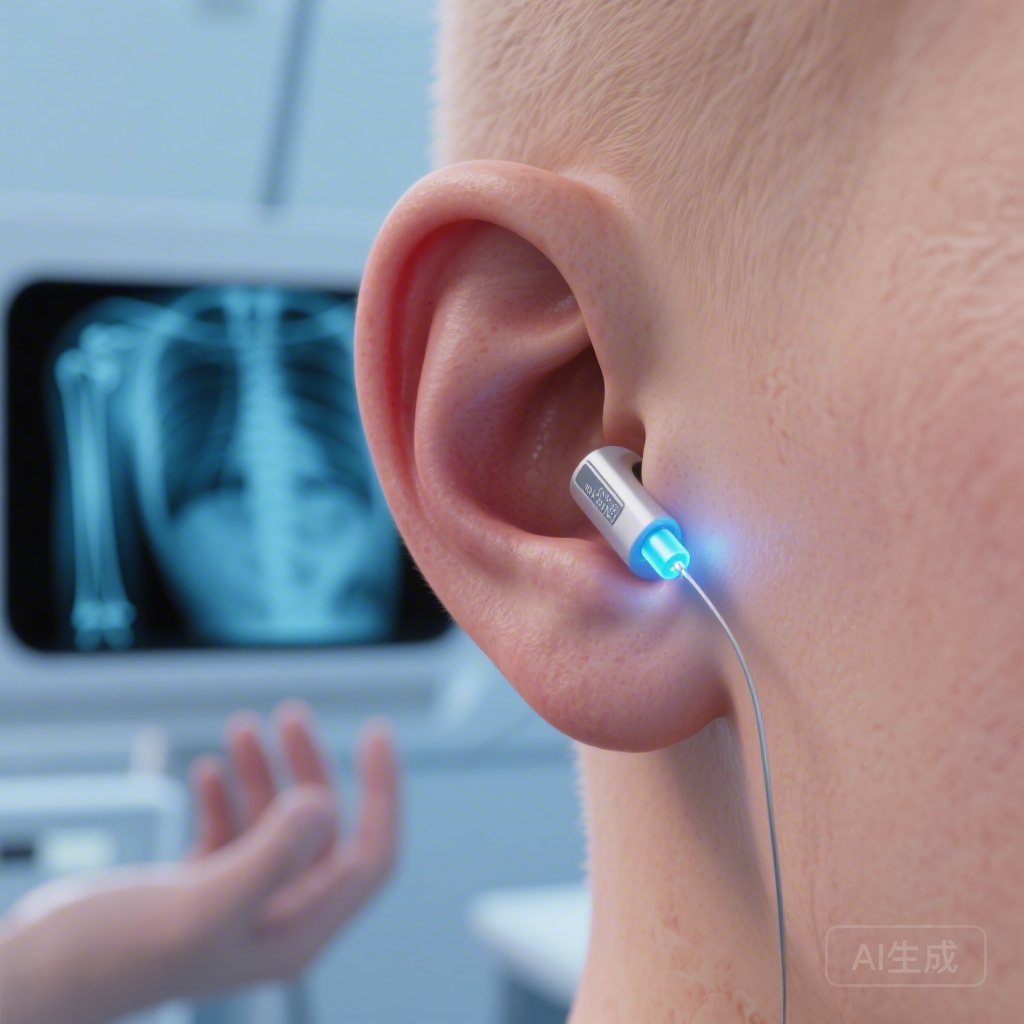
In this context, neuromodulation emerges as a novel frontier. The vagus nerve, the primary component of the parasympathetic nervous system, plays a critical role in the cholinergic anti-inflammatory pathway. Activation of the vagus nerve can inhibit the production of pro-inflammatory cytokines such as TNF, IL-1β, and IL-6 via the alpha-7 nicotinic acetylcholine receptor on macrophages. Transcutaneous auricular vagus nerve stimulation (taVNS) offers a non-invasive method to tap into this pathway by stimulating the auricular branch of the vagus nerve (ABVN) located in the concha of the ear.
Study Design: The ESTIVAL Trial Methodology
The ESTIVAL trial was a multicentre, randomised, double-blind, sham-controlled study conducted across 18 hospital centres in France. The study population consisted of adults (aged 18 years or older) meeting the American College of Rheumatology criteria for hand osteoarthritis. Critically, inclusion required at least one erosive interphalangeal joint (as seen on X-ray) and ultrasound-confirmed synovitis, ensuring an active inflammatory population.
Participants were randomly assigned in a 1:1 ratio to either the taVNS group or the sham group. The taVNS intervention involved a 20-minute daily session using the VAGUSTIM device (Schwa Medico, Rouffach, France). The sham group received a device that looked identical but delivered no electrical current. The trial lasted 12 weeks, with the primary endpoint defined as the change in hand pain measured on a 0–100 mm Visual Analogue Scale (VAS) from baseline to week 12. Secondary outcomes included changes in hand function and various inflammatory biomarkers. Safety was rigorously monitored through standardized reporting of adverse events at each visit.
Key Findings: Efficacy and Safety Outcomes
Between April 2021 and March 2022, 148 patients were enrolled, with 142 ultimately undergoing randomisation (73 to taVNS and 69 to sham). The cohort was predominantly female (88%), with a mean age of 66.5 years, reflecting the typical demographic of EHOA.
The primary analysis revealed that at 12 weeks, both groups experienced a reduction in pain, but the difference between them did not reach statistical significance. The median change in VAS hand pain was -16.0 mm (IQR -32.0 to 5.0) for the taVNS group compared to -6.0 mm (IQR -27.0 to 7.0) for the sham group. The adjusted between-group difference was -10.0 mm (95% CI -23.0 to 2.0; p=0.22).
While the p-value exceeded the standard 0.05 threshold for significance, several observations are noteworthy. First, a 10 mm difference on the VAS, while not statistically significant in this specific sample size, is often considered clinically relevant in chronic pain research, although it falls short of the typical 15-20 mm threshold for a definitive treatment effect. Second, exploratory analyses suggested that patients with higher baseline levels of synovial inflammation (as detected by ultrasound) appeared to respond more favorably to taVNS. This aligns with the mechanistic hypothesis that vagal stimulation primarily targets inflammatory pathways rather than just nociceptive transmission.
Regarding safety, taVNS demonstrated an excellent profile. No serious adverse events were recorded. Minor adverse events, such as local skin irritation or tingling, occurred in 30% of the taVNS group and 23% of the sham group, indicating that the device is well-tolerated for daily home use and that the blinding was likely effective given the similar reporting rates.
Expert Commentary: Mechanistic Insights and Clinical Implications
The failure of the ESTIVAL trial to reach its primary endpoint should be interpreted with nuance. In many neuromodulation and pain trials, the sham effect or placebo response is substantial. In this study, the sham group reported a 6 mm reduction in pain despite receiving no current. This underscores the psychological and contextual impact of participating in a high-tech medical device trial.
One critical discussion point for clinicians is the dose of stimulation. The ESTIVAL trial utilized a 20-minute daily protocol. It remains unknown if multiple daily sessions or longer durations of stimulation would yield more robust anti-inflammatory effects. Furthermore, the selection of the primary endpoint (VAS pain) is subjective. Future studies might benefit from incorporating objective measures of inflammation, such as serial power Doppler ultrasound or high-sensitivity C-reactive protein (hs-CRP) levels, as primary outcomes to better capture the biological effect of the intervention.
From a mechanistic standpoint, the link between auricular stimulation and systemic inflammation is increasingly supported by preclinical data. The ABVN provides a pathway to the nucleus tractus solitarius (NTS) in the brainstem, which in turn modulates the efferent vagal activity that governs the splenic and hepatic inflammatory response. The signal observed in the high-inflammation subgroup in ESTIVAL suggests that taVNS might be more effective as an anti-inflammatory dampener rather than a direct analgesic. This suggests that the therapy might be best positioned as an adjunctive treatment for patients with a flare-heavy disease course.
Conclusion: The Path Forward for Neuromodulation in Rheumatology
The ESTIVAL trial provides high-quality evidence regarding the safety and feasibility of taVNS in a challenging patient population. Although the primary endpoint was not met, the study offers a proof-of-concept for the use of bioelectronic medicine in erosive hand osteoarthritis. The consistent pain reduction observed in patients with greater synovial inflammation suggests that taVNS merits further investigation in this specific sub-population.
For clinicians, the takeaway is twofold: first, that taVNS is a safe modality that does not carry the systemic risks of traditional anti-inflammatory drugs; and second, that its efficacy may be phenotype-specific. Future research should focus on identifying biomarkers—whether imaging-based or molecular—that can predict which patients are most likely to benefit from vagal modulation. As we move toward precision medicine in rheumatology, the ESTIVAL trial serves as a foundational step in defining the role of the nervous system in joint disease.
Funding and Clinical Trial Information
The ESTIVAL trial was funded by the French Ministry of Health (Programme Hospitalier de Recherche Clinique). The study is registered at ClinicalTrials.gov under the identifier NCT04520516. The trial was completed in early 2022 and conducted across 18 secondary and tertiary hospital centres in France.
References
Courties A, Tuffet S, Cormier G, Roux CH, Ornetti P, Pers YM, Gottenberg JÉ, Lespessailles E, Chapurlat R, Arniaud D, Rannou F, Wendling D, Eymard F, Mathieu S, Richette P, Saraux A, Marotte H, Poursac N, Rat AC, Bastard JP, Fellahi S, Henrotin Y, Minssen L, Deprouw C, Nguyen C, Touati A, Bérard L, Rousseau A, Simon T, Maheu E, Berenbaum F, Sellam J. Transcutaneous auricular vagus nerve stimulation versus sham stimulation in patients with erosive hand osteoarthritis (ESTIVAL): a randomised, multicentre, double-blind, sham-controlled trial. Lancet Rheumatol. 2026 Feb;8(2):e98-e107. doi: 10.1016/S2665-9913(25)00226-7.