Highlights
- Real-time online heart teams reduced the median waiting time for final therapy from 5 days to 2 days compared to conventional face-to-face meetings.
- The recatheterization rate was drastically reduced from 98.9% in the conventional group to only 12.5% in the real-time group.
- Safety outcomes remained robust, with the real-time approach proving noninferior to conventional care regarding 1-year major adverse cardiovascular and cerebrovascular events (MACCE).
- Economic benefits were substantial, including an 18% reduction in hospitalization costs for patients undergoing percutaneous coronary intervention (PCI).
Background: The Bottleneck of Multidisciplinary Care
For patients with complex coronary artery disease (CAD), such as those with left main involvement or three-vessel disease, clinical guidelines from the American College of Cardiology (ACC), the American Heart Association (AHA), and the European Society of Cardiology (ESC) strongly recommend a Heart Team approach. This multidisciplinary strategy—typically involving interventional cardiologists, cardiac surgeons, and often non-invasive cardiologists—aims to synthesize diverse clinical perspectives to determine the most appropriate revascularization strategy: Percutaneous Coronary Intervention (PCI) or Coronary Artery Bypass Grafting (CABG).
Despite the clear benefits of the Heart Team in optimizing patient outcomes, its routine implementation in clinical practice faces significant logistical hurdles. Traditional Heart Team meetings are often face-to-face, requiring specialists to synchronize their schedules, which leads to delays in decision-making, increased hospital stays, and administrative burden. Furthermore, the standard workflow often involves a diagnostic angiography followed by a later discussion, necessitating a second catheterization (recatheterization) if the decision for PCI is made post-hoc. The EHEART trial sought to address these inefficiencies by evaluating a “real-time heart team”—an online, synchronous meeting conducted during the diagnostic angiography itself.
The EHEART Trial: Study Design and Methodology
The EHEART trial (NCT05514210) was a noninferiority randomized controlled trial conducted across three high-volume cardiac centers. The study focused on patients with complex de novo left main or 3-vessel CAD, representing the population where revascularization decisions are most nuanced and critical.
Patient Population and Randomization
A total of 490 patients were enrolled and randomly assigned in a 1:1 ratio to either the conventional heart team group (n=245) or the real-time heart team group (n=245). Eligibility required patients to have angiographically confirmed complex CAD that necessitated a multidisciplinary discussion according to standard institutional protocols.
Intervention vs. Conventional Care
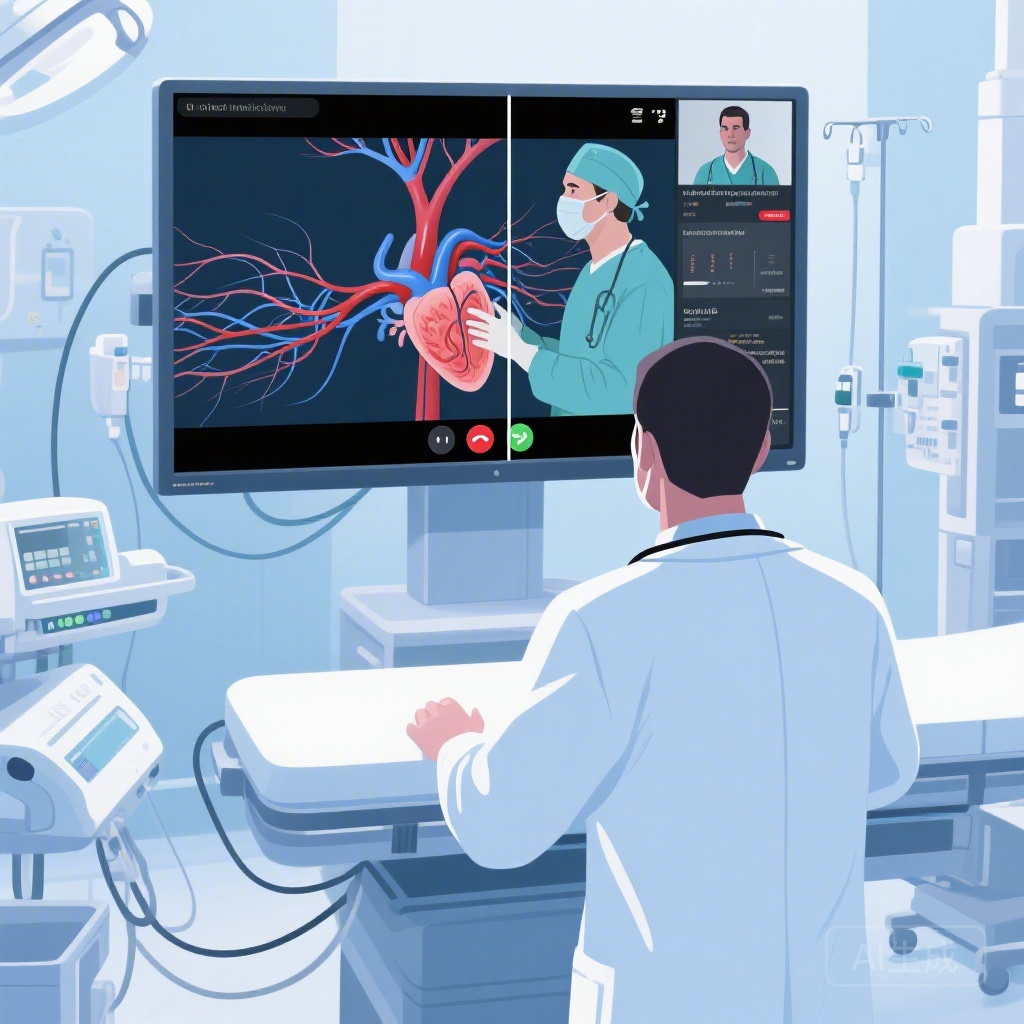
In the conventional group, patients underwent diagnostic angiography, after which their cases were prepared for a scheduled face-to-face multidisciplinary meeting held at a later time. In contrast, the real-time group utilized a digital infrastructure. During the angiography, the interventionalist initiated an online meeting, allowing a cardiac surgeon and other specialists to view the live imaging and clinical data remotely. A decision was reached while the patient was still in or just leaving the catheterization suite, allowing for immediate progression to therapy or a clear, finalized plan.
Key Findings: Efficiency, Cost, and Safety
The results of the EHEART trial provide compelling evidence for the operational advantages of the digital Heart Team model without sacrificing clinical safety.
Dramatic Reductions in Waiting Time and Recatheterization
The primary implementation outcome was care efficiency. The median waiting time for final therapy was significantly shorter in the real-time group (2 days) compared to the conventional group (5 days) (P < 0.001). Perhaps most strikingly, the recatheterization rate dropped from 98.9% in the conventional group to 12.5% in the real-time group. In the conventional workflow, almost every patient who eventually received PCI had to undergo a second procedure because the decision was finalized after the initial diagnostic session. The real-time model effectively eliminated this redundant step for the vast majority of patients.
Workload and Economic Impact
Specialist workload was assessed using the NASA Task Load Index (TLI), which measures mental demand, physical demand, temporal demand, performance, effort, and frustration level. The real-time group reported a significantly lower “high workload” rate (5.3% vs. 29.0%; P < 0.001). This suggests that while the real-time model requires immediate availability, the streamlined nature of the discussion and the elimination of redundant case reviews reduce the overall cognitive and administrative burden on specialists.
From an economic perspective, the real-time approach led to an 18.0% decrease in hospitalization costs for PCI patients (P < 0.001). This reduction is likely driven by shorter lengths of stay and the avoidance of costly recatheterization procedures and associated supplies.
Safety Outcomes: 1-Year MACCE
Safety was a paramount concern in this noninferiority trial. The primary safety endpoint was a composite of 1-year major adverse cardiovascular and cerebrovascular events (MACCE), including all-cause mortality, myocardial infarction, stroke, unplanned revascularization, and readmission due to reangina. The real-time group demonstrated a MACCE rate of 8.2%, compared to 10.6% in the conventional group (risk difference: -2.45%; 95% CI: -7.61% to 2.71%). This met the criteria for noninferiority (P < 0.001), indicating that the speed of the real-time decision-making process does not compromise the quality or safety of the revascularization strategy.
Process Evaluation: Discussion Quality and Shared Decision-Making
The trial also looked at the quality of the multidisciplinary process. The real-time group actually spent more time in discussion (4.0 ± 1.8 min vs. 3.4 ± 1.6 min) and saw higher participation from chief surgeons (26.5% vs. 18.8%). This suggests that the digital platform might actually lower the barrier for senior surgical input during the critical diagnostic phase.
However, a significant challenge was identified: multidisciplinary synchronous shared decision-making (SDM). The rate of SDM—where the patient is actively involved in the multidisciplinary discussion—was lower in the real-time group (2.0% vs. 11.5%). This is likely because the real-time discussion happens while the patient is on the table or in the immediate peri-procedural period, making it difficult to engage them in a complex preference-based dialogue compared to a post-angiography office setting.
Expert Commentary: Balancing Speed with Patient Engagement
The EHEART trial represents a significant step forward in the digital transformation of cardiovascular care. By leveraging telecommunication, the study demonstrates that we can overcome the geographical and temporal barriers that have historically hindered Heart Team performance. The reduction in recatheterization is particularly noteworthy, as it reduces patient exposure to contrast media and the inherent risks of arterial access.
However, clinicians must remain mindful of the “human element.” The drop in shared decision-making highlights a potential pitfall of ultra-efficient workflows. As we move toward real-time models, we must develop protocols to ensure that patients are still adequately informed and their preferences are integrated into the final decision, perhaps through pre-procedural counseling regarding potential outcomes or structured post-discussion consultations before treatment is executed.
Furthermore, while the trial showed success across three centers, the intercenter generalizability remains to be proven. Implementation requires robust IT infrastructure, high-speed data transmission for angiographic images, and a culture of immediate surgical availability that may be difficult to replicate in smaller or less-integrated community hospital settings.
Conclusion: The Future of Real-Time Multidisciplinary Decision-Making
The EHEART trial provides a blueprint for modernizing the management of complex CAD. By transitioning from face-to-face to real-time online Heart Teams, healthcare systems can achieve significantly higher efficiency, lower costs, and reduced specialist burden without compromising 1-year clinical safety. While the approach requires optimization—particularly in ensuring patient-centered shared decision-making—it offers a viable solution to the long-standing logistical challenges of multidisciplinary cardiovascular care.
Funding and Clinical Trial Information
The EHEART Trial was registered at ClinicalTrials.gov (NCT05514210). The study was supported by various clinical research funds dedicated to the advancement of cardiovascular technology and care delivery systems.
References
- Lin S, Su X, Ma H, et al. Real-Time Heart Team for Revascularization in Complex Coronary Artery Disease: The EHEART Randomized Trial. J Am Coll Cardiol. 2026; (PMID: 41778947).
- Lawton JS, Tamis-Holland JE, Bangalore S, et al. 2021 ACC/AHA/SCAI Guideline for Coronary Artery Revascularization. J Am Coll Cardiol. 2022;79(2):e21-e129.
- Neumann FJ, Sousa-Uva M, Ahlsson A, et al. 2018 ESC/EACTS Guidelines on myocardial revascularization. Eur Heart J. 2019;40(2):87-165.