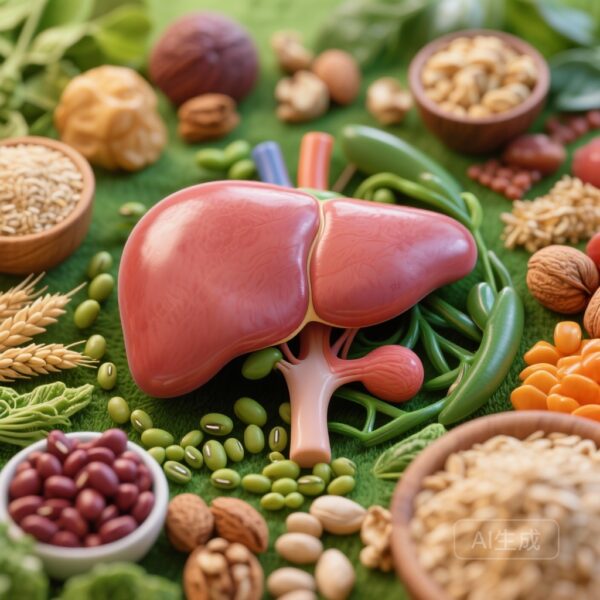
Background: The Intersection of Personal and Environmental Health
In the 21st century, we are facing two simultaneous crises: a global epidemic of metabolic diseases and an accelerating environmental collapse. For decades, clinicians and ecologists operated in separate spheres, but the emerging field of planetary health suggests that the health of the human body and the health of the Earth are inextricably linked. Nowhere is this more evident than in the rising prevalence of metabolic dysfunction-associated steatotic liver disease (MASLD).
MASLD, formerly known as non-alcoholic fatty liver disease (NAFLD), is characterized by the accumulation of excess fat in the liver in the absence of significant alcohol consumption. It is now the most common chronic liver condition worldwide, affecting approximately 25% to 30% of the global population. Driven by sedentary lifestyles and the ‘Western diet’—high in processed sugars, saturated fats, and red meats—MASLD can progress to inflammation, cirrhosis, and even liver cancer.
At the same time, our food systems are responsible for nearly a third of global greenhouse gas emissions and significant biodiversity loss. The EAT-Lancet Commission recently proposed the ‘Planetary Health Diet’ as a solution: a dietary pattern that is nutritionally optimal for humans and stays within planetary boundaries. But can eating for the planet specifically protect our livers? A recent landmark study published in Frontiers in Nutrition (2025) suggests the answer is a resounding yes.
Case Vignette: A Wake-Up Call for David
David Miller, a 48-year-old marketing executive from Chicago, considered himself ‘moderately healthy.’ He hit the gym twice a week but relied heavily on quick meals: steak dinners with clients, deli sandwiches for lunch, and sugary lattes to power through the afternoon. During a routine physical, his blood work showed elevated liver enzymes, and a follow-up ultrasound revealed a ‘bright’ liver—the hallmark of MASLD.
His physician didn’t just prescribe a generic weight-loss plan. Instead, she introduced David to the concept of the Planetary Health Diet Index (PHDI). ‘By focusing on plant-based proteins and reducing processed foods, you aren’t just losing weight,’ she explained. ‘You are reducing the specific inflammatory markers that are currently overwhelming your liver cells.’ For David, the realization that his dietary choices could improve his own health while reducing his carbon footprint provided a new sense of purpose in his recovery.
Scientific and Clinical Evidence: What the Data Tell Us
The research conducted by Liu et al. (2025) titled ‘Protective role of the planetary health diet index against metabolic dysfunction-associated steatotic liver disease’ provides the most comprehensive look yet at this relationship. The researchers utilized a sophisticated multi-level analytical framework, combining global longitudinal data (1990–2018) with individual-level data from the National Health and Nutrition Examination Survey (NHANES).
1. Global Trends and the ‘U-Shaped’ Effect
On a country-wide scale, the study found that adherence to the PHDI has varied significantly over the last three decades. Interestingly, older adults, urban residents, and those with higher education levels showed the most improvement in their dietary scores. The researchers identified a non-linear, U-shaped relationship at the country level. This suggests that while moderate adherence to a planetary diet significantly reduces MASLD incidence, there is an ‘optimal’ point (a PHDI score of approximately 50.69) where the protective benefits are maximized before plateauing.
2. Individual Linear Protection
While the global data showed complexity, the individual-level analysis was clear: the higher a person’s PHDI score, the lower their risk of developing MASLD. Every increase in the intake of whole grains, nuts, and legumes, coupled with a decrease in red meat and added sugar, correlated with improved liver health markers. This linear relationship suggests that for the average person, any shift toward the Planetary Health Diet is a step toward a healthier liver.
The Planetary Health Diet Index (PHDI) Framework
To understand why this diet works, we must look at what it prioritizes. The PHDI is not a ‘vegan’ diet, but rather a plant-forward one. It emphasizes dietary diversity and nutrient density.
| Food Group | PHDI Recommendation | Impact on Liver Health |
|---|---|---|
| Whole Grains | High intake | Improves insulin sensitivity and reduces hepatic fat. |
| Plant Proteins (Beans, Nuts) | Primary protein source | Reduces systemic inflammation and oxidative stress. |
| Red Meat & Processed Meat | Minimal intake | Lower intake reduces heme iron and saturated fats that damage liver cells. |
| Fruits & Vegetables | High variety | Provides antioxidants that prevent liver cell apoptosis (death). |
| Added Sugars | Extremely low | Prevents de novo lipogenesis (the creation of new fat in the liver). |
Misconceptions and Harmful Behaviors
One common misconception is that ‘fatty liver’ is only caused by alcohol or ‘eating too much fat.’ In reality, the most significant driver of MASLD in the modern diet is the overconsumption of refined carbohydrates and fructose. When the liver is flooded with more sugar than it can process, it converts that sugar into fat—a process known as de novo lipogenesis.
Another harmful behavior is the ‘all-or-nothing’ mentality. Many patients believe that if they cannot become fully vegetarian, they cannot improve their liver health. The PHDI research refutes this. The evidence shows that incremental changes—such as replacing two servings of red meat per week with lentils or chickpeas—can significantly move the needle on metabolic health.
Correct Health Practices: Moving Toward a PHDI Lifestyle
Implementing a planetary health approach to eating involves several practical steps that align with the findings of Liu et al.:
- Prioritize Plant-Based Fats: Replace butter and lard with olive oil, avocado, and nut-based fats. These unsaturated fats help resolve liver inflammation.
- The ‘Half-Plate’ Rule: Ensure that at least half of every meal consists of non-starchy vegetables and fruits. This increases fiber intake, which is crucial for a healthy gut-liver axis.
- Source Matters: The PHDI encourages eating locally and seasonally. Not only does this reduce the carbon footprint of your food, but seasonal produce often contains higher peak nutrient levels.
- Mind the Sugars: Be wary of ‘hidden’ sugars in condiments, breads, and low-fat snacks. These are major contributors to MASLD.
Expert Insights and Commentary
Medical experts emphasize that the PHDI is not just another ‘fad diet’ but a scientifically validated framework for long-term health. ‘The beauty of the Planetary Health Diet is its scalability,’ says Dr. Elena Rodriguez, a hepatologist not involved in the study. ‘We are seeing that what is good for the macro-environment of the Earth is also good for the micro-environment of the liver cell. The high fiber and polyphenol content of this diet essentially acts as a ‘cleanup crew’ for the liver.’
Furthermore, the study highlights a critical public health gap. Since men and younger populations generally show lower adherence to the PHDI, targeted interventions are needed. Public health policies should focus on making plant-based whole foods more accessible and affordable than processed alternatives.
Conclusion
The research by Liu et al. (2025) provides a compelling dual mandate: we must change our diets to save our lives and our planet. MASLD is a preventable and often reversible condition, and the Planetary Health Diet Index offers a clear, evidence-based roadmap for achieving this. By shifting our focus from industrial, processed foods to a diverse, plant-forward palette, we can protect our livers from the ‘silent’ epidemic of fatty liver disease while contributing to a more sustainable future for the generations to come.
For patients like David, the path forward is clear. It’s not just about restriction; it’s about choosing foods that nourish both the self and the world. As David’s liver enzymes return to normal, he serves as a living testament to the power of the planetary health approach.
References
1. Liu ZQ, Zhou BG, Fang JW, Yu Y, Jiang X, Chen XY, Wang WJ, Fu XY, Xia JL, Liu BJ, Guo TM, Zhang M, Ding YB. Protective role of the planetary health diet index against metabolic dysfunction-associated steatotic liver disease: global and individual evidence. Front Nutr. 2025 Nov 14;12:1673662. doi: 10.3389/fnut.2025.1673662. PMID: 41323989; PMCID: PMC12661568.
2. Willett W, et al. Food in the Anthropocene: the EAT-Lancet Commission on healthy diets from sustainable food systems. Lancet. 2019;393(10170):447-492.
3. Rinella ME, et al. A multi-society Delphi consensus statement on new nomenclature for steatotic liver disease. Hepatology. 2023;78(6):1966-1980.