Introduction: Addressing the Persistent Gap in Pediatric Influenza Vaccination
The seasonal influenza virus remains a formidable challenge to public health, particularly among vulnerable pediatric populations. Despite long-standing recommendations for universal vaccination for children aged 6 months and older, disparities in uptake persist, often delineated by socioeconomic status and racial identity. In historically marginalized communities, specifically Black or African American neighborhoods, barriers to vaccination are multifaceted, ranging from logistical hurdles to a lack of culturally resonant health communication. Traditional reminder-recall systems, often consisting of automated phone calls or generic electronic health record (EHR) messages, frequently fail to address the underlying hesitancy or lack of urgency felt by some caregivers.
The Rise of Narrative Medicine and Digital Storytelling
Narrative medicine and digital storytelling have emerged as innovative strategies to bridge the gap between clinical evidence and community trust. By leveraging multimodal narratives—incorporating voice, imagery, and personal experience—health systems can ‘uplift’ community voices. These stories are not merely instructional; they are designed to build relatability and social proof, potentially serving as a scalable, equity-promoting intervention. A recent pilot randomized clinical trial conducted in Denver, Colorado, investigated whether this approach could move the needle on pediatric influenza vaccination rates in safety-net settings.
Study Design and Methodology
The study, titled Narrative Reminder Recall to Improve Pediatric Influenza Vaccination, was a pilot randomized clinical trial (NCT06274359) conducted between September 2024 and March 2025. The research team focused on two safety-net clinics located in historically Black neighborhoods in Denver.
Participant Characteristics
The trial included 200 children (aged 6 months to 5 years) and their 198 caregivers. The demographic breakdown was reflective of the safety-net setting: 39% of participants identified as Black or African American, 45% as Hispanic or Latino/a, and 27% as White. The majority of caregivers (89%) were mothers, with a mean age of approximately 30 years. Inclusion criteria required that the child had at least one well-child visit in the previous 18 months to ensure a baseline level of engagement with the health system.
The Intervention: Digital Storytelling via Text
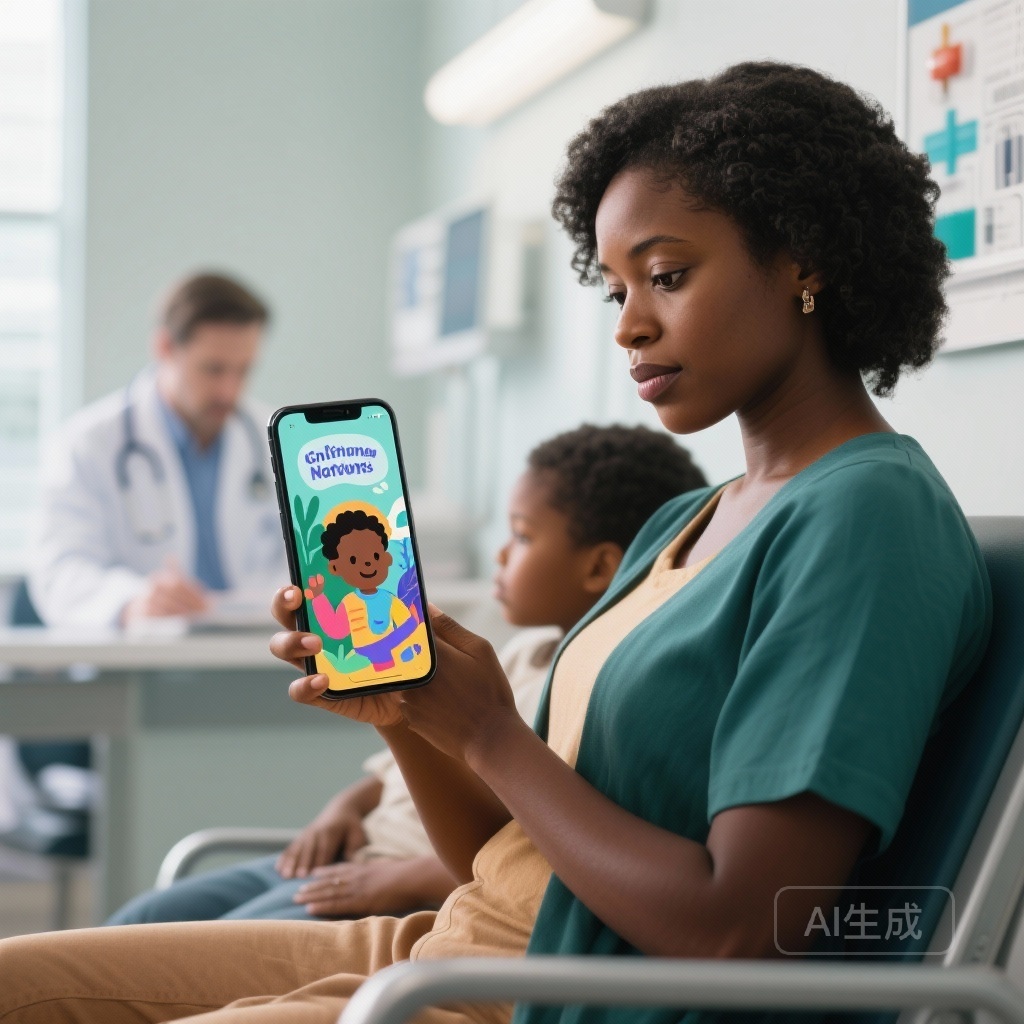
Participants were randomized into two groups: 100 in the intervention group and 100 in the usual care group. The intervention consisted of a series of text messages sent in October 2024. These texts contained links to five distinct digital stories. Crucially, three of these stories featured caregivers who identified as Black or African American, ensuring cultural alignment and representation. The usual care group received a standard message through the EHR messaging portal, a common practice in many modern healthcare systems.
Measuring Reach and Efficacy
The primary outcome of the study was ‘reach,’ defined as the proportion of caregivers who viewed at least one digital story for any duration. The secondary, and arguably more clinically significant, outcome was the time to the child’s first influenza vaccination. The researchers employed adjusted Cox proportional hazards modeling to account for baseline covariates and utilized Kaplan-Meier curves to visualize the proportion of unvaccinated children over the course of the flu season.
Key Findings: The Reach-Effectiveness Paradox
The results of the trial present a fascinating paradox often seen in digital health interventions: low engagement metrics paired with significant clinical impact.
Digital Reach and Engagement
The study achieved 100% delivery of the text messages, confirming that the technical infrastructure for the intervention was robust. However, the actual engagement with the content was surprisingly low. Only 7 caregivers (7%) in the intervention group actually clicked on and viewed one or more of the digital stories. In digital marketing and health informatics, such a low click-through rate might typically be viewed as a failure of the delivery mechanism.
Impact on Vaccination Rates
Despite the low reach, the clinical outcomes told a different story. By the time influenza activity peaked on February 15, 2025, the intervention group showed a marked improvement in vaccination rates. Specifically, 62% of children in the intervention group remained unvaccinated, compared to 74% in the usual care group (P = .03). When adjusting for variables in the Cox proportional hazards model, the results were even more striking: children whose caregivers were in the intervention group were 63% more likely to be vaccinated than those in the usual care group (adjusted hazard ratio [aHR], 1.63; 95% CI, 1.01-2.64).
Interpreting the Results: Why Did It Work?
The disparity between the 7% view rate and the 63% increase in vaccination likelihood suggests several possible mechanisms.
The ‘Nudge’ Effect
It is possible that the mere receipt of a text message containing links to community-centered stories served as a powerful ‘nudge.’ Even if the caregivers did not watch the videos, the framing of the message—coming from a place of community voice rather than clinical authority—may have reduced psychological reactance and increased the perceived importance of the vaccine.
Secondary Exposure and Social Diffusion
While only 7% viewed the stories directly via the link, the study design does not account for social diffusion. It is possible that the content was shared or discussed within social circles, or that the specific timing and cultural relevance of the text itself prompted action.
The Power of Representation
For the Black and African American families in the study, seeing an intervention that explicitly centered their community’s voices may have fostered a sense of inclusion and trust in the health system’s outreach efforts, even among those who did not consume the full narrative.
Clinical Implications and Future Directions
This pilot trial provides a ‘proof of concept’ for narrative-based digital interventions in pediatrics. It suggests that even when direct engagement is low, the quality and framing of outreach can significantly influence health behaviors.
Scalability and Equity
Digital storytelling is highly scalable. Once the content is produced, the cost of distribution via text message is marginal. For safety-net clinics with limited resources, this represents a cost-effective way to supplement traditional EHR reminders. Furthermore, by centering marginalized voices, the intervention directly addresses the ‘trust gap’ that often hinders public health efforts in these communities.
Study Limitations
As a pilot trial, the sample size (n=200) was relatively small, and the study was limited to a specific geographic area (Denver). The low reach remains a concern; future research should investigate how to optimize the ‘hook’ of the text message to increase the proportion of caregivers who engage with the full narrative. Additionally, the study did not measure the specific reasons why vaccination occurred—whether it was due to the story’s emotional impact or simply the frequency of the reminders.
Expert Commentary
Public health experts note that the success of this intervention highlights the limitations of ‘one-size-fits-all’ communication. Standard EHR messages often feel cold and bureaucratic. By contrast, narrative interventions treat the caregiver as a partner in health rather than a recipient of instructions. However, clinicians must be cautious not to view digital storytelling as a panacea. It should be part of a multi-modal strategy that includes in-person counseling, easy access to vaccine clinics, and addressing logistical barriers like transportation and clinic hours.
Conclusion
The Narrative Reminder Recall trial demonstrates that culturally tailored, digital storytelling is a potent tool for improving pediatric influenza vaccination rates in historically underserved communities. While the ‘reach’ of the digital content was modest, the impact on clinical outcomes was substantial, suggesting that the intervention resonated deeply with those it touched. As health systems continue to strive for health equity, incorporating community voices into digital outreach will be a critical strategy in protecting the most vulnerable members of society from seasonal respiratory illnesses.
Funding and Trial Registration
This research was supported by grants from the National Institutes of Health (NIH) and local health foundations in Colorado. The trial is registered at ClinicalTrials.gov (NCT06274359).