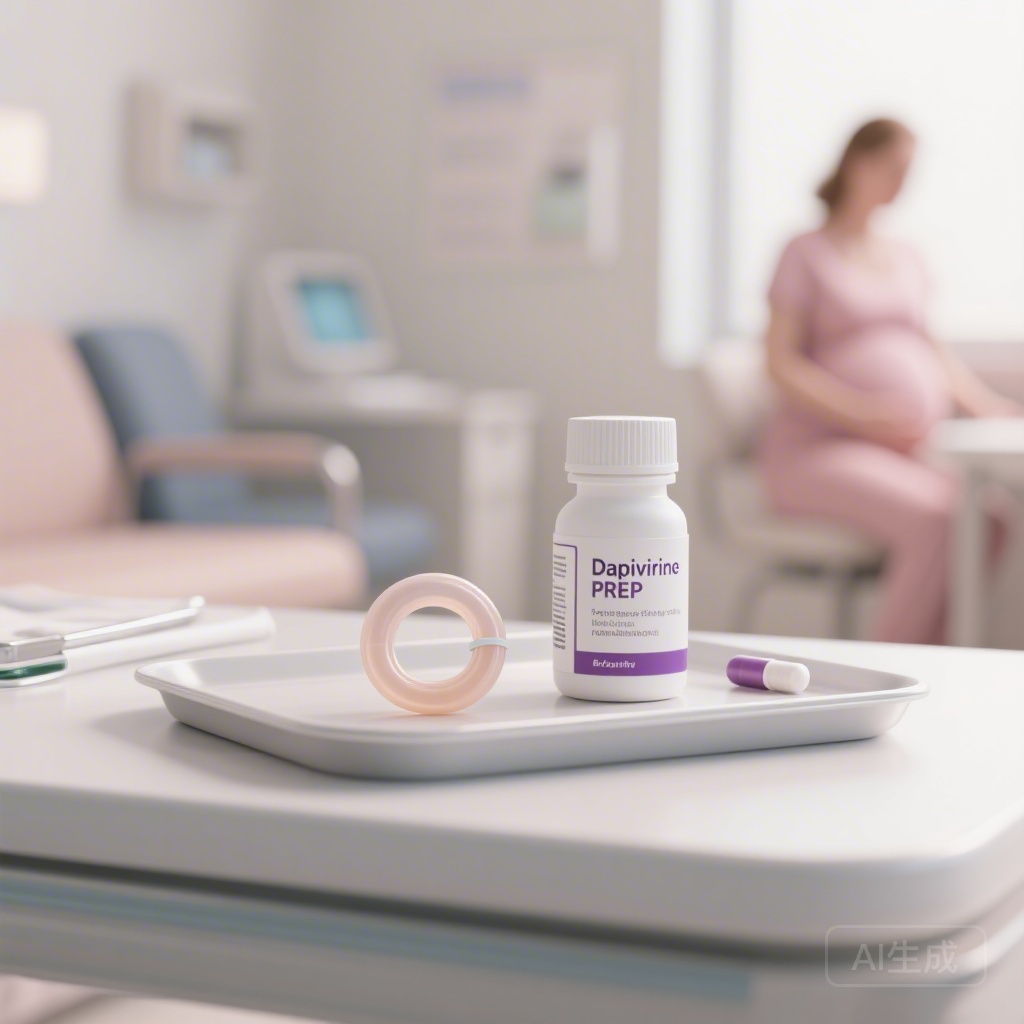
Expanding HIV Prevention Options: The Safety and Efficacy of Dapivirine Rings in Pregnancy
Highlighting Key Findings
The MTN-042/DELIVER trial represents a significant milestone in maternal health and HIV prevention research. The study’s primary findings indicate that both the dapivirine vaginal ring (DVR) and daily oral pre-exposure prophylaxis (PrEP) are safe for use starting in the second trimester of pregnancy. No maternal deaths or HIV seroconversions occurred during the study period. Importantly, 94 percent of pregnancy outcomes were at term, and none of the observed serious adverse events were related to the use of the prevention products. These results provide essential evidence to support the inclusion of pregnant individuals in HIV prevention strategies, offering them a choice between long-acting and daily oral options.
The Clinical Urgency for Pregnancy-Specific HIV Prevention
Pregnant and breastfeeding women in high-burden regions face a disproportionately high risk of HIV acquisition. Biological changes during pregnancy, including hormonal shifts and alterations in the vaginal microbiome and mucosal immunity, result in a fourfold increase in the risk of HIV per coital act compared to non-pregnant women. Despite this heightened vulnerability, pregnant individuals have historically been excluded from clinical trials for new biomedical prevention tools due to perceived risks to the fetus. This exclusion has created a critical gap in safety data, often delaying the rollout of life-saving interventions for this population.
Prior to the DELIVER study, data on the dapivirine vaginal ring—a discreet, long-acting monthly prevention method—were largely limited to non-pregnant populations. Oral PrEP (tenofovir disoproxil fumarate-emtricitabine) had more established safety data but still required further validation regarding adherence and acceptability specifically during the physiological rigors of pregnancy. The DELIVER trial (MTN-042) was designed to address these gaps by rigorously evaluating safety, adherence, and acceptability in a multicountry, randomized setting.
Methodological Rigor of the MTN-042/DELIVER Study
MTN-042/DELIVER was an open-label, phase 3b randomized trial conducted across multiple sites in Malawi, South Africa, Uganda, and Zimbabwe. The study enrolled 251 healthy pregnant women without HIV, aged 18 to 40 years. Participants were enrolled between 12 and 29 weeks of gestation, a period where fetal organogenesis is largely complete, but significant maternal-fetal changes are ongoing.
Participants were randomly allocated in a 4:1 ratio to receive either the monthly dapivirine vaginal ring (n=202) or daily oral PrEP (n=49). This ratio was chosen to maximize safety data for the newer dapivirine ring while maintaining a comparative arm for oral PrEP. Product use continued until delivery or 42 weeks of gestation. The primary safety outcome was a composite of serious adverse events (SAEs), including maternal deaths, grade 3 or higher adverse events, and pregnancy complications such as preterm birth or pregnancy loss.
Safety Outcomes and Maternal-Fetal Wellbeing
Between July 2022 and January 2023, the trial collected robust safety data. The findings were overwhelmingly positive. Out of 251 participants, 28 (11 percent) experienced safety events included in the primary composite outcome. However, a detailed adjudication revealed that none of these events were related to the use of the study products. The absence of product-related SAEs is a critical finding that reinforces the safety profile of both tenofovir-based oral PrEP and the dapivirine ring during the second and third trimesters.
Pregnancy outcomes were also highly favorable. Of the 247 recorded outcomes, 233 (94 percent) were term births (at or after 37 weeks). The incidence of preterm birth and pregnancy loss was consistent with, or lower than, background rates in the participating regions. Furthermore, the study reported no infectious pregnancy complications, which is particularly relevant given the vaginal administration of the dapivirine ring.
Acceptability and the Power of Choice
Beyond clinical safety, the DELIVER trial explored the acceptability of these prevention methods. For many women, the dapivirine ring offers a discreet alternative to daily pills, which can be difficult to maintain due to pregnancy-related nausea or the social stigma associated with taking daily medication. The ring’s monthly replacement schedule reduces the burden of daily adherence, a factor that is often cited as a barrier to oral PrEP success.
Adherence in the trial was generally high, supported by the open-label nature of the study where participants were aware of the preventive benefits. The findings suggest that when provided with choices and clear safety information, pregnant women are highly motivated to utilize HIV prevention tools. The inclusion of the vaginal ring in the prevention toolkit allows for a personalized approach to healthcare, catering to the individual lifestyle and physiological needs of the patient.
Expert Perspectives on Translational Impact
Expert commentary on the DELIVER trial emphasizes the shift from ‘protecting pregnant women from research’ to ‘protecting pregnant women through research.’ Historically, the lack of data has led to cautious clinical guidelines that may leave pregnant women under-protected. The results from MTN-042 provide the evidence base needed for regulatory bodies and national health programs to confidently recommend the dapivirine ring alongside oral PrEP for pregnant individuals.
However, researchers note that while these findings are robust for the second trimester, further studies (such as the ongoing B-PROTECTED study) are essential to evaluate safety during the first trimester and the breastfeeding period. The biological plausibility of the ring’s safety is supported by its localized delivery system, which results in low systemic absorption of dapivirine, thereby minimizing fetal exposure compared to systemic oral medications.
Conclusion
The MTN-042/DELIVER trial provides definitive evidence that the dapivirine vaginal ring and oral PrEP are safe, acceptable, and feasible for HIV prevention in the second trimester of pregnancy. With no product-related safety concerns and excellent pregnancy outcomes, these findings remove a significant barrier to the implementation of comprehensive HIV prevention services for pregnant women. As global health initiatives strive to eliminate new HIV infections, the integration of diverse, evidence-based prevention options into antenatal care is a clinical and public health imperative.
Funding and ClinicalTrials.gov
This study was funded by the US National Institutes of Health (NIH). It is registered with ClinicalTrials.gov, number NCT03965923.
References
Mhlanga FG, Szydlo DW, Mayo AJ, et al. Safety, acceptability, and adherence to dapivirine vaginal ring and oral pre-exposure prophylaxis for HIV prevention in the second trimester of pregnancy: a multicountry, open-label, phase 3b randomised trial. Lancet HIV. 2026. doi: 10.1016/S2352-3018(25)00307-8.