Highlight
– The ABC‑DO prospective cohort (n=2,153) followed women with breast cancer across five sub‑Saharan African countries for up to 7 years; overall crude survival was 51% at 3 years, 40% at 5 years, and 33% at 7 years.
– Large between‑country and race‑stratified variation: 5‑year age‑standardised net survival ranged from 35–42% (Zambia, Nigeria) to 52–58% (Black women in Uganda, South Africa, Namibia), with non‑Black Namibian women exceeding 83%.
– Annual conditional mortality declined after years 2–3 but remained substantial in year 5 (8–21% in some Black populations). Modeling suggested that attaining the WHO Global Breast Cancer Initiative (GBCI) target of 60% stage I/II and increasing treatment access could reduce deaths by ~33% among Black women in the studied countries.
Background
Breast cancer is the most frequently diagnosed cancer among women worldwide and a leading cause of cancer death. Global survival has improved in high‑income settings over recent decades owing to earlier detection and multimodal treatments, but large disparities persist. Sub‑Saharan Africa (SSA) carries a disproportionate burden of mortality: cancers are often diagnosed at advanced stages and health systems face constraints in diagnostics, surgery, systemic therapy, radiotherapy, and survivorship care. The WHO’s Global Breast Cancer Initiative (GBCI) emphasizes downstaging (early detection and prompt diagnosis) and improved treatment coverage as priorities to reduce mortality in low‑ and middle‑income countries.
Study design
The African Breast Cancer‑Disparities in Outcomes (ABC‑DO) study is a prospective, hospital‑based cohort conducted at eight tertiary hospitals across five SSA countries (Namibia, Nigeria, South Africa, Uganda, and Zambia). From Sept 8, 2014 to Dec 31, 2017, women aged ≥18 years presenting with suspected breast cancer were recruited and followed longitudinally; vital status updates were collected telephonically every 3 months for up to 7 years (through Jan 1, 2022, with 1 additional year for South Africa).
After excluding non‑cases, small racial subgroups, women with prior treatment/possible recurrence, and those without any follow‑up, 2,153 women (93% of recruits) remained for analysis. The cohort was stratified by country and race to reflect local demographics and between‑group differences.
The primary endpoint was overall survival. The investigators estimated crude survival, age‑standardised net survival, 1‑year conditional net survival (annual risk of death), and modeled potential survival gains under scenarios consistent with the GBCI (notably raising the proportion of early‑stage [I/II] cases to 60% and increasing treatment access).
Key findings
Study population and outcomes: Of 2,153 women included, 1,323 (61%) died during follow‑up, 672 (31%) were alive at administrative censoring, and 158 (7%) were lost to follow‑up. Crude overall survival was 51% at 3 years, 40% at 5 years, and 33% at 7 years.
Between‑country and racial survival variation
Age‑standardised 5‑year net survival varied markedly by location and racial group within countries. Key reported estimates:
- Zambia and Nigeria: 5‑year net survival approximately 35–42%.
- Black women in Uganda, South Africa, and Namibia: 5‑year net survival approximately 52–58%.
- Non‑Black women in Namibia (White and mixed race groups combined): 5‑year net survival over 83%.
These contrasts indicate both between‑country differences in care and within‑country, race‑associated inequities where access to timely diagnosis and treatment differs.
Annual risks of death and conditional survival
By estimating 1‑year conditional net survival (the annual probability of death accounting for previous survival), the study found the highest mortality risk in the first 1–2 years after diagnosis, with a general decline after 2–3 years in most groups. However, for Black women in Namibia, Uganda, and Nigeria, the probability of death remained appreciable during year 5 after diagnosis (8–21%), indicating persistent mortality risk among longer‑term survivors.
Modelled impact of achieving GBCI targets
Using simulations that shifted stage distribution toward the GBCI target (60% stage I/II) and increased treatment access, the authors estimated an approximate one‑third reduction in deaths among Black women across the sampled countries (Namibia, Nigeria, South Africa, Uganda, Zambia). This suggests that downstaging and improved treatment could substantially reduce mortality but that gains would be heterogeneous and dependent on health system capacity.
Expert commentary and interpretation
The ABC‑DO 7‑year results provide robust, prospective real‑world evidence of sustained high breast cancer mortality in much of SSA and highlight three key messages for clinicians, health systems planners, and policy makers:
1. Late diagnosis and incomplete treatment remain central drivers
Low 5‑year survival in several settings is consistent with advanced stage at presentation and barriers to receiving guideline‑concordant care, including limited surgical capacity, radiotherapy shortages, inconsistent access to systemic therapies (chemotherapy, endocrine therapy, targeted agents), financial toxicity, and disrupted treatment pathways.
2. Persistent intermediate‑term mortality signals gaps in survivorship and control of micrometastatic disease
The observation that substantial mortality persists beyond three years in some groups suggests insufficient disease control among patients who initially survive the early high‑risk window. Potential contributors include suboptimal systemic therapy (dose reductions, incomplete cycles), absence of targeted treatments for HER2‑positive disease, limited access to adjuvant endocrine therapy or poor adherence, and lack of surveillance/palliative care integration.
3. Equity is a major determinant
The stark advantage seen in non‑Black Namibian women compared with Black women in the same country reinforces that social determinants, access to private care, and systemic inequities strongly influence outcomes, beyond tumor biology alone.
Limitations and generalisability
Strengths include prospective ascertainment, frequent follow‑up, sizable sample, and explicit stratification by country and race. Limitations include hospital‑based recruitment (which may not capture community‑level cases), potential residual confounding, and limited molecular subtype data reported in the summary. Loss to follow‑up was relatively low (7%), but differential follow‑up could bias subgroup comparisons. Extrapolation beyond the studied sites should be cautious, although the findings align with other SSA reports showing poor survival overall.
Clinical and policy implications
The ABC‑DO findings reinforce that pragmatic, system‑level interventions could yield large survival gains in SSA:
- Downstaging: community awareness, timely referral pathways, and strengthened diagnostic capacity to increase the proportion of stage I/II presentations toward the GBCI 60% target.
- Treatment access and quality: expanded surgical and oncology services, reliable supply chains for chemotherapy and endocrine agents, scaled radiotherapy capacity, and implementation of standard treatment protocols.
- Targeted investments: prioritizing interventions with high population impact (affordable endocrine therapy, essential chemotherapy regimens, and cost‑effective radiotherapy planning) and tailored approaches for high‑risk subgroups.
- Survivorship and palliative care: integrated follow‑up, symptom control, adherence support, and psychosocial services to address persistent intermediate‑term mortality and quality of life.
Conclusion
The ABC‑DO 7‑year follow‑up demonstrates unacceptably low breast cancer survival across multiple SSA settings, with marked between‑country and within‑country disparities. While mortality is highest in the early years post‑diagnosis, appreciable risk persists into year 5 for many women, underscoring the need for interventions that combine earlier detection with reliable, high‑quality treatment and survivorship care. Achieving the WHO GBCI targets at scale could avert a substantial proportion of deaths, but this will require sustained investments in health systems, equitable access, and implementation science to translate targets into realized patient benefit.
Funding and registration
Primary funding for ABC‑DO was provided by the US National Cancer Institute, Susan G. Komen, and the International Agency for Research on Cancer. Clinical trial or registry identifiers were not reported in the primary paper citation.
References
1. Mo T, Joffe M, Cubasch H, et al. Breast cancer overall survival, annual risks of death, and survival gap apportionment in sub‑Saharan Africa (ABC‑DO): 7‑year follow‑up of a prospective cohort study. Lancet Glob Health. 2025 Oct;13(10):e1681‑e1690. doi: 10.1016/S2214‑109X(25)00273‑6.
2. Sung H, Ferlay J, Siegel RL, et al. Global Cancer Statistics 2020: GLOBOCAN estimates of incidence and mortality worldwide for 36 cancers in 185 countries. CA Cancer J Clin. 2021;71(3):209‑249.
3. Allemani C, Matsuda T, Di Carlo V, et al. Global surveillance of trends in cancer survival 2000–14 (CONCORD‑3): analysis of individual records for 37 513 025 patients diagnosed with one of 18 cancers from 322 population‑based registries in 71 countries. Lancet. 2018;391(10125):1023‑1075.
4. World Health Organization. Global Breast Cancer Initiative. Geneva: WHO; 2021. (WHO initiative targeting downstaging and improved access to treatment to reduce global breast cancer mortality.)
Thumbnail image prompt (AI‑friendly)
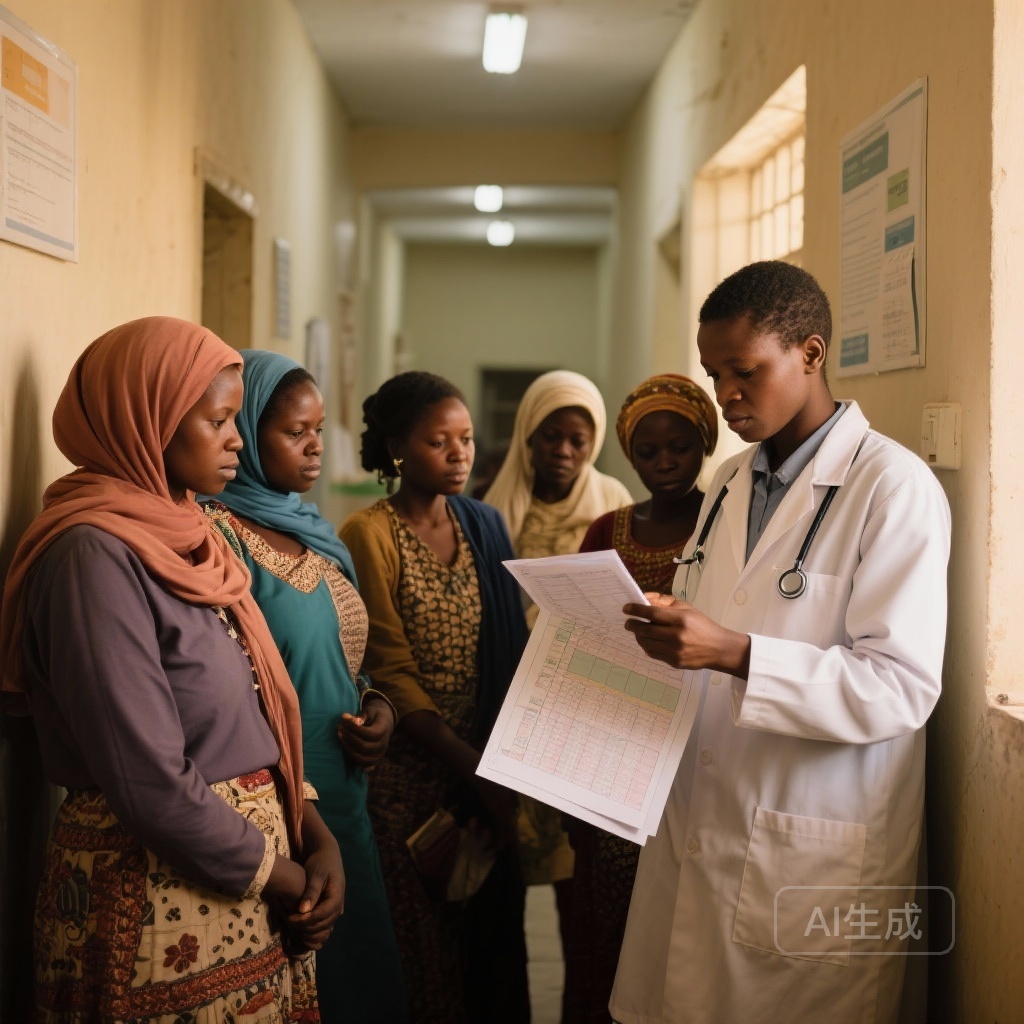
A diverse group of women and a female clinician in a Sub‑Saharan African outpatient corridor: mid‑aged and younger women in colorful but modest clothing, one woman holding a medical chart, the clinician consulting compassionately; warm natural light, shallow depth of field, editorial photorealistic style, tones of urgency and cautious optimism.