Introduction: The Evolution of Cardiovascular Health Metrics
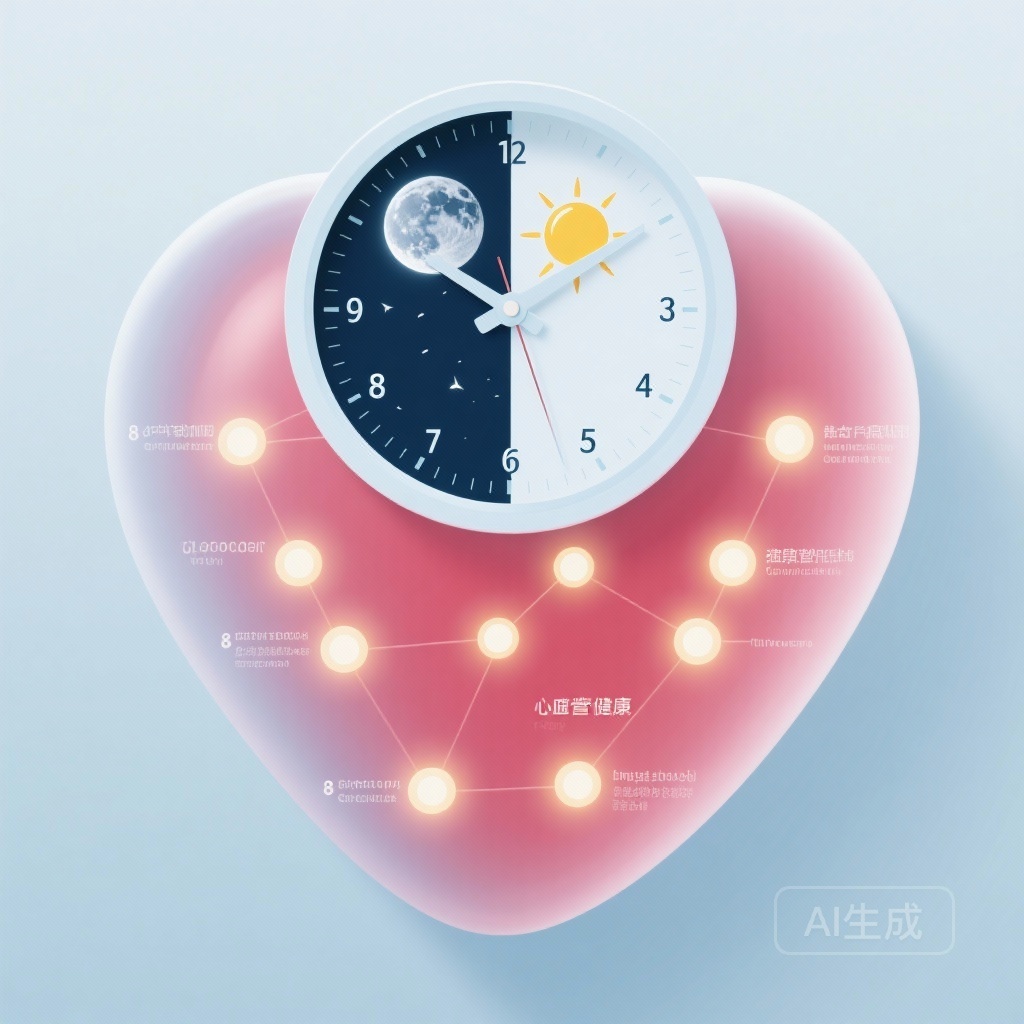
In recent years, the American Heart Association (AHA) has refined its framework for defining and quantifying cardiovascular health (CVH). The transition from the Life’s Simple 7 (LS7) to the Life’s Essential 8 (LE8) marked a significant shift in preventive cardiology, most notably by incorporating sleep health as a fundamental pillar of cardiovascular well-being. The LE8 score—comprising diet, physical activity, nicotine exposure, sleep duration, body mass index (BMI), blood lipids, blood glucose, and blood pressure—provides a comprehensive 100-point scale to assess an individual’s cardiovascular trajectory. Two landmark studies, recently published in the Journal of the American Heart Association, have now shed light on how this scoring system correlates with long-term mortality and, crucially, how our internal biological clocks (chronotypes) influence our ability to maintain these essential health metrics.
Circadian Biology and Cardiovascular Risk: The UK Biobank Perspective
The Night Owl Penalty
The relationship between chronotype—a person’s natural inclination regarding the timing of sleep and wakefulness—and cardiometabolic health has long been a subject of clinical interest. The prospective cohort study involving 322,777 UK Biobank participants (aged 39 to 74 years) provides some of the most robust evidence to date regarding the ‘eveningness’ penalty.
Researchers found that individuals who identified as a ‘definite evening’ chronotype had a 79% higher prevalence of poor LE8 scores (less than 50 points) compared to those with an ‘intermediate’ chronotype. This suggests that ‘night owls’ are significantly less likely to meet the targets for the eight essential cardiovascular health factors. Over a median follow-up of 13.8 years, the study recorded 17,584 incident cardiovascular disease (CVD) events, including myocardial infarction and stroke.
Mediation Analysis: Is Chronotype Destiny?
One of the most clinically significant findings of the UK Biobank study is the mediation analysis. While the ‘definite evening’ chronotype was associated with a 16% higher risk of total CVD (HR 1.16; 95% CI, 1.10–1.22), the researchers discovered that the LE8 score explained 75% of this association. This ‘natural indirect effect’ indicates that the increased risk faced by evening types is not necessarily an immutable biological trait, but is largely driven by the poorer cardiovascular health behaviors and metabolic profiles associated with an evening preference.
This suggests that the circadian misalignment often experienced by evening types—sometimes referred to as ‘social jetlag’—leads to disruptions in diet, physical activity, and metabolic regulation. When these factors are optimized (as measured by the LE8), the excess risk associated with being an evening person is substantially mitigated.
Validating the LE8 Framework: Insights from the Framingham Heart Study
LE8 vs. Life’s Simple 7
While the UK Biobank focused on chronotype, the Framingham Heart Study (FHS) sought to validate the LE8 score itself against the previous LS7 standard. Evaluating participants from the Framingham Offspring cohort across several decades, researchers found that the LE8 is a more sensitive instrument for risk stratification. Interestingly, 60% of participants who were classified as having ‘ideal’ health under the old LS7 criteria were reclassified into the ‘intermediate’ category when using the LE8. This shift is primarily due to the more nuanced scoring of the LE8 and the inclusion of sleep health.
Long-Term Outcomes and Mortality
The FHS data, with a median follow-up exceeding 30 years, demonstrated a clear dose-response relationship between LE8 scores and clinical outcomes. Participants with an LE8 score of 68 or higher (the sample median) enjoyed a 53% reduction in CVD risk and a 45% reduction in all-cause mortality compared to those with lower scores.
Furthermore, the study highlighted the importance of the CVH trajectory. Participants who maintained low LE8 scores from midlife into later life faced the highest risks, with hazard ratios for CVD ranging from 1.8 to 2.3. This underscores the clinical necessity of not only achieving high cardiovascular health but maintaining it across the lifespan.
Expert Commentary: Clinical Implications for Preventive Practice
The Integration of Sleep and Circadian Health
The inclusion of sleep in the LE8 and the subsequent findings regarding chronotype represent a paradigm shift in how clinicians should approach primary prevention. It is no longer sufficient to merely advise patients on diet and exercise; we must also consider the timing of their behaviors. For the evening chronotype patient, the challenge often lies in the mismatch between their internal clock and the demands of a traditional 9-to-5 society. This mismatch leads to higher rates of smoking, sedentary behavior, and poor dietary choices (e.g., late-night caloric intake), all of which degrade the LE8 score.
Biological Plausibility
The mechanistic link between eveningness and poor LE8 scores involves complex neuroendocrine pathways. Circadian disruption is known to affect glucose metabolism, insulin sensitivity, and the regulation of appetite hormones like ghrelin and leptin. When individuals with an evening preference are forced to adhere to early-morning schedules, they often experience chronic sleep deprivation and elevated cortisol levels, further exacerbating blood pressure and inflammatory markers.
Limitations and Future Directions
While these studies are powerful, they are not without limitations. The UK Biobank relied on a single self-reported question for chronotype, which may not capture the full complexity of circadian rhythms. Additionally, both cohorts are predominantly of European descent, necessitating further research into diverse populations where cultural and environmental factors may influence the LE8-chronotype relationship differently.
Conclusion: A Call for Targeted Interventions
The collective evidence from the UK Biobank and the Framingham Heart Study reaffirms that the Life’s Essential 8 is a superior metric for predicting cardiovascular and mortality risk. More importantly, the data suggests a clear clinical pathway for managing high-risk ‘night owls.’ Since 75% of the CVD risk in evening chronotypes is mediated by LE8 factors, clinical interventions should specifically target these modifiable behaviors in patients with an evening preference.
Physicians should consider screening for chronotype as part of a standard cardiovascular risk assessment. For those identified as evening types, intensive counseling on sleep hygiene, the timing of meals, and the maintenance of physical activity may be the key to closing the ‘circadian gap’ in cardiovascular outcomes.
References
1. Kianersi S, Potts KS, Wang H, et al. Chronotype, Life’s Essential 8, and Risk of Cardiovascular Disease: A Prospective Cohort Study in UK Biobank. J Am Heart Assoc. 2026;15:e044189.
2. Rempakos A, Prescott B, Mitchell GF, Vasan RS, Xanthakis V. Association of Life’s Essential 8 With Cardiovascular Disease and Mortality: The Framingham Heart Study. J Am Heart Assoc. 2023;12(23):e030764.
3. Lloyd-Jones DM, Allen NB, Anderson CAM, et al. Life’s Essential 8: Updating and Enhancing the American Heart Association’s Construct of Cardiovascular Health: A Presidential Advisory From the American Heart Association. Circulation. 2022;146(5):e18-e43.