Introduction: The Unmet Medical Need in Homozygous Familial Hypercholesterolaemia
Homozygous familial hypercholesterolaemia (HoFH) represents one of the most challenging phenotypes in clinical lipidology. Characterized by a near-complete lack of low-density lipoprotein receptor (LDLR) activity, patients with HoFH experience extreme elevations in LDL cholesterol (LDL-C), often exceeding 13 mmol/L (500 mg/dL) from birth. This leads to accelerated atherosclerosis, with cardiovascular events frequently occurring in the first or second decade of life. While conventional therapies such as statins, ezetimibe, and PCSK9 inhibitors have revolutionized the management of heterozygous FH, their efficacy is severely limited in HoFH because they rely primarily on the upregulation of functional LDLRs. Consequently, there is a critical need for therapies that lower LDL-C through mechanisms independent of the LDL receptor pathway.
ANGPTL3: A Validated LDLR-Independent Target
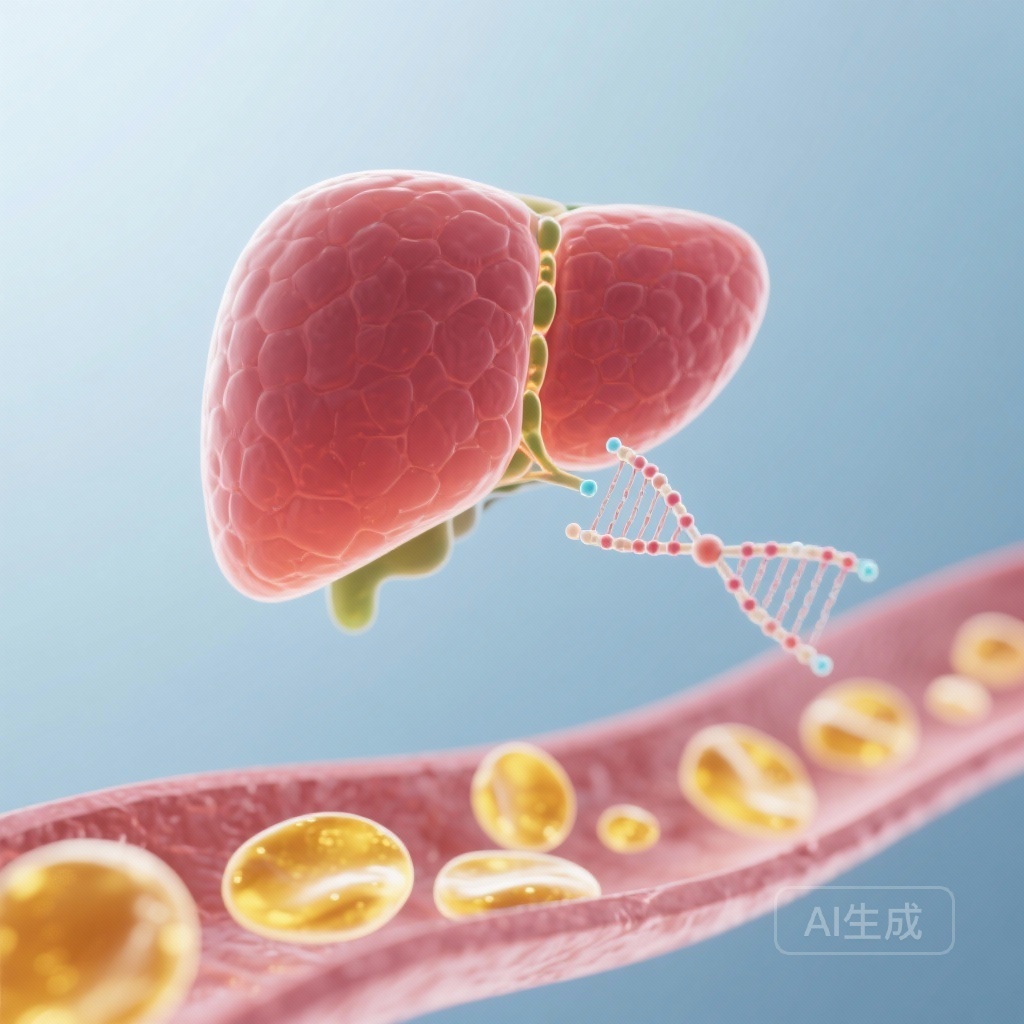
Angiopoietin-like protein 3 (ANGPTL3) has emerged as a key regulator of lipoprotein metabolism. Secreted primarily by the liver, ANGPTL3 inhibits both lipoprotein lipase (LPL) and endothelial lipase (EL). Genetic studies have shown that individuals with loss-of-function mutations in the ANGPTL3 gene have significantly lower levels of LDL-C, triglycerides, and high-density lipoprotein cholesterol (HDL-C), a condition known as familial combined hypolipidemia. Crucially, this lipid-lowering effect is preserved even in the absence of functional LDL receptors. Zodasiran is a liver-targeted RNA interference (RNAi) therapeutic designed to silence the expression of ANGPTL3, thereby mimicking the protective genetic phenotype of ANGPTL3 deficiency.
The GATEWAY Trial: Study Design and Methodology
The GATEWAY trial was an open-label, randomized, phase 2 study conducted across seven clinical sites in Australia, Canada, South Africa, and the USA. The study enrolled 18 patients aged 16 years or older with documented HoFH. At baseline, these patients were already receiving stable lipid-lowering therapy and following a low-fat diet. Despite these interventions, the mean baseline LDL-C concentration was 9.8 mmol/L (SD 5.7). Participants were randomized (1:1) to receive subcutaneous injections of either 200 mg or 300 mg of zodasiran on day 1 and month 3.
The primary endpoint was the percentage change from baseline to month 6 in fasting LDL-C. After the initial 9-month follow-up, patients could enter an open-label extension (OLE) phase, receiving 200 mg of zodasiran every three months for an additional 24 months. Safety was a secondary but paramount objective, assessed in all patients who received at least one dose of the study drug.
Primary Findings: Robust and Dose-Responsive LDL-C Reduction
The results of the GATEWAY trial demonstrated that zodasiran achieved significant reductions in LDL-C across both dosing groups. At month 6, patients in the 200 mg group showed a mean reduction of 35.7% (95% CI -57.6 to -13.7), while those in the 300 mg group achieved a 39.9% reduction (95% CI -53.9 to -26.0). These findings were consistent with interim aggregate analyses that suggested a reduction of more than 40% in both cohorts.
Interestingly, the efficacy of zodasiran appeared even more pronounced in a subset of patients whose background therapy included a PCSK9 inhibitor. In this subgroup, the mean reduction in LDL-C was 55.8% at month 6. This suggests a potential synergistic effect between ANGPTL3 inhibition and PCSK9 inhibition, perhaps through complementary mechanisms that optimize the clearance of remnant lipoproteins and other atherogenic particles.
Long-Term Efficacy and the Open-Label Extension
One of the most encouraging aspects of the GATEWAY trial was the durability of the response. All 18 patients entered the open-label extension phase. Despite the study being stopped early for business reasons, the data collected over an additional 12 months showed a continued effect, with a mean LDL-C reduction of 40.7% for the pooled doses. In the PCSK9 inhibitor subgroup, the reduction remained stable at 51.9% at month 12 of the OLE. This sustained efficacy with quarterly dosing highlights the potential of RNAi as a long-acting therapeutic modality, which could significantly improve treatment adherence compared to more frequent dosing schedules.
Safety and Tolerability Profile
Zodasiran demonstrated a favorable safety profile throughout both the randomized treatment period and the open-label extension. There were no drug-related severe adverse events, no deaths, and no discontinuations due to adverse events. In the randomized period, treatment-emergent adverse events (TEAEs) occurred in 67% of patients in both groups, with nasopharyngitis and dizziness being the most common. During the OLE, the most frequent AEs were COVID-19 and nasopharyngitis, occurring in 28% of the cohort. Importantly, no significant signals regarding liver enzyme elevations or other metabolic disturbances were noted, which is a key consideration for liver-targeted RNAi therapies.
Clinical Interpretation and Mechanistic Insights
The GATEWAY trial confirms that zodasiran effectively bypasses the requirement for functional LDL receptors by targeting ANGPTL3. By inhibiting ANGPTL3, zodasiran likely increases the activity of LPL and EL, leading to enhanced clearance of VLDL remnants and IDL before they can be converted into LDL. Additionally, the reduction in EL inhibition may lead to changes in the composition of HDL and other lipoproteins. The data suggest that zodasiran provides a potent, dose-responsive, and durable reduction in LDL-C that is additive to current standard-of-care therapies.
When compared to other ANGPTL3-targeted therapies, such as the monoclonal antibody evinacumab, zodasiran offers the logistical advantage of less frequent subcutaneous dosing (quarterly versus monthly). This could be a decisive factor in long-term management strategies for HoFH patients who are often burdened by complex polypharmacy and frequent clinical visits.
Conclusion and Future Directions
The GATEWAY trial provides strong evidence that quarterly dosed zodasiran is a safe and effective treatment for reducing LDL-C in patients with HoFH. The study successfully met its primary endpoint and demonstrated sustained efficacy over 18 months of total follow-up. While the trial was limited by a small sample size—a common challenge in orphan disease research—and was terminated early for non-clinical reasons, the results are sufficiently robust to warrant further investigation in larger, phase 3 clinical trials.
As the field of lipidology moves toward more personalized and potent interventions, zodasiran stands out as a promising candidate to fill the therapeutic gap for patients with the most severe forms of hypercholesterolaemia. Future research should also explore the cardiovascular outcomes associated with long-term ANGPTL3 inhibition and its role in other populations with refractory dyslipidemia.
Funding and ClinicalTrials.gov
This study was funded by Arrowhead Pharmaceuticals. ClinicalTrials.gov Identifier: NCT05217667.
References
Raal FJ, Bergeron J, Gaudet D, Rosenson RS, Sullivan DR, Turner T, Hegele RA, Ballantyne CM, Knowles JW, Leeper NJ, Goldberg IJ, Zhou R, Muhsin M, Hellawell J, Hamilton J, Watts GF. Zodasiran, an RNAi therapeutic targeting ANGPTL3, for treating patients with homozygous familial hypercholesterolaemia (GATEWAY): an open-label, randomised, phase 2 trial. Lancet Diabetes Endocrinol. 2025 Dec 18:S2213-8587(25)00290-6. doi: 10.1016/S2213-8587(25)00290-6. Epub ahead of print. PMID: 41422812.