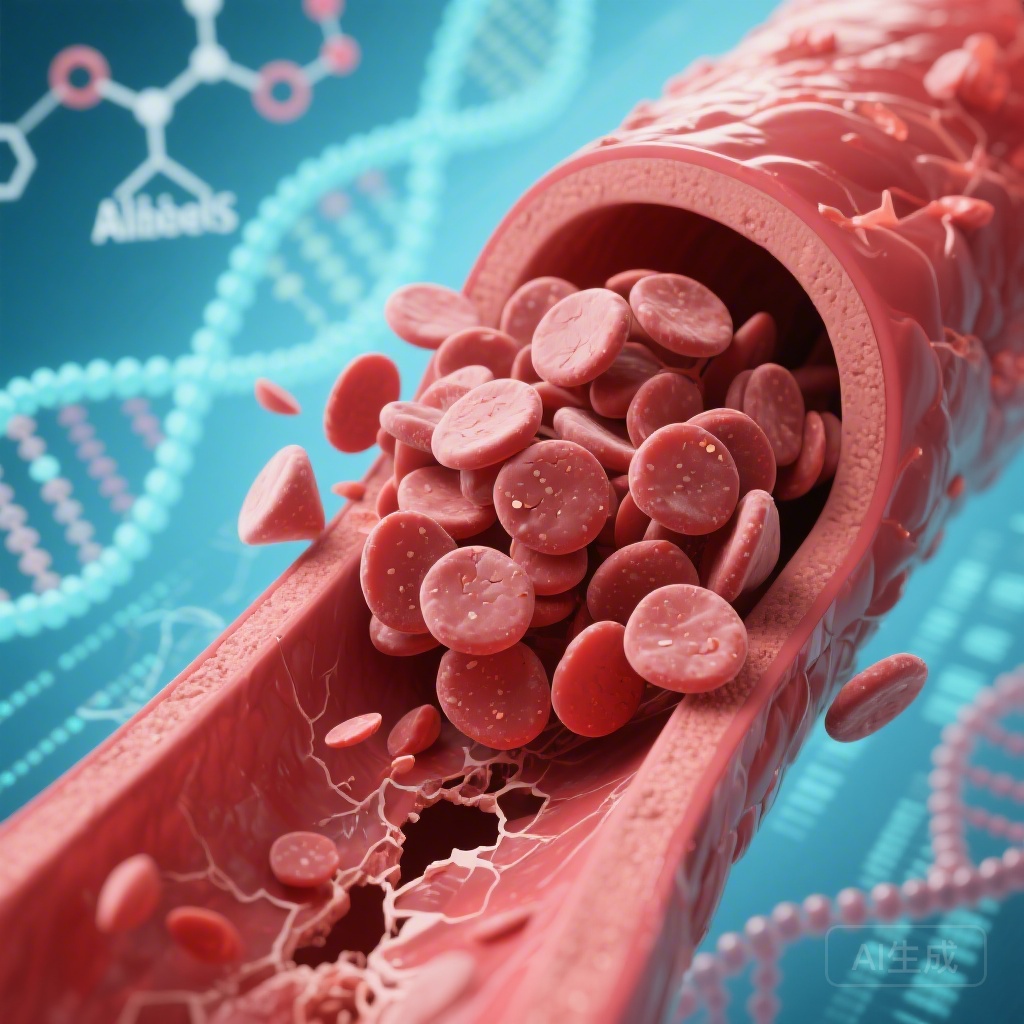
Introduction: The Genetic Landscape of Cardiovascular Risk in East Asia
Acute myocardial infarction (AMI) remains a leading cause of global mortality, with arterial thrombosis—the formation of a blood clot within a coronary artery—serving as the primary precipitating event. While traditional risk factors such as hypertension, diabetes, and hyperlipidemia are well-documented, genetic predispositions play a critical role in individual susceptibility to thrombotic events. In East Asian populations, a specific polymorphism in the aldehyde dehydrogenase 2 (ALDH2) gene, known as rs671, is remarkably prevalent, affecting approximately 30% to 50% of individuals. This variant, often associated with the “Asian Flush” response to alcohol, results from a glutamate-to-lysine substitution at position 506 (E506K), which significantly impairs the enzyme’s ability to metabolize toxic aldehydes. While ALDH2 rs671 has been recognized as a risk factor for various cardiovascular diseases, its direct impact on platelet function and the underlying mechanisms of enhanced thrombosis have, until recently, remained elusive.
Highlights of the Research
Research published in Circulation (2026) has provided groundbreaking evidence linking the ALDH2 rs671 variant to increased platelet reactivity. The study highlights that the mutation exacerbates thrombus formation through several convergent pathways: aldehyde accumulation, increased production of reactive oxygen species (ROS), and dysregulated mitophagy. Key findings include:
1. Platelets from carriers of the ALDH2 rs671 variant exhibit significantly higher levels of agonist-induced aggregation and activation markers.
2. The loss of ALDH2 function leads to elevated mitochondrial reactive oxygen species and reduced nitric oxide (NO) bioavailability.
3. ACAD10-mediated mitophagy is a critical driver of platelet hyperactivity in ALDH2-deficient states.
4. ALDH2 activation via the small molecule Alda-1 can effectively mitigate thrombogenesis in experimental models.
Study Design and Methodology
To elucidate the role of ALDH2 in platelet biology, a multidisciplinary research team utilized a combination of transgenic animal models and human clinical data. The experimental framework included:
Murine Models
Researchers employed platelet-specific Aldh2 knockout (Aldh2-/-) mice and ALDH2E506K knock-in mice, the latter specifically designed to mimic the human rs671 mutation. Arterial thrombosis was assessed using a ferric chloride (FeCl3)-induced injury model in the carotid artery. Furthermore, a murine model of myocardial infarction was used to evaluate microthrombosis and the subsequent expansion of the infarct area.
Human Platelet Analysis
Platelets were isolated from healthy human donors categorized by their ALDH2 rs671 genotype (GG, GA, and AA). These samples were subjected to various functional assays, including light transmission aggregometry, flow cytometric analysis of P-selectin expression, and integrin αIIbβ3 activation.
Clinical Cohort
The study also enrolled 118 patients diagnosed with ST-segment-elevation myocardial infarction (STEMI). Patients were stratified by genotype to correlate the presence of the rs671 variant with clinical markers of platelet activation and thrombus burden in a real-world setting.
Mechanistic Insights: From Genetic Mutation to Platelet Hyperactivity
The study provides a detailed molecular map of how ALDH2 deficiency translates into a pro-thrombotic state. Under normal conditions, ALDH2 serves as a critical detoxifying enzyme, clearing reactive aldehydes like 4-hydroxynonenal (4-HNE) produced during oxidative stress. In the presence of the rs671 variant, these aldehydes accumulate, leading to several cellular dysfunctions.
Oxidative Stress and Nitric Oxide Depletion
ALDH2-deficient platelets were found to generate significantly higher levels of ROS. This oxidative environment leads to the sequestration and depletion of nitric oxide (NO), a potent endogenous inhibitor of platelet activation. The resulting imbalance shifts the platelet toward a hyper-responsive state, lowering the threshold for activation by physiological agonists like thrombin or collagen.
The Role of ACAD10 and Mitophagy
A novel finding of this research is the involvement of ACAD10 (Acyl-CoA Dehydrogenase Family Member 10). The study demonstrated that ALDH2 deficiency triggers increased mitophagy—the selective degradation of mitochondria—via an ACAD10-dependent pathway. This heightened mitochondrial turnover appears to maintain a pool of hyperactive platelets, further contributing to the enhanced thrombotic potential observed in rs671 carriers.
Key Findings: Impact on Arterial Thrombosis and Myocardial Infarction
The functional consequences of ALDH2 deficiency were stark across both animal and human studies. Platelets lacking functional ALDH2 showed enhanced ATP release, increased spreading on fibrinogen-coated surfaces, and accelerated clot retraction.
Exacerbation of Thrombus Formation
In the FeCl3-induced thrombosis model, Aldh2-/- and ALDH2E506K mice reached total vessel occlusion significantly faster than wild-type controls. This was accompanied by a marked increase in the size and stability of the formed thrombi. Crucially, treatment with Alda-1, a pharmacological activator of ALDH2, was able to reverse these effects in the knock-in mice, suggesting a potential therapeutic avenue.
Microthrombosis and Infarct Expansion
In the myocardial infarction model, platelet-specific Aldh2 deficiency was associated with increased microthrombosis within the coronary microvasculature. This microvascular obstruction led to a significant expansion of the myocardial infarct size compared to wild-type mice, highlighting the role of platelet ALDH2 in the secondary damage that occurs post-MI.
Clinical Correlation in STEMI Patients
The clinical portion of the study confirmed these experimental findings. STEMI patients with the rs671 variant (GA or AA genotypes) exhibited higher plasma levels of platelet activation markers and larger thrombus burdens compared to those with the wild-type GG genotype. This suggests that the rs671 variant is not just a genetic curiosity but a clinically significant driver of poor outcomes in MI patients.
Expert Commentary: Towards Precision Antiplatelet Therapy
The identification of the ALDH2 rs671 variant as a driver of platelet hyperactivity has profound implications for the management of cardiovascular disease in East Asia. Current antiplatelet protocols often follow a “one-size-fits-all” approach, typically involving aspirin and a P2Y12 inhibitor (e.g., clopidogrel, ticagrelor). However, the ALDH2 rs671 variant may represent a population-specific risk factor that requires a more aggressive or tailored antiplatelet strategy.
Experts suggest that for patients identified as carriers of the rs671 mutation, standard doses of antiplatelet agents might be insufficient to overcome the genetically driven platelet hyperreactivity. There is also the intriguing possibility of using ALDH2 activators like Alda-1 as an adjunct therapy to reduce thrombotic risk without the bleeding complications often associated with high-dose traditional antiplatelets. However, clinical trials are necessary to determine if genotype-guided therapy can improve long-term outcomes in this specific demographic.
Conclusion
The study by Sun et al. establishes the ALDH2 rs671 variant as a major contributor to arterial thrombosis and myocardial injury. By linking aldehyde metabolism to ROS production and ACAD10-mediated mitophagy, the researchers have uncovered a previously unknown regulatory axis in platelet biology. Given that nearly half of the East Asian population carries this variant, these findings represent a significant step toward precision medicine in cardiology. Future research should focus on whether aggressive antiplatelet regimens or novel ALDH2-targeting therapies can mitigate the excess cardiovascular risk associated with this common genetic polymorphism.
References
1. Sun S, Zhang X, Yue H, et al. The Aldehyde Dehydrogenase 2 rs671 Variant Enhances Platelet Activation and Arterial Thrombosis. Circulation. 2026 Feb 6. doi: 10.1161/CIRCULATIONAHA.125.074318.
2. Chen CH, Ferreira JC, Gross ER, Mochly-Rosen D. Targeting Aldehyde Dehydrogenase 2: New Therapeutic Opportunities. Physiological Reviews. 2014;94(1):1-34.
3. Gross ER, et al. A personalized medicine approach for Asian Americans with the ALDH2*2 variant. JCI Insight. 2019;4(10).