The Role of Albumin in Septic Shock: A Clinical Impasse?
Septic shock remains one of the most significant challenges in modern intensive care medicine, characterized by profound circulatory, cellular, and metabolic abnormalities. Fluid resuscitation is the cornerstone of initial management, yet the choice of fluid—specifically the role of colloids like albumin—has been a subject of intense debate for decades. While crystalloids are the first-line recommendation in international guidelines, albumin is often considered when patients require large volumes of fluid. The Albumin Replacement Therapy in Septic Shock (ARISS) trial sought to provide definitive evidence on whether targeted albumin supplementation could improve long-term survival in this high-risk population.
The Biological Rationale for Albumin Supplementation
Albumin is the primary protein responsible for maintaining plasma oncotic pressure. In septic shock, systemic inflammation leads to increased capillary permeability, often referred to as ‘leaky capillary syndrome.’ This results in the loss of albumin into the interstitial space, leading to hypoalbuminemia, which is associated with increased mortality and organ dysfunction. Beyond its osmotic properties, albumin acts as a carrier for various drugs and hormones, possesses antioxidant properties, and serves as a buffer for acid-base balance. Therefore, the hypothesis that replacing albumin to reach physiological levels could mitigate organ failure and improve survival is biologically plausible and has been supported by post-hoc analyses of previous studies like the ALBIOS trial.
Study Design: The ARISS Randomized Clinical Trial
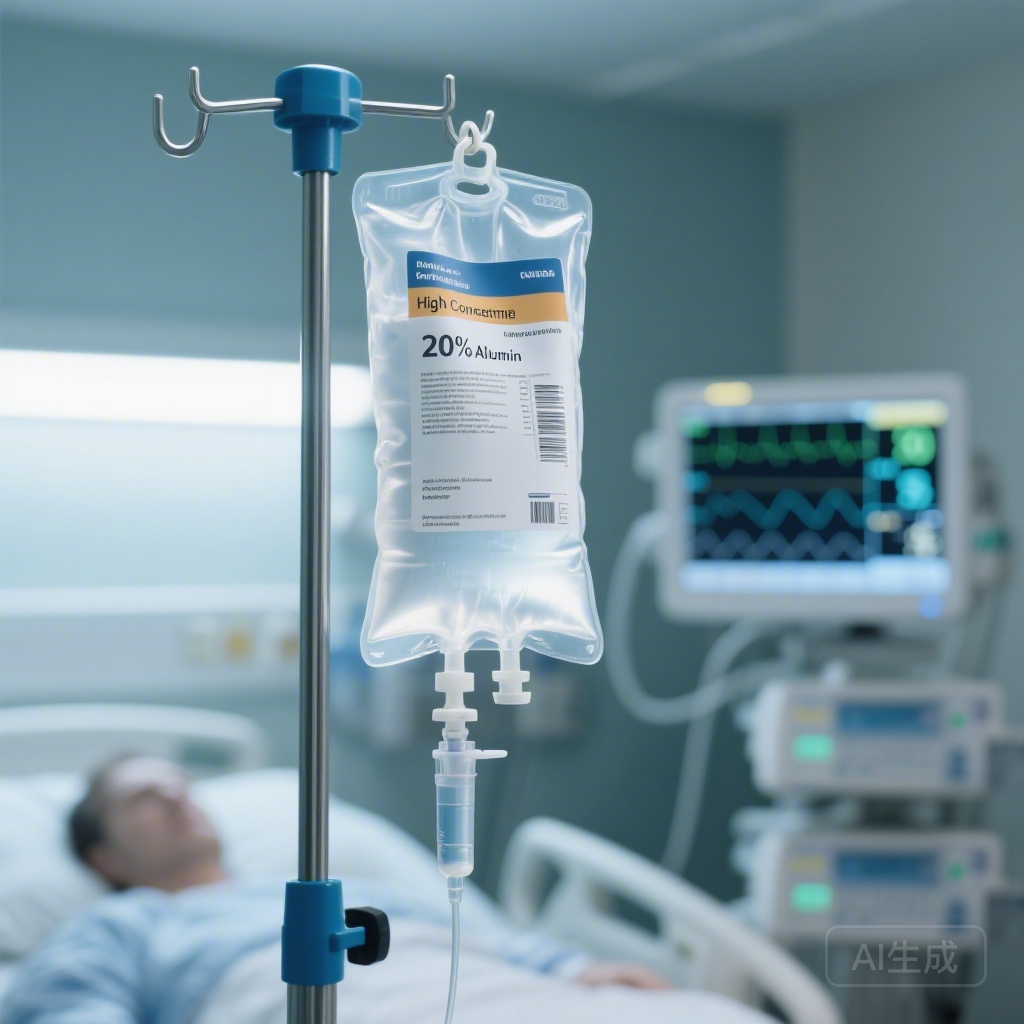
The ARISS trial was a multicenter, open-label randomized clinical trial conducted across 23 intensive care units (ICUs) in Germany between 2019 and 2022. The study enrolled 440 patients within 24 hours of the onset of septic shock. Patients were randomized into two groups: the protocol group, which received 20% albumin to maintain serum albumin levels of at least 3.0 g/dL for up to 28 days, and the control group, which received standard fluid administration with crystalloids. The primary endpoint was 90-day mortality, a robust measure of long-term clinical outcome. Secondary endpoints were comprehensive, including 28-day and 60-day mortality, organ dysfunction scores, total fluid balance, and the duration of ICU and hospital stays.
Key Findings: Mortality and Clinical Outcomes
The trial results, published in JAMA Network Open, revealed that while albumin administration was safe, it did not lead to a statistically significant improvement in survival. Of the 440 randomized patients (median age 69 years; 65.9% male), 222 were in the albumin group and 218 in the control group. The primary outcome of 90-day mortality was 43.3% (91 of 210) in the albumin group compared to 45.9% (96 of 209) in the control group. The relative risk was calculated at 0.94 (95% CI, 0.76-1.17; P = .71), indicating a slight but non-significant trend toward benefit. These findings suggest that for the broad population of patients in septic shock, the routine supplementation of albumin to a target of 3.0 g/dL does not offer a survival advantage over standard crystalloid therapy.
Secondary Endpoints and Safety Profile
Secondary outcomes mirrored the primary results. There were no significant differences between the albumin and control groups regarding 28-day mortality, 60-day mortality, or in-hospital mortality. Furthermore, the duration of mechanical ventilation, the need for renal replacement therapy, and the overall length of stay in the ICU and hospital were comparable between the two cohorts. Importantly, the study confirmed the safety of 20% albumin. There was no increase in adverse events in the albumin group, addressing previous concerns regarding potential complications such as fluid overload or renal impairment associated with colloid use. The total fluid balance while in the ICU also did not differ significantly between groups, suggesting that albumin did not drastically alter the net fluid requirements in this specific protocol.
Critical Interpretation: The Challenges of Early Termination
A critical factor in interpreting the ARISS trial is its premature termination. The study was stopped early due to low enrollment rates, which were exacerbated by the logistical challenges of the COVID-19 pandemic. Consequently, the final sample size of 440 patients was lower than the original power calculation required to detect a definitive mortality difference. This leaves the results in a state of statistical uncertainty. While the point estimate (RR 0.94) leans toward a potential benefit, the wide confidence interval means that the trial cannot rule out either a meaningful benefit or a lack thereof. As the authors noted, the results remain inconclusive, and the ‘absence of evidence’ should not necessarily be interpreted as ‘evidence of absence’ for albumin’s utility.
Expert Commentary: Where Do We Stand?
The ARISS trial adds to a complex body of literature including the SAFE and ALBIOS trials. While the SAFE trial suggested albumin was safe but not superior to saline in a general ICU population, a subgroup analysis in ALBIOS suggested that patients in septic shock might benefit more than those with sepsis alone. ARISS specifically targeted this shock subgroup but failed to reach statistical significance. Current Surviving Sepsis Campaign guidelines suggest using albumin in patients who require substantial amounts of crystalloids, a recommendation that remains largely unchanged by these new data. Experts suggest that the next frontier of research should focus on ‘precision fluid therapy’—identifying specific phenotypes of septic shock patients, perhaps those with the most severe capillary leak or specific inflammatory profiles, who might derive the most benefit from albumin.
Conclusion: Practical Implications for Intensive Care
The ARISS trial reinforces the safety of albumin replacement in septic shock but stops short of endorsing it as a standard of care for mortality reduction. For clinicians, the takeaway is that while targeting an albumin level of 3.0 g/dL is a safe strategy, it should not be viewed as a ‘magic bullet’ for survival. Crystalloids remain the foundational fluid for resuscitation. However, in cases where fluid requirements are high or oncotic pressure is severely compromised, albumin remains a viable and safe adjunct. Further large-scale, fully powered trials are necessary to definitively determine if there is a specific threshold or patient subgroup where albumin replacement translates into saved lives.
Funding and ClinicalTrials.gov
The ARISS trial was supported by the German Research Foundation (DFG) and the SepNet Critical Care Trials Group. The trial is registered at ClinicalTrials.gov with the identifier NCT03869385.
References
1. Sakr Y, Nierhaus A, Schumacher U, et al. Albumin Replacement Therapy in Septic Shock: A Randomized Clinical Trial. JAMA Netw Open. 2026;9(2):e2559297. doi:10.1001/jamanetworkopen.2025.59297.
2. Caironi P, Tognoni G, Masson S, et al. Albumin replacement in patients with severe sepsis or septic shock. N Engl J Med. 2014;370(15):1412-1421.
3. Finfer S, Bellomo R, Boyce N, et al. A comparison of albumin and saline for fluid resuscitation in the intensive care unit. N Engl J Med. 2004;350(22):2247-2256.