Introduction: The Shift Toward Decentralized Urological Care
The management of Benign Prostatic Hyperplasia (BPH) has traditionally relied on objective assessments performed within the confines of a clinical setting. Among these, uroflowmetry—the measurement of the rate of urine flow over time—remains a cornerstone for diagnosing bladder outlet obstruction (BOO) and evaluating the success of surgical interventions like Transurethral Resection of the Prostate (TURP). However, conventional in-office uroflowmetry is often fraught with limitations, including the ‘white coat’ effect, where patients feel pressured to void on command, and the ‘snapshot’ nature of a single measurement that may not reflect a patient’s true diurnal voiding patterns.
The Unmet Need in Perioperative Surveillance
For patients undergoing TURP, accurate longitudinal monitoring is essential to detect early complications such as acute urinary retention or to confirm the resolution of obstructive symptoms. The burden of frequent clinic visits for uroflowmetry can be prohibitive for elderly patients or those living in remote areas. This has spurred interest in telemedicine and digital health solutions. While various home-monitoring tools have been proposed, few have undergone rigorous, prospective validation in the perioperative period until now.
Study Design: Validating the proudP Acoustic System
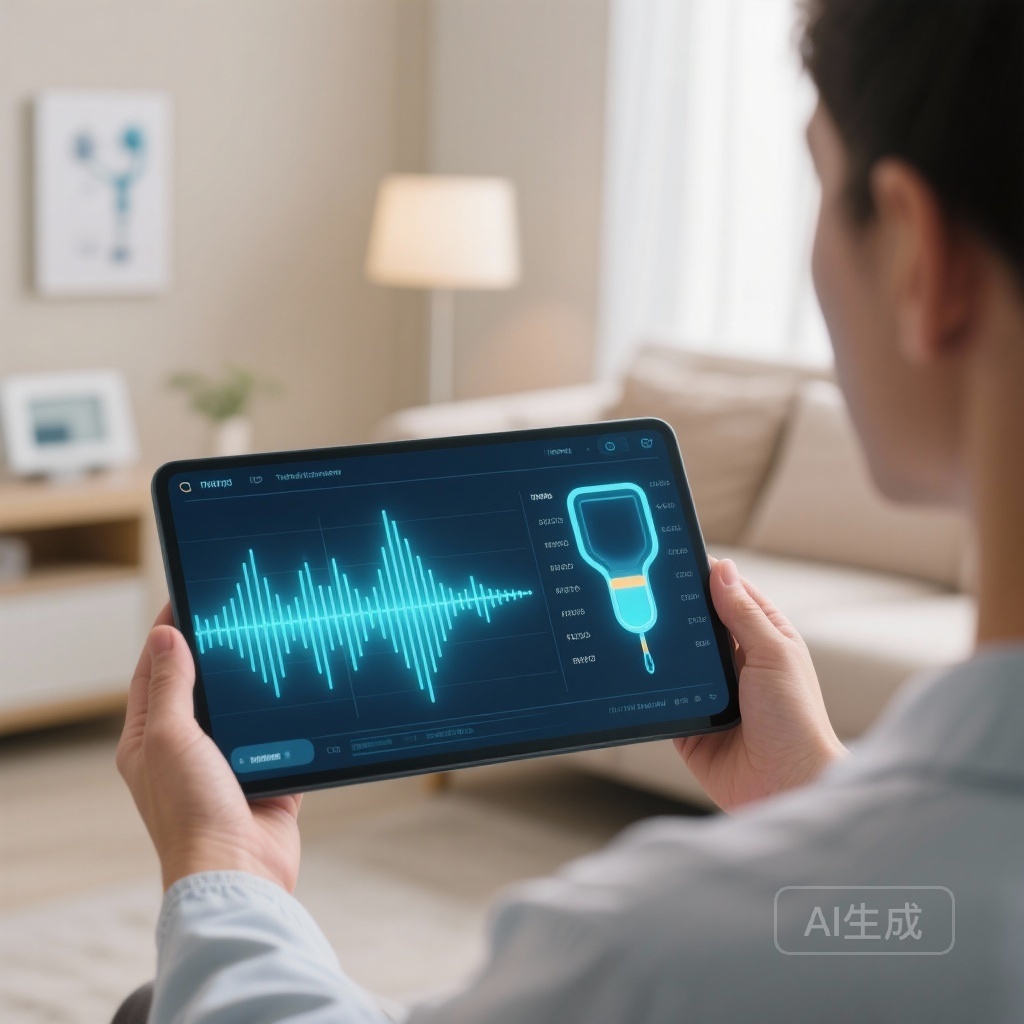
This prospective, multicenter, observational pilot study was conducted across three tertiary medical centers to evaluate the efficacy of the proudP mobile application. The app utilizes acoustic sensing technology to analyze the sound of urine hitting water, converting these acoustic signals into flow rate data using proprietary algorithms.
Methodology and Patient Population
The study enrolled 46 treatment-naive patients diagnosed with BPH who were scheduled for TURP. The protocol was structured to capture data at multiple critical junctures: pre-treatment, pre-operative, and at 2, 6, and 12 weeks post-operation.
Integrated Monitoring Protocol
Participants were instructed to use the proudP app for at least four days during each evaluation period. Concurrent in-office uroflowmetry was performed during scheduled visits to serve as the gold standard for comparison. The primary endpoints included the maximum flow rate (Qmax) and total voided volume. Additionally, the study tracked subjective improvements using the International Prostate Symptom Score (IPSS) and a Quality of Life (QoL) scale.
Key Findings: Accuracy and Clinical Correlation
The results of the study demonstrate a strong statistical alignment between acoustic-based mobile measurements and conventional gravimetric uroflowmetry.
Quantitative Qmax Improvements
Following TURP, conventional uroflowmetry recorded a mean Qmax improvement of 7.2 mL/s. The proudP app successfully reflected this trend, recording a mean improvement of 5.1 mL/s. While a slight conservative bias was noted in the app’s absolute values compared to the office setting, the correlation between the two methods remained statistically significant (P < .05). This suggests that the app is highly effective at tracking the *relative* change in a patient’s condition, which is often more clinically relevant than a single absolute value.
Symptom Relief and Patient-Reported Outcomes
The digital monitoring also mirrored the significant symptomatic relief experienced by patients post-TURP. The study reported marked decreases across all IPSS domains: total IPSS decreased by 4.7 points, obstructive symptoms by 5.7 points, and irritative symptoms by 2.6 points. Most notably, the Quality of Life score improved by 5.9 points (all P < .05).
Table 1. Perioperative International Prostate Symptom Score (IPSS) change.
| Baseline, mean (SD) | 2 weeks, mean (SD) | 6 weeks, mean (SD) | 12 weeks, mean (SD) | P value | |
| IPSS total | 18.0 (8.0) | 12.1 (8.1) | 10.3 (7.1) | 7.8 (6.6) | <.001 |
| IPSS obstructive | 10.7 (5.1) | 5.2 (5.4) | 3.5 (4.1) | 2.7 (4.0) | <.001 |
| IPSS irritative | 7.3 (3.1) | 6.9 (3.6) | 6.8 (3.7) | 5.2 (3.4) | .009 |
| IPSS quality of life | 4.2 (0.8) | 2.3 (1.9) | 2.3 (1.7) | 1.8 (1.5) | <.001 |
Table 2. Perioperative change in maximum flow rate (Qmax) and voided volume as measured by conventional in-office uroflowmetry and app-based uroflowmetry.
| Parameter | In-office uroflowmetry | App-based uroflowmetry | |||||||
| Baseline | 2 weeks | 6 weeks | 12 weeks | Baseline | 2 weeks | 6 weeks | 12 weeks | ||
| Qmax (mL/s), mean (SD) | 13.7 (6.0) | 21.4 (10.6) | 22.0 (10.3) | 20.9 (10.5) | 14.1 (5.0) | 18.3 (4.9) | 20.0 (6.0) | 19.2 (6.4) | |
| Voided volume (mL), mean (SD) | 221 (109) | 215 (135) | 203 (145) | 189 (102) | 261 (94) | 242 (79) | 215 (79) | 237 (90) | |
| Posttransurethral resection of prostate change in Qmax (mL/s) | Reference | 7.7 | 8.5 | 7.2 | Reference | 4.2 | 5.9 | 5.1 | |
High Patient Satisfaction
One of the most compelling findings was the high level of patient engagement and satisfaction. At the end of the 12-week study, participants reported a mean satisfaction score of 9.5 out of 10. This indicates that the technology is not only accurate but also user-friendly and well-accepted by an older demographic typically associated with BPH.
Table 3. Patient satisfaction survey.
| Survey item | Scores of all patients, mean (SD) | Scores of those aged ≥70 years, mean (SD) |
| Can better assess my own clinical status | 9.4 (1.2) | 9.1 (1.2) |
| Can improve my physician’s assessment of my status | 9.4 (1.7) | 9.7 (0.5) |
| Was convenient and easy to use | 9.4 (1.1) | 9.7 (0.7) |
| Overall satisfaction | 9.4 (0.9) | 9.3 (0.7) |
Expert Commentary: Digital Biomarkers in Urology
The validation of acoustic uroflowmetry represents a significant step forward in urological digital therapeutics. The ability to collect ‘real-world’ voiding data over several days provides a more comprehensive picture of a patient’s functional status than a single office visit.
Addressing the Variability of Voiding
Urologists have long recognized that voiding dynamics fluctuate based on hydration, time of day, and psychological comfort. By enabling patients to record multiple voids in their natural environment, proudP offers a ‘mean flow profile’ that may eventually prove superior to the highly variable in-office tests. Furthermore, the ability to monitor patients at home in the weeks following TURP provides a safety net for the early detection of post-operative issues, potentially reducing emergency department visits for suspected retention.
Limitations and Future Directions
While the results are promising, it is important to note that this was a pilot study with a relatively small sample size (n=46). The slight discrepancy between the office Qmax and the app Qmax (7.2 vs 5.1 mL/s) warrants further investigation into environmental acoustics and the impact of different toilet types on sound-based algorithms. Future large-scale trials should focus on whether this technology can reliably replace, rather than just supplement, in-office measurements.
Conclusion: A New Standard for Perioperative Care
The study concludes that the proudP app-based uroflowmetry is an accurate, reliable, and highly acceptable tool for the perioperative surveillance of BPH patients. By bridging the gap between clinical visits and the patient’s home, this technology empowers clinicians with continuous data while significantly reducing the logistical burden on patients. As urology continues to embrace the digital revolution, tools like acoustic uroflowmetry will likely become standard components of personalized, evidence-based surgical follow-up.
References
1. Song SH, Chung Y, Ryu H, Lee JW, Lee S. Efficacy and Reliability of Mobile Uroflowmetry in Patients With Benign Prostatic Hyperplasia Undergoing Transurethral Resection: Prospective Multicenter Observational Pilot Validation Study. J Med Internet Res. 2025;27:e75313.
2. Gratzke C, et al. EAU Guidelines on the Management of Non-neurogenic Male Lower Urinary Tract Symptoms (LUTS), incl. Benign Prostatic Obstruction (BPO). European Association of Urology 2023.
3. Oelke M, et al. Standardisation and quality control of uroflowmetry in a multicentre study. World J Urol. 2014;32(3):769-774.