Highlights
- A simplified preparation involving clear liquids and 1.5 L of water is non-inferior to standard 2 L PEG-based regimens for small bowel capsule endoscopy (SBCE) in Crohn’s disease.
- Intestinal cleanliness, diagnostic yield, and capsule completion rates were comparable between the simplified and PEG-based groups.
- Patient acceptability and procedural comfort were significantly higher in the simplified preparation group.
- The KODA score demonstrated high diagnostic accuracy (80%) for discriminating intestinal cleanliness levels.
Background: The Challenge of Bowel Preparation in Crohn’s Disease
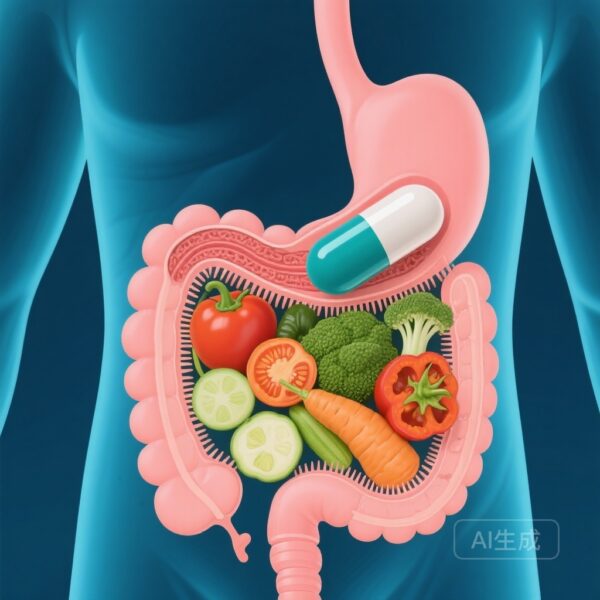
Small bowel capsule endoscopy (SBCE) has become an indispensable tool in the management of Crohn’s disease (CD). Unlike traditional ileocolonoscopy, which may fail to reach the proximal or mid-small bowel, SBCE provides a non-invasive, high-resolution view of the entire small intestinal mucosa. This is critical for assessing disease activity, monitoring mucosal healing, and identifying complications such as strictures or occult bleeding. However, the quality of the visual data obtained by the capsule is heavily dependent on the quality of the bowel preparation.
For years, the gold standard for bowel cleansing has been polyethylene glycol (PEG)-based solutions. While effective, these regimens are often burdensome for patients, particularly those with CD who may already suffer from nausea, abdominal pain, and frequent diarrhea. Poor palatability and the large volume of fluid required can lead to low patient compliance, which in turn compromises the diagnostic accuracy of the procedure. There has been a long-standing clinical debate regarding whether a simplified approach—relying on dietary restriction and water ingestion—could provide sufficient mucosal visualization without the physiological and psychological toll of osmotic laxatives.
Study Design: A Multicenter Superiority Trial
To address this clinical uncertainty, Rouveyre and colleagues conducted a randomized, controlled, single-blind, superiority, multicentre trial. The study, titled Simplified Bowel Preparation for Small Bowel Capsule Endoscopy in Crohn’s Disease, aimed to determine if a simplified preparation could match or exceed the performance of standard PEG-based protocols.
Patient Population and Randomization
The trial included patients with established Crohn’s disease who were scheduled for SBCE as part of their routine care. Participants were randomized in a 1:1 ratio into two distinct groups:
- Simplified Preparation Group: This group followed a clear liquid diet and was instructed to ingest 500 mL of water prior to capsule ingestion and 1 L of water post-ingestion.
- PEG-Based Preparation Group: This group followed a 24-hour residue-free diet and ingested 2 L of a PEG-based solution.
Primary and Secondary Endpoints
The researchers utilized the KODA score (a validated quantitative tool) and qualitative evaluations to assess intestinal cleanliness. Secondary endpoints included patient acceptability (measured via standardized surveys), diagnostic yield (the ability to detect CD-related lesions), capsule completion rate (the percentage of capsules reaching the cecum), and small bowel transit time (SBTT).
Key Findings: Cleanliness, Diagnostic Yield, and Patient Preference
The results of the trial, involving 142 SBCE procedures, provide compelling evidence for the shift toward simplified preparation protocols.
Intestinal Cleanliness and Diagnostic Yield
Data analysis revealed no statistically significant difference in intestinal cleanliness between the two groups. Whether patients consumed 2 L of PEG or simply adhered to a clear liquid diet with water, the quality of the mucosal images remained high. Importantly, the diagnostic yield—the ability of the clinician to identify active Crohn’s lesions—was similar in both cohorts. This suggests that the simplified preparation does not compromise the clinical utility of the SBCE.
Patient Acceptability and Comfort
The most striking difference between the groups was in patient acceptability. Patients in the simplified preparation group reported significantly higher levels of satisfaction and lower levels of discomfort compared to those in the PEG group. Given that CD is a chronic condition requiring repeated monitoring, improving the patient experience is not merely a matter of comfort but a strategy to enhance long-term compliance with surveillance programs.
Capsule Performance and Transit Time
The study found no significant differences in the capsule completion rate or the small bowel transit time (SBTT). This indicates that the type of preparation does not adversely affect the motility required for the capsule to navigate the small intestine within its battery life.
The KODA Score: Quantifying Visual Quality
One of the methodological strengths of this study was the use of the KODA score to quantify cleanliness. The area under the receiver operating characteristic (ROC) curve for the KODA score was 0.87 (95% CI: 0.84-0.90), demonstrating its robustness as an evaluative tool. Using a threshold of 2.25, the score allowed clinicians to discriminate between images with ‘good’ and ‘fair or poor’ cleanliness with an accuracy of 80%, a sensitivity of 76%, and a specificity of 84%.
Expert Commentary and Clinical Implications
The findings of this trial challenge the traditional reliance on high-volume osmotic laxatives for SBCE in Crohn’s disease. From a physiological perspective, the small bowel does not require the same level of aggressive purgation as the colon, as it does not contain solid fecal matter in the same way. The “washing” effect of clear liquids and water appears sufficient to clear the luminal debris that might otherwise obscure the mucosa.
Mechanistic Insights
The efficacy of the simplified preparation may be attributed to the rapid transit of water through the small intestine, which helps to hydrate the mucosa and clear bubbles or bile without the electrolyte shifts often seen with PEG. For patients with CD, who may have altered motility or strictures, avoiding the rapid osmotic flux of PEG might also reduce the risk of transient abdominal cramping.
Study Limitations
While the study was single-blinded (the evaluating physicians were unaware of the preparation type), the patients could not be blinded to their own preparation. This could introduce some bias in the patient acceptability scores. Additionally, while the multicenter nature of the trial increases generalizability, further research in specific subpopulations—such as those with suspected small bowel obstruction or severe motility disorders—may still be warranted.
Conclusion: A New Standard for CD Monitoring?
The trial concludes that a simplified preparation consisting of a clear liquid diet and water is a viable, and perhaps preferable, alternative to PEG-based preparations for SBCE in patients with Crohn’s disease. By offering comparable diagnostic outcomes while significantly reducing the patient burden, this approach aligns with the principles of patient-centered care.
Clinicians should consider adopting this simplified protocol to improve the patient experience and potentially increase the uptake of necessary surveillance procedures in the Crohn’s disease population. As we move toward more personalized medicine, the ability to simplify diagnostic pathways without sacrificing accuracy is a significant step forward.
Funding and ClinicalTrials.gov
This trial was registered at ClinicalTrials.gov with the identifier NCT05117996. The study was conducted in accordance with the Consolidated Standards of Reporting Trials (CONSORT) guidelines to ensure transparency and scientific rigor.
References
- Rouveyre R, Coudol S, Collins M, et al. Clinical Trial: Simplified Bowel Preparation for Small Bowel Capsule Endoscopy in Crohn’s Disease. Aliment Pharmacol Ther. 2026;63(1):57-69. doi: 10.1111/apt.70417.
- Leighton JK, et al. ASGE guideline: the role of endoscopy in the management of patients with known or suspected small-bowel diseases. Gastrointest Endosc. 2017;85(1):22-43.
- Van Tuyl SA, et al. Low-volume polyethylene glycol with ascorbic acid versus high-volume polyethylene glycol for bowel preparation before capsule endoscopy. Endoscopy. 2014;46(11).