Highlights
1. In a post hoc analysis of the landmark SWITCH trial, decompressive craniectomy (DC) combined with best medical treatment (BMT) consistently reduced the risk of death or severe disability (mRS 5-6) across all deep intracerebral hemorrhage (ICH) locations compared to BMT alone.
2. The analysis categorized deep ICH into three distinct anatomical groups: basal ganglia (BG) alone, BG plus the posterior limb of the internal capsule (PLIC), and BG plus PLIC and the thalamus.
3. There was no statistically significant interaction between the anatomical location of the hemorrhage and the treatment effect of DC (P=0.95), suggesting that the surgical benefit is not confined to specific deep-seated structures.
4. These findings support the use of DC as a life-saving and disability-reducing intervention for patients with severe deep ICH, regardless of whether the thalamus or internal capsule is involved.
Background: The Challenge of Deep Intracerebral Hemorrhage
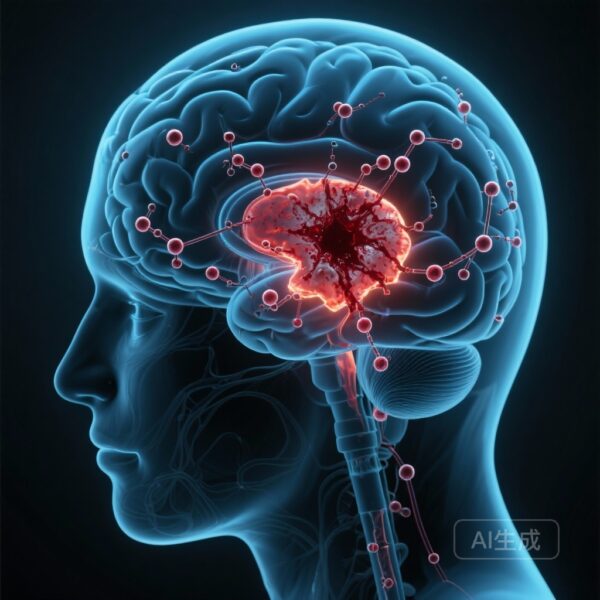
Spontaneous supratentorial intracerebral hemorrhage (ICH) remains one of the most devastating forms of stroke, characterized by high mortality rates and significant long-term morbidity. Deep ICH, typically involving the basal ganglia and surrounding structures, is often associated with hypertensive small vessel disease. The primary injury—the mechanical disruption of neural tissue by the hematoma—is frequently exacerbated by secondary injury mechanisms, including perihematomal edema, mass effect, and intracranial hypertension.
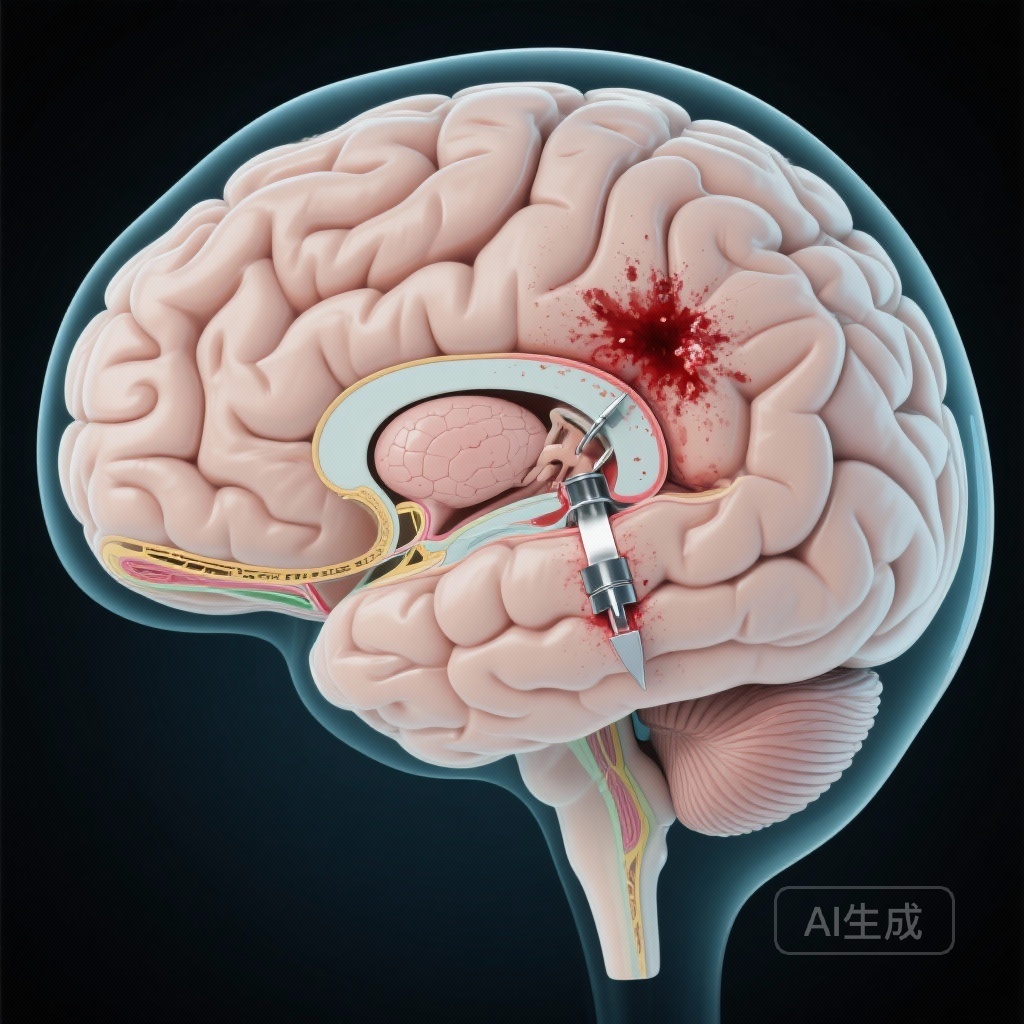
For decades, the role of surgical intervention in ICH has been a subject of intense debate. While the STICH and STICH II trials failed to show a clear benefit for early hematoma evacuation in most patients, the focus has recently shifted toward decompressive craniectomy (DC). Rather than removing the clot, DC aims to mitigate the secondary injury by providing space for the swelling brain, thereby lowering intracranial pressure (ICP) and improving cerebral perfusion pressure.
The Swiss Trial of Decompressive Craniectomy versus Best Medical Treatment of Spontaneous Supratentorial Intracerebral Hemorrhage (SWITCH) provided pivotal evidence, showing that DC reduced the risk of death or profound disability (modified Rankin Scale [mRS] score of 5-6) by an absolute 13%. However, a critical clinical question remained: Does the specific anatomical location of the deep ICH influence the efficacy of DC? For instance, does involvement of the thalamus or the internal capsule—structures vital for consciousness and motor function—negate the potential benefits of decompression? This post hoc analysis of the SWITCH trial was designed to address this uncertainty.
Study Design and Methodology
This study was a post hoc analysis of participants with severe deep ICH from the intention-to-treat (ITT) population of the SWITCH randomized controlled trial. The SWITCH trial enrolled patients with spontaneous supratentorial ICH, a hematoma volume between 30 and 100 mL, and a Glasgow Coma Scale (GCS) score between 8 and 13 (or a GCS of 14-15 with subsequent deterioration).
Patient Categorization
Researchers focused on 184 participants from the original ITT population of 197. The location of the ICH was meticulously categorized based on baseline imaging into three hierarchical groups:
1. Basal ganglia (BG) alone.
2. Basal ganglia and the posterior limb of the internal capsule (PLIC).
3. Basal ganglia, PLIC, and the thalamus.
Outcomes and Statistical Analysis
The primary outcome was the proportion of patients with an mRS score of 5 or 6 (death or severe disability) at 180 days. Secondary outcomes included mortality alone and the full distribution of the mRS score. The researchers utilized unadjusted and adjusted logistic regression models to examine the interaction between ICH location and the effect of DC. Adjustments were made for well-known prognostic factors, including age, GCS score at baseline, and ICH volume.
Key Findings: Consistency Across Anatomical Subgroups
The analysis included 184 patients with a median age of 61 years; 59 were women. Of these, 91 were randomized to DC plus BMT and 93 to BMT alone. The distribution of ICH location was as follows: BG alone (14%), BG+PLIC (51%), and BG+PLIC+thalamus (35%).
Primary Outcome: mRS 5–6
The core finding of the study was the lack of a treatment-by-location interaction (P=0.95). This indicates that the benefit of DC did not significantly vary based on which deep structures were involved. The adjusted marginal risk reduction for the primary outcome was observed across all groups:
1. BG alone: 15.6% absolute reduction in mRS 5-6 with DC (95% CI, -49.2% to 18.1%).
2. BG + PLIC: 11.4% absolute reduction (95% CI, -29.3% to 6.6%).
3. BG + PLIC + Thalamus: 9.0% absolute reduction (95% CI, -31.0% to 12.9%).
Secondary Outcomes and Mortality
The results for mortality and the shift analysis of the mRS were consistent with the primary findings. While deep ICH involving the thalamus generally carried a worse overall prognosis compared to ICH limited to the basal ganglia, the relative benefit provided by decompressive craniectomy remained stable. DC was associated with a lower probability of death across all anatomical subgroups when compared to medical management alone.
Expert Commentary and Clinical Implications
The results of this SWITCH trial analysis provide important reassurance to neurosurgeons and stroke neurologists. There has long been a clinical hesitation to offer aggressive surgical interventions to patients with thalamic or internal capsule involvement, under the assumption that the primary damage to these eloquent structures is so severe that secondary decompression would be futile.
Mechanistic Insights
Why does the location not seem to matter for the efficacy of DC? The biological plausibility lies in the nature of the intervention. Decompressive craniectomy is a non-targeted physiological intervention. It addresses global intracranial dynamics rather than local tissue destruction. By increasing the intracranial volume, DC reduces the global burden of intracranial hypertension and improves perfusion to the penumbra—the viable but at-risk tissue surrounding the hematoma. This study suggests that the preservation of this surrounding tissue and the prevention of brainstem herniation are the primary drivers of improved outcomes, regardless of whether the initial clot affected the thalamus or the internal capsule.
The Importance of Patient Selection
While the study shows that location should not be a strict exclusion criterion, it also highlights that the overall prognosis is still heavily influenced by the extent of the bleed. Patients with BG+PLIC+Thalamus involvement still had higher rates of disability than those with BG involvement alone, even with DC. However, the 9% to 15% absolute risk reduction in death or profound disability is clinically meaningful in the context of neurocritical care.
Study Limitations
As a post hoc analysis, the study is subject to certain limitations. The sample sizes within the subgroups, particularly the “BG alone” group, were relatively small, leading to wide confidence intervals. Additionally, the study did not account for the specific volume of the thalamic component of the bleed, but rather its presence or absence. Nonetheless, because the data comes from a high-quality randomized controlled trial, it represents the best available evidence on this specific question.
Conclusion
The SWITCH trial analysis demonstrates that the potential benefits of decompressive craniectomy in severe deep ICH are preserved regardless of the anatomical involvement of the basal ganglia, internal capsule, or thalamus. For clinicians, this means that the decision to proceed with DC should be based on the patient’s overall clinical status, hematoma volume, and the risk of herniation, rather than the specific deep-seated location of the hemorrhage. This study reinforces DC as a vital tool in the management of large, life-threatening supratentorial ICH.
Funding and ClinicalTrials.gov
The SWITCH trial was supported by the Swiss National Science Foundation and various institutional grants. The trial is registered at ClinicalTrials.gov with the unique identifier: NCT02258919.
References
1. Polymeris AA, Lang MF, Hakim A, et al. Effect of Decompressive Craniectomy According to Location of Deep Intracerebral Hemorrhage: A SWITCH Trial Analysis. Stroke. 2026;57(1):12-19. doi:10.1161/STROKEAHA.125.052460.
2. Fischer U, et al. Decompressive Craniectomy versus Best Medical Treatment of Spontaneous Supratentorial Intracerebral Hemorrhage (SWITCH): A Randomized Controlled Trial. Lancet. 2024 (Primary Trial Publication).
3. Mendelow AD, et al. Early surgery versus initial conservative treatment in patients with spontaneous supratentorial intracerebral haematomas in the International Surgical Trial in Intracerebral Haemorrhage (STICH): a randomised trial. Lancet. 2005;365(9457):387-397.
4. Hemphill JC 3rd, et al. Guidelines for the Management of Spontaneous Intracerebral Hemorrhage: A Guideline for Healthcare Professionals From the American Heart Association/American Stroke Association. Stroke. 2015;46(7):2032-2060.