Highlights
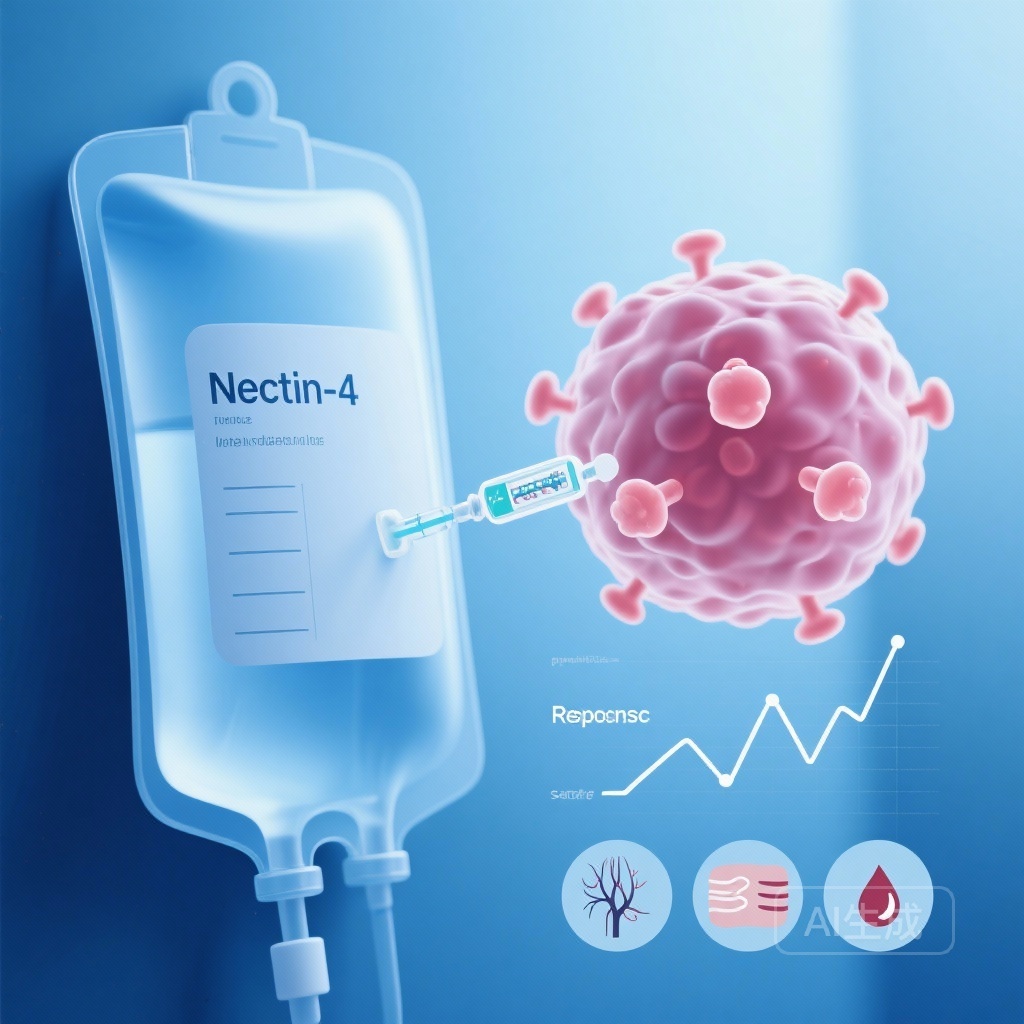
- Zelenectide pevedotin (BT8009) is a Bicycle Drug Conjugate that targets Nectin‑4 and delivers monomethyl auristatin E (MMAE).
- In a first‑in‑human Phase I/II dose‑escalation cohort (Duravelo‑1, NCT04561362), the drug had an overall objective response rate (ORR) of 24% (38% in urothelial carcinoma) with manageable toxicity.
- Key toxicities included peripheral neuropathy, neutropenia, and skin reactions; the maximum tolerated dose (MTD) was 7.5 mg/m2 every 2 weeks, and the recommended phase 2 doses (RP2Ds) were 5.0 mg/m2 weekly and 7.5 mg/m2 on days 1 and 8 of a 21‑day cycle.
Background
Therapeutic targeting of Nectin‑4 has emerged as a clinically validated strategy in solid tumors, most notably urothelial carcinoma (UC). Antibody–drug conjugates (ADCs) that deliver potent cytotoxins to Nectin‑4–expressing cells have produced meaningful responses in heavily pretreated UC populations. Bicycle Drug Conjugates (BDCs) are a distinct class of targeted therapeutics that use small, constrained peptides (Bicycles) to achieve high affinity and selectivity for tumor antigens while being linked to cytotoxic payloads (here, monomethyl auristatin E, MMAE). The smaller size and different pharmacokinetic profile of BDCs may confer advantages in tumor penetration and dosing flexibility compared with full‑length antibodies.
Duravelo‑1 is a first‑in‑human Phase I/II program evaluating zelenectide pevedotin (also referenced as BT8009), a Nectin‑4–directed BDC carrying an MMAE payload, across advanced solid tumors with documented or presumed Nectin‑4 expression. The monotherapy dose‑escalation cohort reported here explores safety, defines MTD/RP2D, and provides early efficacy signals to inform expansion cohorts.
Study design
Population and eligibility
Adults with advanced or metastatic solid tumors associated with Nectin‑4 expression were enrolled. The reported cohort included 49 patients, a plurality of whom had urothelial carcinoma (25/49). Patients were heavily pretreated (median of three prior lines of systemic therapy).
Dosing cohorts and schedule
Zelenectide pevedotin was administered intravenously in multiple schedules during dose escalation: 2.5, 5.0, or 7.5 mg/m2 once weekly on a 28‑day cycle; 7.5 mg/m2 on days 1 and 8 of a 21‑day cycle; and 7.5 or 10.0 mg/m2 once every 2 weeks on a 28‑day cycle. The primary objective was to evaluate safety and tolerability; antitumor activity and pharmacokinetics were secondary objectives.
Key findings
Safety and tolerability
All treated patients were assessed for safety. The most common treatment‑related adverse events (TRAEs) were gastrointestinal and constitutional: nausea occurred in 49% (grade 3/4 2%) and fatigue in 39% (grade 3/4 6%). Investigators noted that the elevated nausea rate likely related in part to absence of routine prophylactic antiemetics during the dose‑limiting toxicity evaluation period, underscoring the role of supportive care in future cohorts.
TRAEs of clinical interest included peripheral neuropathy (33%, grade 3/4 2%), neutropenia (22%, grade 3/4 16%), and skin reactions (22%, grade 3/4 2%). Neutropenia accounted for the most frequent grade 3/4 hematologic toxicity. Peripheral neuropathy—an expected toxicity with MMAE payloads—was mostly low grade, with a small proportion experiencing grade 3 events. Skin toxicities were generally low grade.
The MTD was identified as 7.5 mg/m2 administered once every 2 weeks. Based on the balance of tolerability and exposure, RP2Ds were selected as 5.0 mg/m2 once weekly and 7.5 mg/m2 on days 1 and 8 of a 21‑day cycle.
Antitumor activity
Forty‑two patients were evaluable for efficacy across tumor types. The overall objective response rate (ORR) was 24%, and the clinical benefit rate (CBR; which typically includes partial response plus stable disease of a defined duration) was 48% (10/42; 95% CI, 12.1–39.5). In the urothelial carcinoma subgroup (n = 21 evaluable), the ORR was 38% and the CBR 57% (8/21; 95% CI, 18.1–61.6). The median duration of response among responders was 11.1 months, with a median follow‑up of 7.4 months for all patients.
These response rates are notable given the heavily pretreated nature of the enrolled population and are concentrated in the tumor type with the highest expected expression of the target antigen (UC). Responses were observed across dose levels and schedules, supporting biologic activity of the BDC construct.
Pharmacokinetics and exposure
Pharmacokinetic profiling was a secondary objective; although detailed pharmacokinetic parameters are not reproduced here, dose selection for expansion incorporated tolerability and exposure data suggesting adequate target engagement at the RP2Ds with a manageable safety profile. The BDC platform is expected to produce different systemic exposure characteristics compared with antibody‑based conjugates due to smaller molecular size and faster systemic clearance.
Expert commentary and interpretation
The Duravelo‑1 monotherapy dose‑escalation data position zelenectide pevedotin as a promising targeted cytotoxic approach for Nectin‑4–expressing tumors, particularly urothelial carcinoma. Several practical and scientific points merit emphasis:
- Signal strength in UC: An ORR of 38% in a heavily pretreated UC cohort is clinically meaningful and aligns with the rationale that Nectin‑4 is a relevant therapeutic antigen in this disease. The median duration of response of ~11 months suggests durability for a subset of responders.
- Safety profile consistent with MMAE payload: Peripheral neuropathy and neutropenia are predictable toxicities for MMAE‑containing constructs. Rates of high‑grade neuropathy were low in this cohort, while neutropenia was the principal grade 3/4 event. Early incorporation of antiemetic prophylaxis and vigilance for myelosuppression are pragmatic steps for future studies.
- Dose and schedule flexibility: Identification of two RP2Ds (weekly and days 1/8 q21d) provides options to optimize exposure while balancing toxicity. The MTD at 7.5 mg/m2 q2w provides a boundary for intermittent dosing strategies.
- BDC platform advantages and unknowns: Bicycle Drug Conjugates may offer improved tumor penetration and distinct pharmacokinetics compared with antibodies, potentially expanding the therapeutic window. However, the clinical implications of faster systemic clearance (e.g., on‑target/off‑tumor toxicity, dosing frequency) require further elucidation in larger cohorts.
Limitations of the reported dataset include the modest size of the efficacy‑evaluable population, heterogeneous tumor types, and relatively short median follow‑up at the time of reporting. These are common and expected constraints in first‑in‑human dose‑finding studies and highlight the need for prespecified expansion cohorts with tumor‑specific enrollment criteria and comparator arms where appropriate.
Clinical implications and next steps
The observed activity and manageable safety profile support continued development of zelenectide pevedotin, with priority given to expansion cohorts in urothelial carcinoma and selected non‑UC indications with high Nectin‑4 expression. Future studies should incorporate:
- Prospective biomarker assessments to quantify Nectin‑4 expression and correlate expression levels with response
- Standardized supportive care measures (e.g., antiemetic prophylaxis) to reduce preventable adverse events
- Careful monitoring for cumulative neuropathy and neutropenia, including dose modification algorithms
- Comparative strategies or combination regimens (for example, with immune checkpoint inhibitors) that are biologically rational and supported by safety data
Conclusion
Zelenectide pevedotin (BT8009) demonstrated preliminary antitumor activity and a tolerability profile consistent with an MMAE payload in this first‑in‑human dose‑escalation study. The particularly encouraging response rate in urothelial carcinoma, together with identified RP2Ds, justifies tumor‑specific expansion and further clinical development. Ongoing and future cohorts should refine patient selection, optimize supportive care, and evaluate combination strategies to maximize clinical benefit.
Funding and clinicaltrials.gov
The primary report of these data is published in Journal of Clinical Oncology (Baldini et al., 2025). The study is registered as Duravelo‑1, ClinicalTrials.gov identifier NCT04561362.
References
1. Baldini C, Verlingue L, Goldschmidt V, et al. First-in-Human, Phase I/II Dose Escalation and Expansion Study of Zelenectide Pevedotin in Patients With Advanced Solid Tumors: Results From Monotherapy Dose Escalation. J Clin Oncol. 2025 Dec 10;43(35):3728-3738. doi: 10.1200/JCO-25-00559 IF: 41.9 Q1 . Epub 2025 Nov 6. PMID: 41197088 IF: 41.9 Q1 ; PMCID: PMC12680284 IF: 41.9 Q1 .
2. ClinicalTrials.gov. NCT04561362. Duravelo‑1: A Phase I/II Study of Zelenectide Pevedotin in Patients With Advanced Solid Tumors. https://clinicaltrials.gov/ct2/show/NCT04561362