Highlights
Children and adolescents with a history of out-of-home placement (OOHP) spend 24% more time in the emergency department (ED) for psychiatric concerns compared to their peers without such histories.
The odds of receiving physical or pharmacological restraints are more than doubled for youth with a history of OOHP, even when controlling for clinical presentation and demographic factors.
Disparities in ED length of stay persist regardless of age, sex, insurance status, or the complexity of the presenting psychiatric concern.
Background: The Crisis of Pediatric Boarding and Vulnerable Populations
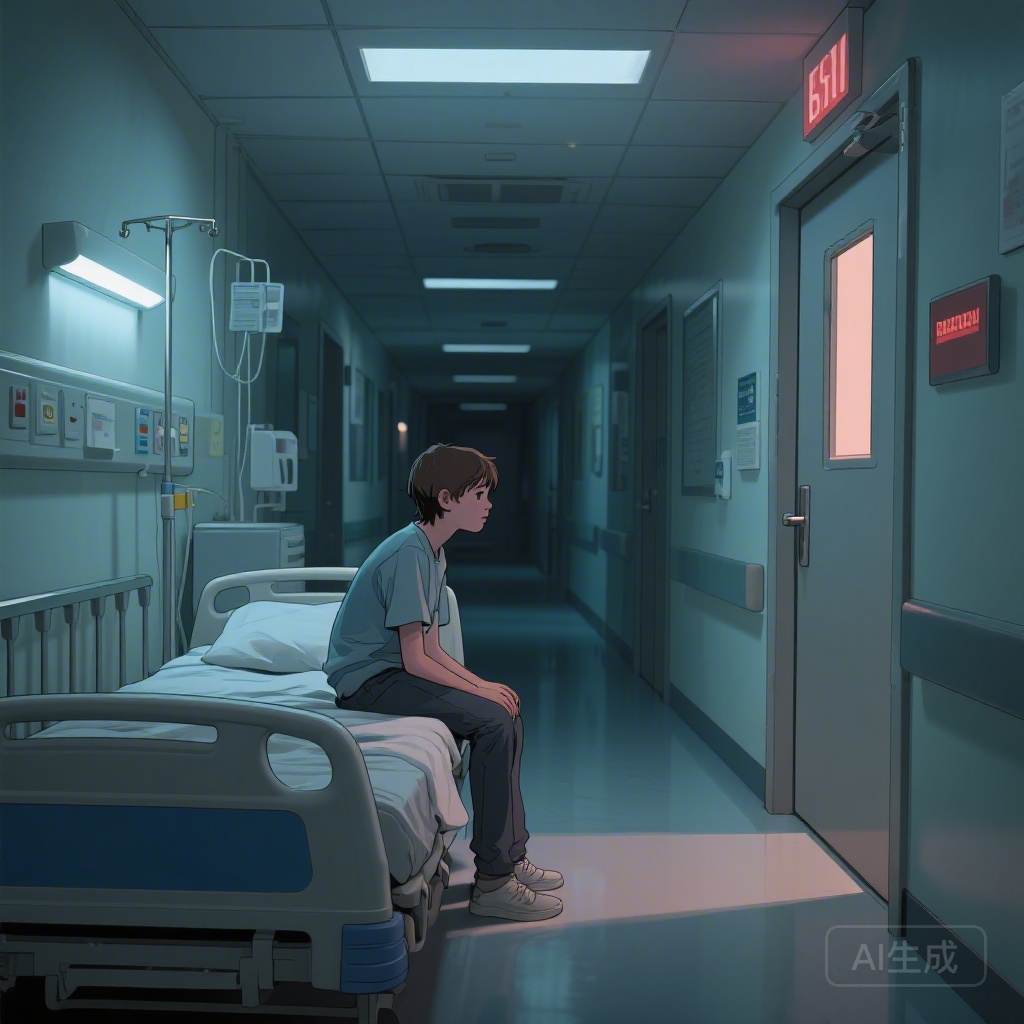
Over the last decade, the United States has witnessed an alarming surge in pediatric mental health crises. The emergency department (ED) has increasingly become the de facto safety net for youth experiencing acute psychiatric distress. However, the phenomenon of “boarding”—where patients remain in the ED for hours or even days while awaiting inpatient placement or community-based services—has reached critical levels. While previous research has identified disparities in ED utilization based on race, socioeconomic status, and geographic location, there has been a significant gap in our understanding of how children with histories of out-of-home placement (OOHP) fare in these settings.
Out-of-home placement includes foster care, kinship care, group homes, and residential treatment centers. These children often represent some of the most vulnerable members of the pediatric population, frequently having experienced significant trauma, neglect, or multiple transitions in care. Understanding whether these youths experience differential treatment or outcomes in the ED is vital for clinicians and policymakers seeking to improve health equity and clinical outcomes in pediatric emergency psychiatry.
Study Design and Methodology
In a recent retrospective, electronic health record (EHR)-based cross-sectional study published in JAMA Network Open, researchers at the Mayo Clinic Rochester investigated the association between OOHP history and ED length of stay (LOS). The study population included patients aged 17 years or younger who received a child and adolescent psychiatric consultation in the Mayo Clinic Rochester ED between January 1, 2021, and June 30, 2024.
The primary outcome measure was the length of stay in the ED. Secondary outcomes included the use of physical and pharmacological restraints during the encounter. To ensure the robustness of the findings, the researchers employed linear mixed-effects regression models, log-transforming the LOS to account for its typically skewed distribution. The models were adjusted for various confounders, including age at admission, sex, insurance type, number of prior psychiatric diagnoses, presenting concerns, and documented reasons for prolonged boarding.
Key Findings: Extended Stays and Increased Use of Restraint
The study analyzed 1572 care encounters involving 1119 unique patients. Of these encounters, 328 involved youth with a history of OOHP, while 1244 involved those with no such history. The demographic breakdown revealed notable differences; for instance, the OOHP group had a higher proportion of male patients (48% vs 34% in the non-OOHP group) and a higher representation of Black (16% vs 10%) and American Indian or Alaska Native (4% vs 2%) individuals.
Significant Prolongation of Length of Stay
The most striking finding was that youth with a history of OOHP spent significantly more time in the ED. Even after rigorous adjustment for demographic and clinical variables, these children spent 24% (95% CI, 12%-36%) more time in the ED than their peers (P = .004). This suggests that the history of placement itself—and the systemic complexities associated with it—is a potent predictor of delayed disposition, independent of the severity of the psychiatric symptoms at presentation.
Increased Risk of Restraint Use
The study also highlighted concerning disparities in the use of acute behavioral interventions. Children with a history of OOHP had 2.05 (95% CI, 1.69-2.48) higher odds of being physically restrained and 2.15 (95% CI, 1.79-2.58) higher odds of receiving pharmacological restraints (P < .001 for both). These findings raise critical questions regarding the role of trauma-informed care and the potential for healthcare provider bias or systemic friction when managing crises in this specific subpopulation.
Expert Commentary: Clinical and Systems-Level Implications
The data from Mayo Clinic Rochester underscores a systemic failure to efficiently serve youth in the welfare system. The prolonged LOS for OOHP youth may stem from several factors. First, the lack of available inpatient beds or specialized residential facilities often results in “dispositional bottlenecks.” When a child is in the legal custody of the state or a foster agency, the logistical hurdles for discharge—such as securing approval from case workers or finding a placement willing to accept a child with high acuity—are significantly more complex than for children returning to a traditional family home.
Furthermore, the increased use of physical and pharmacological restraints is particularly troubling. Many children with histories of OOHP have experienced childhood trauma, making the use of restraints potentially re-traumatizing. Clinicians must consider whether the increased restraint use reflects higher levels of agitation among these youths or a systemic lack of resources for de-escalation that is sensitive to the needs of trauma-exposed children. The biological plausibility of heightened stress responses in these patients, often referred to as “toxic stress,” may contribute to more intense presentations, yet the medical system must adapt to these needs without resorting to restrictive measures that prolong the crisis.
Conclusion: Addressing the Vulnerabilities of Youths in Placement
This cross-sectional study provides robust evidence that a history of out-of-home placement is a significant risk factor for extended emergency department stays and increased use of restraints during mental health crises. These findings serve as a call to action for healthcare systems and social services to collaborate more effectively. To mitigate the risk of extended ED stays, there is an urgent need for streamlined communication between hospitals and child welfare agencies, expanded access to step-down psychiatric facilities, and the implementation of trauma-informed care protocols specifically tailored for youth in the foster care system.
Future research should focus on identifying the specific barriers within the discharge process for OOHP youth and evaluating interventions, such as dedicated social work navigators or specialized crisis stabilization units, that could reduce the burden on both the child and the emergency healthcare system.
References
Kelly CK, Saliba M, Park JH, Yoshii HK, Tarikogullari I, Tarasewicz A, Kaase A, Porter C, Boehm SM, Loy SN, LeMahieu A, Romanowicz M, Taylor-Desir MJ. Prior Out-of-Home Placement and Length of Stay Among Youths Receiving Mental Health Services in the ED. JAMA Netw Open. 2026 Jan 2;9(1):e2555339. doi: 10.1001/jamanetworkopen.2025.55339. PMID: 41575744; PMCID: PMC12831154.