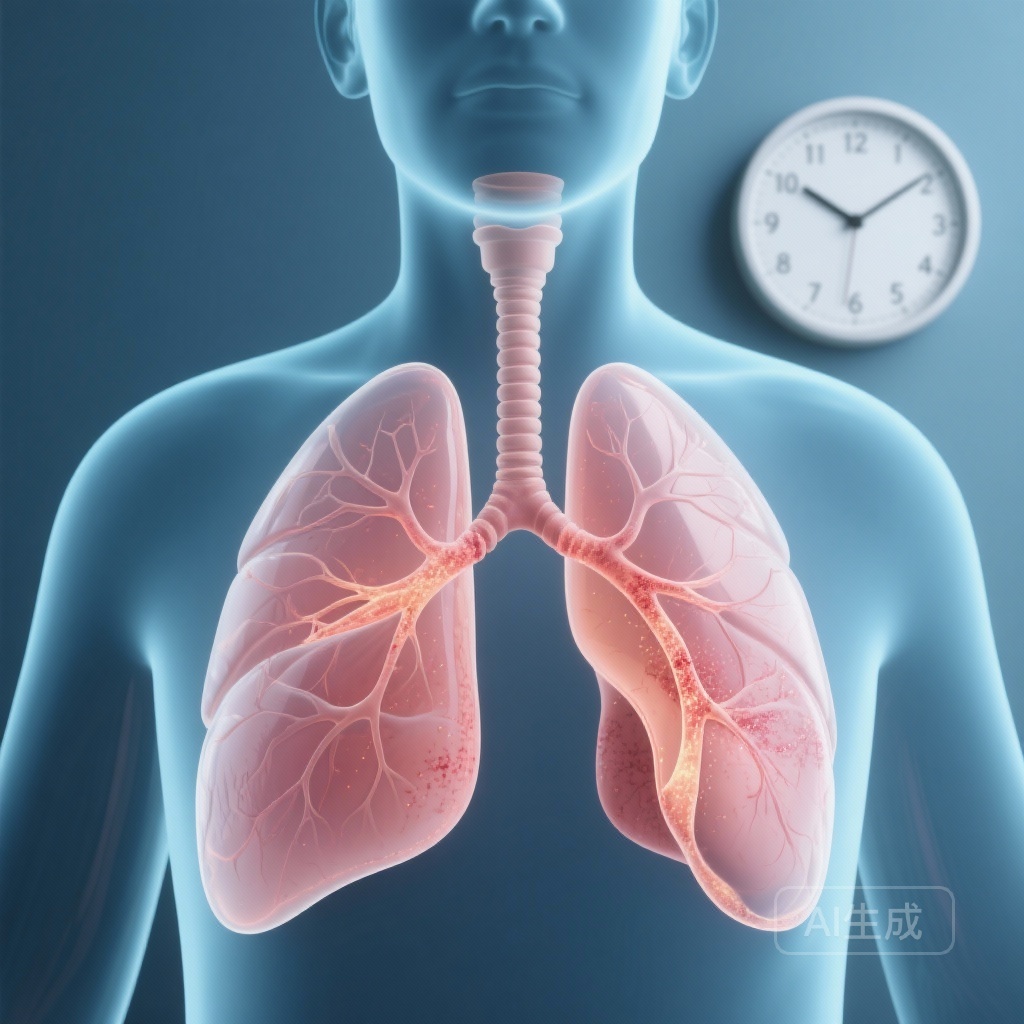
The Emerging Challenge of Early-Onset Respiratory Impairment
Chronic obstructive pulmonary disease (COPD) has traditionally been framed as a disease of the elderly, a culmination of decades of noxious exposures and biological aging. However, this paradigm is shifting as clinical research increasingly identifies a significant cohort of younger adults who manifest spirometric obstruction and respiratory symptoms. Identifying ‘young COPD’—diagnosed before age 50—is not merely an academic exercise; it represents a critical window for intervention that could alter the trajectory of a patient’s life. Two landmark studies recently published in NEJM Evidence and The Lancet Respiratory Medicine provide a compelling look at the prevalence, prognostic significance, and life-course trajectories of early-onset lung impairment, challenging clinicians to rethink how we screen and manage respiratory health in young and middle-aged adults.
Defining and Quantifying Young COPD: The NEJM Evidence Study
Study Design and Objectives
The study by Diaz et al., published in NEJM Evidence, aimed to clarify the prevalence and prognostic significance of COPD in adults younger than 50 years. This population-based study pooled data from four prospective U.S. cohorts, including 10,680 participants with a median age of 40. The researchers established a specific case definition for ‘young COPD’: the presence of spirometric airflow obstruction combined with either respiratory symptoms (cough, phlegm, dyspnea) or a smoking history of 10 or more pack-years. This definition was compared against ‘simple obstruction,’ which involved spirometric obstruction without symptoms or significant smoking history.
Key Findings on Prevalence and Mortality
The prevalence of young COPD in this large, diverse cohort (56.8% women; 41.7% Black) was found to be 4.5%. This figure is striking, as it suggests that nearly 1 in 20 adults under 50 may be living with a condition that has historically been overlooked in this age bracket. Perhaps more concerning are the prognostic outcomes associated with this diagnosis. Over the follow-up period, participants meeting the criteria for young COPD faced a significantly higher risk of premature mortality. The adjusted hazard ratio (aHR) for death before age 75 was 1.43 (95% CI, 1.19 to 1.73; P<0.001) compared to nonobstructed participants.
Respiratory and Cardiovascular Complications
The impact of young COPD extended beyond all-cause mortality. The study revealed a robust association with severe respiratory morbidity and cardiovascular events. Participants with young COPD were 2.56 times more likely to experience hospitalization or death due to chronic lower respiratory disease (95% CI, 2.05 to 3.20). Interestingly, the study also highlighted a significant cardiovascular burden; the hazard ratio for incident heart failure was 1.72 (95% CI, 1.26 to 2.35). While the association with coronary heart disease was less pronounced (aHR 1.12), the link to heart failure underscores the systemic implications of early-onset lung disease.
In contrast, those with ‘simple obstruction’ (spirometric obstruction without symptoms or heavy smoking) showed hazards for clinical outcomes similar to those of participants with normal lung function. This suggests that the combination of airflow limitation and clinical symptoms or smoking history is the primary driver of poor prognosis in early life.
Life-Course Trajectories and the Symptomatic Burden: The Lancet Respiratory Medicine Analysis
Investigating FEV1/FVC Trajectories
Complementing the findings on young COPD, the study by Perret et al. in The Lancet Respiratory Medicine utilized data from two longitudinal cohorts—the Tasmanian Longitudinal Health Study (TAHS) in Australia and the Coronary Artery Risk Development in Young Adults (CARDIA) study in the USA. This research focused on life-course lung function trajectories, specifically the ratio of forced expiratory volume in 1 second to forced vital capacity (FEV1/FVC). By following participants from childhood or early adulthood into middle age, the researchers were able to categorize individuals based on their lung function patterns over time.
Symptoms Precede Diagnosis
The findings provide a profound insight into the ‘pre-COPD’ state. Individuals on the most impaired FEV1/FVC trajectories (e.g., those with a low peak or rapid decline) experienced a significantly higher burden of respiratory symptoms—such as wheeze and phlegm—even if they did not yet meet the formal spirometric criteria for COPD. In the TAHS cohort, the most impaired trajectory was associated with a multinomial odds ratio (mOR) of 6.71 for predominant wheeze, while in the CARDIA cohort, the mOR was a staggering 9.90.
Crucially, among those on the most impaired trajectories, 20% to 25% reported symptoms like wheezing and chronic bronchitis as early as childhood (under age 14) or young adulthood (under age 30). This suggests that for many, the path toward COPD is not a sudden late-life event but a decades-long process marked by early symptomatic warning signs.
Expert Commentary: The Heart-Lung Connection and Early Screening
Biological Plausibility and Mechanistic Insights
The association between young COPD and heart failure identified in the Diaz et al. study is particularly noteworthy. Mechanistically, this can be attributed to several factors. Chronic airflow obstruction and lung hyperinflation can increase pulmonary vascular resistance and place additional strain on the right ventricle. Furthermore, the systemic inflammation often associated with COPD may accelerate atherosclerotic processes and myocardial dysfunction. These findings suggest that COPD should be viewed as a multi-system disorder even in its early stages.
The Importance of Symptom Recognition
The Perret et al. study reinforces the clinical importance of respiratory symptoms in young patients. Often, symptoms like ‘smoker’s cough’ or occasional wheezing are dismissed by both patients and clinicians as minor. However, the data show that these symptoms are strong indicators of an underlying impaired lung function trajectory. For clinicians, this means that a young adult presenting with persistent wheeze or phlegm warrants a closer look at their lung function, even if they appear healthy otherwise.
Study Limitations and Generalizability
While these studies are robust, some limitations must be considered. The definition of young COPD in the Diaz et al. study relied on pre-bronchodilator spirometry in some cohorts, which might overestimate obstruction by including individuals with reversible asthma. However, the use of symptoms and smoking history in the case definition helps mitigate this. The Perret et al. study, being longitudinal, faced challenges with participant retention over decades, though the replication of findings across two independent cohorts in different countries adds significant weight to the results.
Conclusion: A Call for Proactive Respiratory Management
The evidence is clear: young COPD is a prevalent and dangerous condition that carries a high risk of premature death and cardiovascular morbidity. Furthermore, the foundations of this disease are often laid in early life, with symptoms manifesting long before traditional diagnostic thresholds are met. To improve long-term outcomes, the medical community must move toward a more proactive model of respiratory health. This includes:
1. Early Spirometric Screening
Clinicians should have a lower threshold for performing spirometry in young adults who report persistent respiratory symptoms or have a significant smoking history.
2. Holistic Risk Assessment
Recognizing that young COPD is a risk factor for heart failure and premature mortality, these patients should be screened for cardiovascular risk factors and managed aggressively.
3. Targeting Impaired Trajectories
Identifying children and young adults on suboptimal lung function trajectories provides an opportunity for early intervention, such as smoking cessation, environmental mitigation, and optimized management of asthma, to preserve lung function for as long as possible.
By shifting our focus from end-stage disease to the early stages of lung function decline, we can potentially prevent the significant burden of morbidity and mortality associated with COPD in later life.
Funding and References
The study by Diaz et al. was funded by the National Heart, Lung, and Blood Institute (NHLBI) and others. The study by Perret et al. was funded by the National Health and Medical Research Council (Australia), the University of Melbourne, and the NHLBI, among other foundations.
References
1. Diaz AA, Balte PP, Han M, et al. Prevalence and Prognostic Significance of COPD in Adults Younger than 50 Years of Age. NEJM Evid. 2025;4(8):EVIDoa2400424. doi:10.1056/EVIDoa2400424.
2. Perret JL, Bui DS, Pistenmaa C, et al. Associations between life-course FEV1/FVC trajectories and respiratory symptoms up to middle age: analysis of data from two prospective cohort studies. Lancet Respir Med. 2025;13(2):130-140. doi:10.1016/S2213-2600(24)00265-0.