The Challenge of Cryptogenic Stroke and Silent Atrial Fibrillation
Cryptogenic stroke (CS) remains a diagnostic enigma and a therapeutic challenge in contemporary neurology, representing approximately one-third of all ischemic stroke admissions. While the clinical presentation is often indistinguishable from other embolic events, the absence of a clear etiology—such as large-vessel atherosclerosis, small-vessel disease, or a known cardioembolic source—complicates long-term management. Silent paroxysmal atrial fibrillation (PAF) is widely suspected to be the occult culprit in a significant proportion of these cases. However, the transient and asymptomatic nature of PAF makes it notoriously difficult to capture using conventional monitoring techniques like 24-hour or 48-hour Holter monitoring.
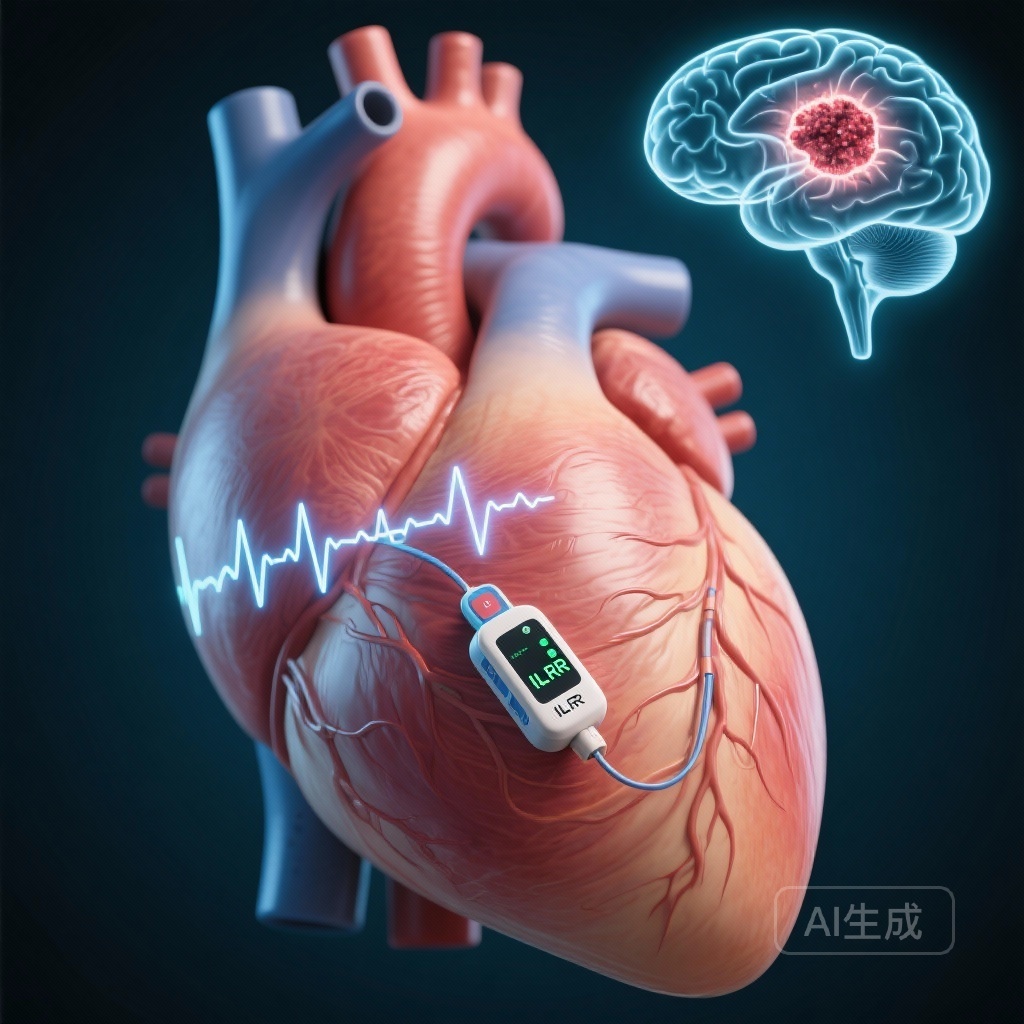
Existing guidelines have historically been ambiguous regarding the timing and selection criteria for long-term continuous ECG monitoring. While the CRYSTAL AF trial previously demonstrated the superiority of internal loop recorders (ILR) over standard care at six months, questions remain about the efficacy of ultra-early monitoring and whether specific cardiac biomarkers or imaging findings can help identify high-risk patients who would benefit most from such invasive diagnostics. The CRIPTOFAST Randomized Controlled Trial was designed to address these gaps, evaluating the efficacy of ultra-early ILR implantation and the predictive value of subtle left atrial (LA) anomalies.
Study Design and Methodology
The CRIPTOFAST study was a randomized, controlled, parallel-arm, open-label trial conducted to evaluate the detection rate of silent PAF in patients with cryptogenic stroke. The investigators focused on the efficacy of ultra-early ILR implantation compared to standard care, which typically involves short-term non-invasive monitoring.
Fifty-nine patients with CS were enrolled and randomized in a 1:1 ratio. The ILR group (52.5%) received the device shortly after the index stroke event, while the control group (47.5%) received standard clinical follow-up. The median follow-up period for the study was 377 days.
A distinctive feature of the CRIPTOFAST trial was its focus on left atrial (LA) morphology and function as a predictor for AF. The researchers utilized advanced echocardiographic parameters to define ‘subtle LA anomalies.’ A patient was categorized as having an abnormal LA if they met any of the following criteria: LA dilatation, maximum systolic global longitudinal strain (GLS) less than 21%, atrial contraction strain less than 13%, or an atrial ejection fraction less than 55%. These parameters go beyond traditional LA volume measurements, seeking to identify early signs of atrial cardiopathy that might precede the clinical manifestation of atrial fibrillation.
Key Findings: A Seven-Fold Increase in Detection
The results of the CRIPTOFAST trial were striking. The primary endpoint—the diagnosis of silent PAF—was achieved in 43.3% of patients in the ILR group, compared to only 7.1% in the standard care group. This translates to a Hazard Ratio (HR) of 7.47 (95% CI 1.68–31.19, p = 0.008), representing a more than seven-fold increase in the likelihood of detecting AF when using an ultra-early ILR strategy.
One of the most clinically relevant findings was the timing of detection. The majority of PAF events in the ILR group were detected within the first 100 days following implantation. This suggests that the ‘cryptogenic’ nature of many strokes may simply be a reflection of the limitations of short-term monitoring in the acute and subacute phases of stroke recovery. By monitoring continuously from the earliest possible window, clinicians can significantly shorten the time to diagnosis and, consequently, the time to initiation of oral anticoagulation (OAC).
The Role of Left Atrial Anomalies in Patient Selection
The pre-specified subgroup analysis based on LA anomalies provided a roadmap for a more personalized diagnostic approach. In patients with functionally and structurally normal left atria, the detection of PAF was relatively low (23% in the ILR group vs. 7% in the control group). However, in the subgroup of patients with abnormal LA features, the detection rate in the ILR group surged to 58.8%, compared to just 7.7% in the control group.
This finding underscores the importance of atrial cardiopathy as a precursor to AF. Subtle changes in atrial strain and ejection fraction appear to be highly sensitive markers for an underlying substrate prone to fibrillation. For clinicians, this means that an echocardiogram showing reduced LA strain or dilatation should serve as a ‘red flag,’ potentially justifying the immediate implantation of an ILR to rule out occult AF.
Expert Commentary and Clinical Implications
The CRIPTOFAST trial adds a crucial layer of evidence to the evolving management of cryptogenic stroke. While previous studies like STROKE-AF have shown that AF is common in patients with both large and small vessel disease, CRIPTOFAST emphasizes the ‘ultra-early’ window and the predictive power of LA imaging.
From a mechanistic perspective, the high rate of AF detection in the abnormal LA group supports the theory that atrial remodeling is a primary driver of embolic events. In some cases, the atrial substrate itself may be thrombogenic even before sustained AF develops, but the detection of AF remains the current clinical ‘gold standard’ for switching from antiplatelet therapy to anticoagulation.
However, the study is not without limitations. The sample size of 59 patients is relatively small, which may limit the generalizability of the absolute percentages. Furthermore, as an open-label trial, there is a risk of bias in follow-up intensity, although the objective nature of ILR data (continuous ECG recording) mitigates this significantly. The high hazard ratio and statistical significance despite the small cohort size actually highlight the robustness of the effect size.
In the context of current guidelines, these findings suggest a shift toward more aggressive monitoring. If nearly 60% of CS patients with LA anomalies are found to have AF within a year, the cost-effectiveness and clinical benefit of ILR implantation in this specific subgroup are likely substantial. It moves the needle from ‘watchful waiting’ to ‘proactive diagnosis.’
Conclusion and Summary
The CRIPTOFAST Randomized Controlled Trial provides compelling evidence that early ILR implantation is a superior strategy for detecting silent atrial fibrillation in patients following a cryptogenic stroke. By identifying a seven-fold increase in detection compared to standard care—and demonstrating that the majority of these events occur within the first three months—the study advocates for a more rapid diagnostic workflow.
Furthermore, the integration of advanced echocardiographic markers, specifically left atrial strain and ejection fraction, allows for a precision medicine approach. Patients with identified LA anomalies represent a high-yield population for ILR implantation. As we move forward, incorporating these imaging biomarkers into routine post-stroke workups could significantly improve our ability to prevent recurrent strokes through timely anticoagulation. The challenge for the medical community now lies in implementing these findings into clinical pathways and ensuring that ‘ultra-early’ monitoring becomes the standard for those at highest risk.
Funding and Trial Information
The CRIPTOFAST trial was conducted as an investigator-initiated study. Further details regarding the trial protocol and patient demographics can be found under the reference: Vallès E, et al. Eur J Neurol. 2026. DOI: 10.1111/ene.70482.