Highlight
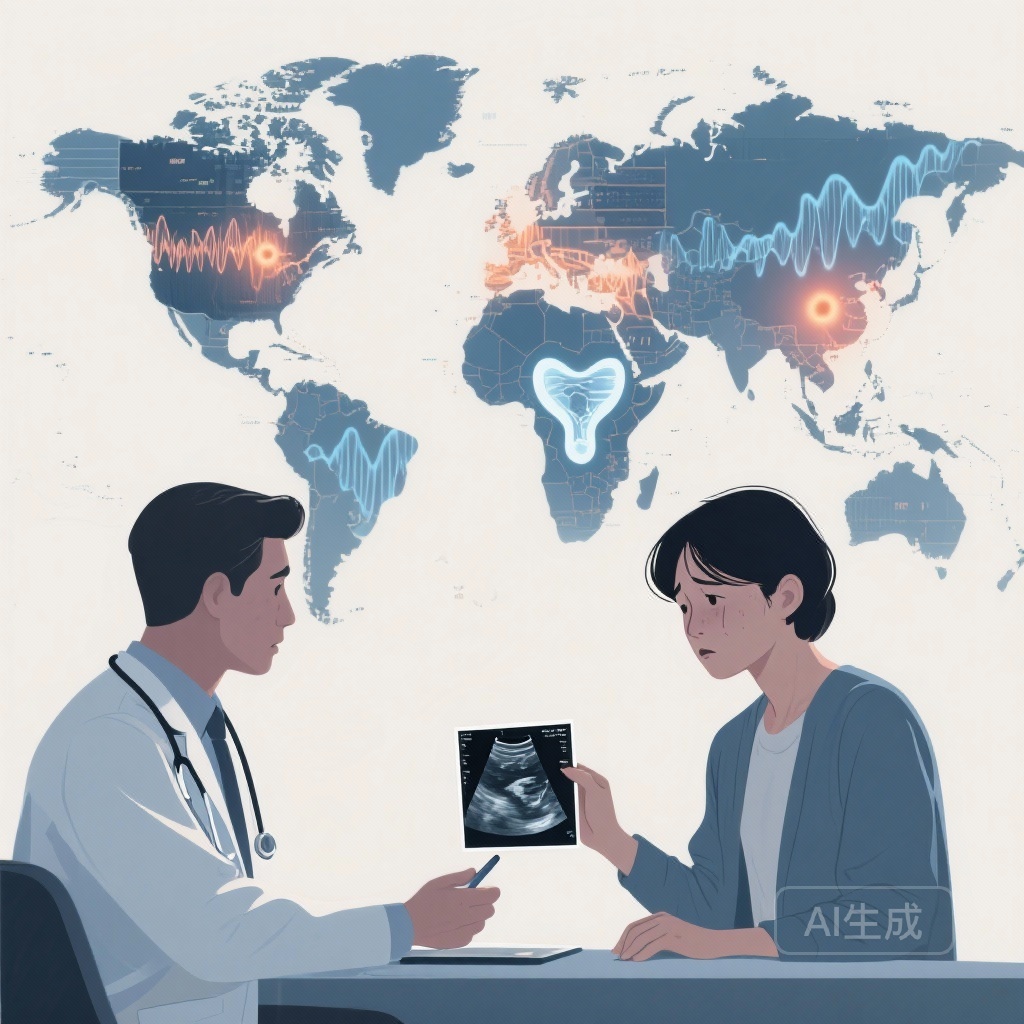
– Thyroid cancer incidence in adolescents and young adults (AYAs, 15–39 years) increased rapidly in most countries since the 2000s, while mortality remained stably low, consistent with overdiagnosis.
– In 2022 there were an estimated ~237,000 new AYA thyroid cancer cases and ~2,100 deaths worldwide; thyroid cancer represented 20.3% of all female AYA cancers and 13.6% of male AYA cancers.
– Incidence-to-mortality ratios were extreme in some countries (>3,300 for females), and incidence correlated strongly and positively with human development index (HDI), supporting a role for diagnostic intensity rather than true disease burden.
Background: Why this matters clinically
Adolescents and young adults (AYAs, defined as ages 15–39 years) occupy a distinct clinical and psychosocial niche: life-stage considerations include fertility, employment, long-term quality of life and survivorship. Thyroid cancer, predominantly differentiated papillary thyroid carcinoma in this age group, has become one of the most frequently diagnosed cancers in AYAs globally. Understanding whether observed rises in incidence reflect a true increase in clinically meaningful disease or expanding detection of indolent lesions is critical because diagnosis often triggers surgery, lifelong surveillance, possible radioactive iodine, and substantial psychological and economic burdens.
Study design and data sources
The referenced population-based analysis (Li et al., Lancet Diabetes & Endocrinology, 2025) combined multiple high-quality registries and databases to assess global trends and current burden of AYA thyroid cancer. Key data sources included Cancer Incidence in Five Continents Plus (CI5plus) for incidence trends, the WHO Mortality Database for deaths, and GLOBOCAN 2022 (IARC) for 2022 national estimates across 185 countries. Temporal trends were summarized as average annual percent change (AAPC) in age-standardised incidence rates for 2003–2017. The authors also calculated incidence-to-mortality ratios and examined correlations with the Human Development Index (HDI).
Key findings
Rapid, geographically widespread increases in incidence
Incidence of thyroid cancer in AYAs rose rapidly across most countries since the early 2000s. Notable increases were documented in South Korea, Cyprus, Ecuador, Türkiye and particularly in China. During 2003–2017 the AAPC in AYA thyroid cancer incidence exceeded 10% in six countries and exceeded 5% in 19 countries. By 2022, thyroid cancer ranked among the top three diagnosed cancers in 100 countries for females and 26 countries for males.
Large burden in AYAs by 2022
GLOBOCAN 2022 estimates indicated approximately 237,000 new thyroid cancer cases and about 2,100 deaths among AYAs worldwide. Thyroid cancer accounted for 20.3% of all new cancer cases in female AYAs (second only to breast cancer) and for 13.6% in male AYAs, making it the most common cancer among male AYAs in 2022.
Mortality remained low and geographically homogeneous
Despite striking rises in incidence, mortality rates stayed stably low and showed much less geographic variation than incidence. This discordance is a key epidemiologic signal consistent with overdiagnosis: increasing detection of indolent disease that would not have become clinically apparent or lethal during a patient’s lifetime.
Extreme incidence-to-mortality ratios and HDI correlations
Incidence-to-mortality ratios for AYA thyroid cancer in some countries exceeded 3,300 for females and 600 for males — values far above those observed for most other cancer types (<100). There was a strong positive correlation between HDI and AYA thyroid cancer incidence, whereas the association between HDI and mortality was negative but weak. This pattern suggests that countries with higher development and greater access to diagnostic imaging and health services detect many more cases without corresponding gains in survival.
Interpretation: Overdiagnosis is the dominant explanation
The combined features — rapid incidence increases concentrated in countries with high diagnostic capacity, extremely high incidence-to-mortality ratios, and stable low mortality — are classic hallmarks of overdiagnosis. Overdiagnosis occurs when screening or diagnostic intensity identifies cancers that would not progress to cause symptoms or death. In thyroid cancer, widespread use of high-resolution ultrasound, increased incidental detection on cross-sectional imaging, and low thresholds for biopsy have been implicated.
Clinical and public health implications
Overdiagnosis matters because it leads to unnecessary treatments (thyroidectomy, sometimes with lymph node dissection), exposure to anesthesia and potential complications (hypoparathyroidism, recurrent laryngeal nerve injury), lifelong thyroid hormone replacement, psychological distress and health-care costs. For AYAs, these harms intersect with fertility concerns, career and educational progress, and long-term quality of life.
Practice recommendations aligned with current evidence
- Discourage population screening or screening of asymptomatic individuals with neck ultrasound for thyroid cancer. Screening asymptomatic people has not reduced mortality but increases diagnosis of indolent lesions.
- Adopt and implement evidence-based thresholds for diagnostic ultrasound and fine-needle aspiration (FNA) based on nodule size and sonographic risk features; adhere to guideline-based risk stratification (e.g., American Thyroid Association [ATA] 2015/2016 recommendations).
- Consider active surveillance for small, low-risk papillary thyroid carcinomas rather than immediate surgery, particularly for tumors that are intrathyroidal, ≤1 cm, and lack high-risk features.
- Improve clinician and patient education about risks and benefits of diagnosis and treatment; shared decision-making is important in AYAs.
- Health systems should audit patterns of imaging, biopsy and surgery to detect and reduce low-value practices.
Expert commentary and study limitations
Independent experts have long warned that modern imaging and low biopsy thresholds have fueled a thyroid cancer epidemic of detection rather than disease. Landmark analyses from South Korea showed disappearance of an apparent epidemic after national screening practices changed — providing compelling, quasi-experimental evidence that screening drove most of the increase (Ahn HS et al., NEJM 2014). Comprehensive global analyses (Vaccarella and colleagues) have drawn similar conclusions: most of the international increase is likely attributable to increased diagnosis.
Limitations of registry-based ecological analyses deserve emphasis. Data quality and completeness vary across countries, and coding or classification changes over time can influence rates. The study could not fully disaggregate tumor histologies or stage at diagnosis in all settings; therefore, the contribution of more aggressive subtypes cannot be entirely excluded. Environmental or lifestyle factors (obesity, radiation exposure, iodine intake) may contribute to real increases in risk in some regions, but these factors are unlikely to explain the magnitude and rapid pace of increases observed, especially where increases parallel expansion of imaging services.
Research and policy priorities
Top priorities include: (1) prospective evaluation of active surveillance versus immediate surgery in AYAs to quantify long-term outcomes including fertility and quality of life; (2) behavioral and implementation research to reduce low-value imaging and procedures; (3) improved international registries capturing tumor size, stage, and management to monitor de‑implementation efforts; (4) research into non‑diagnostic contributors (environmental, genetic, metabolic) to clarify any true etiologic trends.
Conclusion
The 185-country analysis provides robust, contemporary evidence that thyroid cancer diagnosis among AYAs has expanded substantially worldwide without parallel reductions in mortality. The pattern is most consistent with extensive overdiagnosis driven by increased imaging and diagnostic intensity, particularly in higher‑HDI countries. Clinicians, health systems and policy makers should prioritize de‑implementation of low‑value thyroid cancer screening and adopt guideline‑concordant strategies (including active surveillance for selected small tumors) to avoid unnecessary treatment and its lifelong consequences in adolescents and young adults.
Funding
The original study was funded by the Guangzhou Science and Technology Project, Guangdong Basic and Applied Basic Research Foundation, Italian Association for Cancer Research, Italian Ministry of Health, and Young Talents Program of Sun Yat‑sen University Cancer Center.
References
1. Li M, Dal Maso L, Pizzato M, Rumgay H, Vaccarella S. Thyroid cancer in adolescents and young adults: a population-based study in 185 countries worldwide. Lancet Diabetes Endocrinol. 2025 Nov 19:S2213-8587(25)00289-X. doi: 10.1016/S2213-8587(25)00289-X. Epub ahead of print.
2. Ahn HS, Kim HJ, Welch HG. Korea’s thyroid-cancer ‘epidemic’ — screening and overdiagnosis. N Engl J Med. 2014;371:1765–1767.
3. Vaccarella S, Franceschi S, Bray F, Wild CP, Plummer M, Dal Maso L. Worldwide thyroid-cancer epidemic? The increasing incidence of thyroid cancer is mainly due to overdiagnosis. Lancet Oncol. 2016;17(7):e30–e32.
4. Welch HG, Black WC. Overdiagnosis in cancer. J Natl Cancer Inst. 2010;102(9):605–613.
5. Haugen BR, Alexander EK, Bible KC, et al. 2015 American Thyroid Association Management Guidelines for Adult Patients with Thyroid Nodules and Differentiated Thyroid Cancer. Thyroid. 2016;26(1):1–133.
6. International Agency for Research on Cancer. GLOBOCAN 2022: Estimated cancer incidence, mortality and prevalence worldwide in 2022. Available from: https://gco.iarc.fr/ (accessed 2025).
Note: This article synthesizes findings from the cited population-based study and places them in clinical and public health context for practitioners and policy makers.