Highlights
Obesity-induced endothelial dysfunction (ED) is a critical precursor to cardiovascular disease, yet it often escapes detection through traditional risk factor screening. A landmark study recently published in the European Heart Journal elucidates a novel metabolic pathway that could redefine our approach to vascular health in obese patients.
Key highlights include:
- Identification of Taurochenodeoxycholic acid (TCDCA) as a potent endogenous protector against obesity-induced microvascular impairment.
- The discovery that “metabolically healthy” and “metabolically unhealthy” obesity phenotypes share similar degrees of endothelial dysfunction.
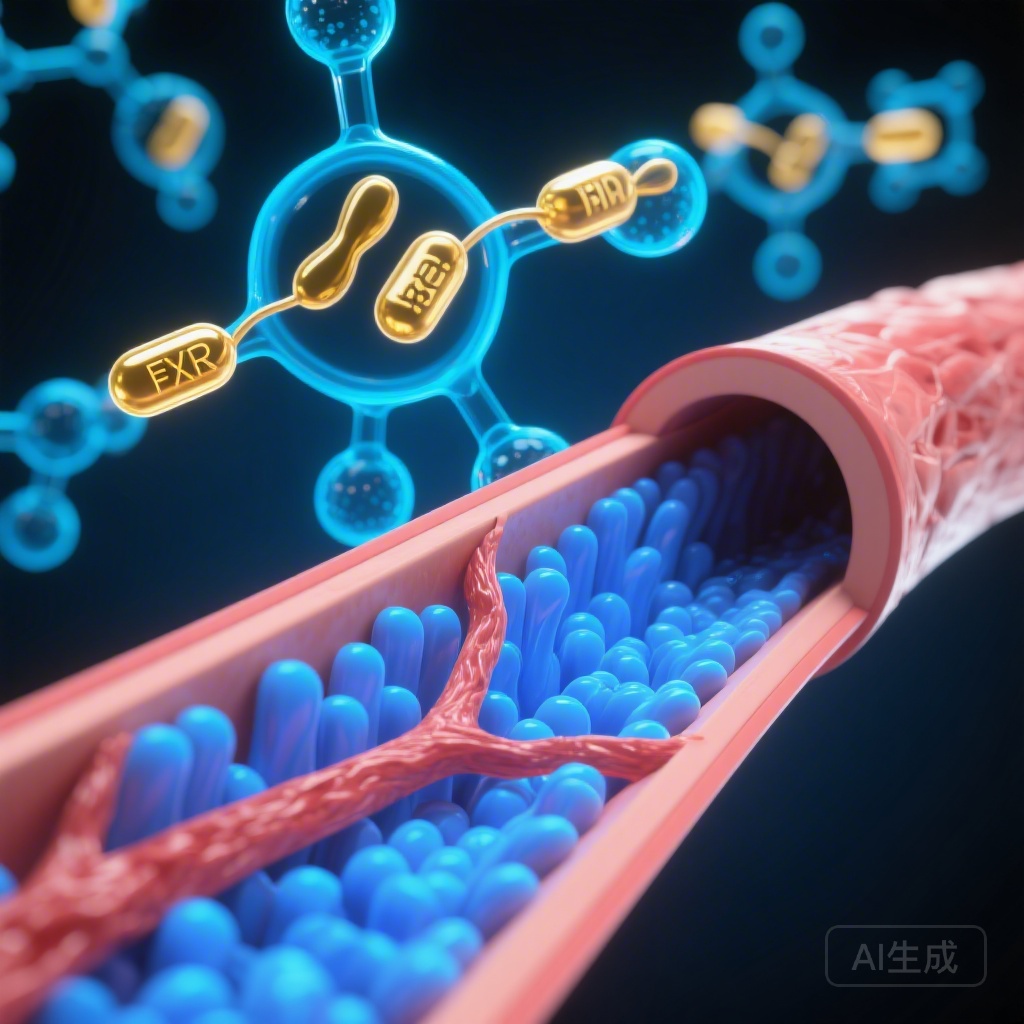
- Elucidation of the endothelial FXR-PHB1-ATF4 signaling axis, which regulates serine and one-carbon metabolism to maintain vascular integrity.
- Evidence that TCDCA supplementation or bariatric surgery-induced metabolite shifts can effectively rescue endothelial function and prevent hypertension.
Introduction: The Vascular Toll of Obesity
Obesity is a global epidemic and a primary driver of the cardiovascular disease (CVD) burden. Central to this pathology is endothelial dysfunction (ED), the earliest detectable stage of atherosclerosis and a key contributor to hypertension and heart failure. Despite its clinical importance, the mechanisms driving ED in obese individuals—particularly those without concurrent hypertension or diabetes—have remained poorly understood.
Clinical management has traditionally focused on managing overt comorbidities like dyslipidemia and hyperglycemia. However, many obese patients exhibit significant vascular damage long before these markers become abnormal. This study sought to characterize the heterogeneity of ED in non-hypertensive obese (NHO) individuals and identify serum metabolites that could serve as both biomarkers and therapeutic targets.
Study Design: Probing the Omental Microvasculature
The research team employed a sophisticated translational approach, utilizing ex vivo arterioles harvested from the omental adipose tissue of 213 non-hypertensive obese (NHO) patients. These patients were categorized into two groups: Metabolically Healthy Obesity (MHO) and Metabolically Unhealthy Obesity (MUO), based on their metabolic profiles. Endothelial function was meticulously assessed using a wire myograph to measure vasodilation responses.
To identify potential mediators, the researchers conducted targeted metabolomic profiling of patient serum. This was followed by extensive mechanistic studies using endothelial-specific Farnesoid X receptor (FXR) knockout mice and cell culture models to map the signaling pathways involved in TCDCA-mediated vascular protection.
Results: Beyond Traditional Risk Factors
The Paradox of Metabolically Healthy Obesity
One of the most striking findings of the study was that traditional cardiovascular risk factors—such as LDL cholesterol, fasting glucose, and body mass index (BMI)—showed poor correlation with the degree of endothelial dysfunction in NHO patients. Furthermore, individuals classified as MHO exhibited similar levels of microvascular impairment and comparable metabolomic profiles to those in the MUO group. This suggests that the “healthy” label in obesity may be a misnomer regarding vascular health, as subclinical ED is prevalent across the obesity spectrum.
Metabolomic Profiling and the Role of CDCA/TCDCA
Serum metabolomics identified bile acids (BAs) as the primary metabolite class associated with endothelial health. Specifically, chenodeoxycholic acid (CDCA) levels were negatively correlated with the severity of ED. Its taurine-conjugated derivative, Taurochenodeoxycholic acid (TCDCA), emerged as a powerful therapeutic candidate. In experimental models, TCDCA treatment significantly improved endothelial-dependent vasodilation and protected against the development of obesity-induced hypertension.
Mechanistic Insights: The TCDCA-FXR-PHB1-ATF4 Axis
The study provides a deep dive into the molecular machinery through which TCDCA exerts its effects. The researchers identified the Farnesoid X receptor (FXR) in endothelial cells as the critical mediator. While FXR is well-known for its role in the liver and gut, its function in the vascular endothelium has been less clear.
The researchers demonstrated that:
- Endothelial-specific deletion of FXR aggravated obesity-induced ED and abolished the blood-pressure-lowering effects of TCDCA.
- TCDCA-mediated FXR activation upregulates the transcription of ATF4 (Activating Transcription Factor 4).
- This process is modulated by PHB1 (Prohibitin 1), which acts as a regulatory checkpoint.
- The activation of the FXR-PHB1-ATF4 axis leads to the upregulation of enzymes involved in serine and one-carbon metabolism.
By enhancing these metabolic pathways, TCDCA provides the endothelium with the necessary substrates to resist oxidative stress and maintain nitric oxide bioavailability, thereby preserving dilatory function.
Expert Commentary: Clinical Implications and Limitations
The identification of the TCDCA-FXR axis represents a paradigm shift in our understanding of how the metabolic environment communicates with the vasculature. For clinicians, this research suggests that CDCA and TCDCA could serve as valuable biomarkers to identify patients at high risk for cardiovascular events, even when their traditional metabolic markers appear stable.
From a therapeutic perspective, the study highlights the potential of FXR agonists or TCDCA supplementation as a “vascular-first” strategy in obesity management. It also provides a mechanistic explanation for why bariatric surgery—which significantly alters the bile acid pool—leads to rapid improvements in vascular health that often precede significant weight loss.
However, some limitations must be noted. The study focused on omental microvasculature; while omental fat is highly metabolically active and clinically relevant, further research is needed to determine if these findings translate identically to the coronary or peripheral macrovasculature. Additionally, the long-term safety and efficacy of TCDCA supplementation in humans require rigorous clinical trials.
Conclusion
This study positions Taurochenodeoxycholic acid as a promising therapeutic agent for alleviating obesity-induced endothelial dysfunction. By targeting the endothelial TCDCA-FXR-PHB1-ATF4 axis to boost serine and one-carbon metabolism, we may be able to delay or prevent the onset of hypertension and other life-threatening cardiovascular diseases in the growing obese population. This research underscores the importance of looking beyond BMI and traditional lipids to understand the complex metabolic dialogue that maintains vascular integrity.
References
Lu H, Wu Z, Wan M, et al. Taurochenodeoxycholic acid alleviates obesity-induced endothelial dysfunction. European Heart Journal. 2026;47(10):1221-1238. PMID: 41042950.
Mach F, Baigent C, Catapano AL, et al. 2019 ESC/EAS Guidelines for the management of dyslipidaemias: lipid modification to reduce cardiovascular risk. Eur Heart J. 2020;41(1):111-188.