Highlights
Standardized neck and orofacial exercises significantly improve swallowing-related quality of life (QoL) at 1 and 6 months post-thyroidectomy compared to general movement advice.
Approximately 80% of patients experience swallowing disorders after thyroid surgery even without laryngeal nerve injury; this intervention successfully addresses this high-prevalence clinical burden.
While the rehabilitation group reported transiently higher pain levels during the first postoperative week, the program proved safe with no severe adverse events or long-term complications.
The structured 3-month rehabilitation protocol offers a scalable, evidence-based addition to postoperative care pathways to optimize functional recovery.
The Silent Burden of Post-Thyroidectomy Dysphagia
Thyroidectomy is among the most frequently performed surgical procedures globally. While surgical techniques have advanced to minimize the risk of recurrent laryngeal nerve (RLN) or superior laryngeal nerve (SLN) injury, a significant proportion of patients continue to report functional impairments. Specifically, swallowing disorders and voice changes occur in up to 80% of patients in the absence of any identifiable nerve damage. This phenomenon, often termed non-neurogenic post-thyroidectomy syndrome, is frequently attributed to surgical trauma to the strap muscles, adhesion formation between the trachea and the skin or strap muscles, and psychological distress associated with neck surgery.
Despite the high prevalence of these symptoms, postoperative care has traditionally lacked standardized protocols for functional rehabilitation. Patients are often given vague instructions to move their necks freely without a structured regimen. This gap in clinical care led to the development and testing of a standardized rehabilitation protocol designed to specifically target the mechanisms of postoperative dysphagia.
Study Design: A Rigorous Evaluation of Rehabilitation
The study was a single-center, open-label randomized controlled trial (RCT) registered at the Chinese Clinical Trial Registry (ChiCTR2500097960). It aimed to evaluate the efficacy of a 3-month standardized postoperative neck and orofacial rehabilitation exercise program in enhancing Quality of Life (QoL), particularly swallowing-related QoL, in patients without definitive laryngeal nerve injury.
Population and Randomization
A total of 374 patients were recruited, with 356 ultimately included in the final analysis (176 in the rehabilitation exercise group and 180 in the control group). The inclusion criteria focused on patients undergoing thyroidectomy who showed no evidence of nerve injury during surgery.
The Intervention Protocol
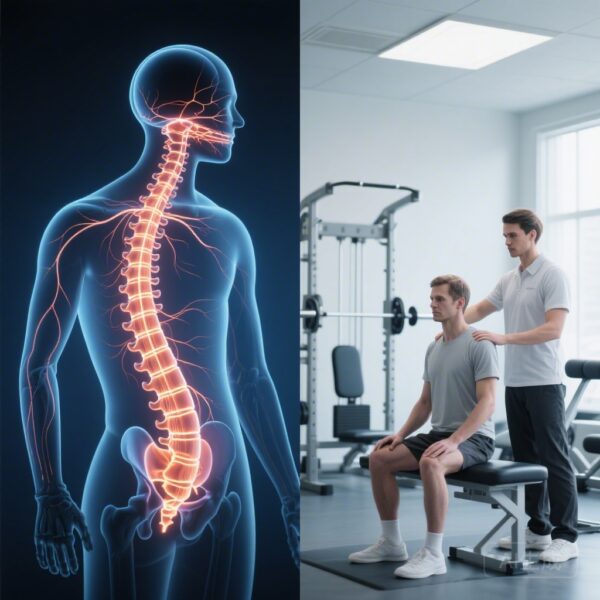
The rehabilitation exercise (RE) group followed a standardized regimen for three months, which included three primary components: neck extension exercises to prevent adhesions and maintain range of motion, swallowing training to coordinate the orofacial musculature, and voice training. In contrast, the control group received only general advice to maintain free neck movement without a structured schedule or specific exercise types.
Outcome Measures
The primary endpoint was the swallowing-related QoL at 1 month postoperatively, measured by the MD Anderson Dysphagia Inventory (MDADI). This validated tool assesses the physical, emotional, and functional impact of swallowing difficulties. Secondary outcomes included MDADI scores at 1 week, 3 months, and 6 months; thyroid cancer-specific QoL; scar assessment; and safety metrics including pain scores, drainage volume, and adverse events.
Key Findings: Quantifying Functional Improvement
The trial yielded compelling evidence that structured exercise outperforms general advice in restoring swallowing function and overall patient well-being.
Primary Outcome: MDADI Scores
At 1 month postoperatively, the RE group demonstrated significantly higher MDADI total scores compared to the control group (97.4 vs. 88.9, p = 0.004). This difference signifies a clinically meaningful improvement in how patients perceive their swallowing ability and its impact on their daily lives. The benefit persisted through the 6-month follow-up (100 vs. 98.9, p = 0.020), suggesting that the intervention not only accelerates recovery but also ensures a more complete return to baseline function.
Pain and Safety Profile
A notable finding was that the RE group reported significantly higher pain levels at 1 week after surgery (p = 0.013). This is biologically plausible, as early mobilization of surgically traumatized tissues can cause transient discomfort. However, this difference disappeared at subsequent follow-up points, and no severe adverse events were recorded. There were no statistically significant differences between the two groups regarding postoperative drainage or scar assessment, indicating that the exercise regimen did not interfere with wound healing or increase surgical site complications.
Comprehensive Quality of Life
While the most pronounced differences were seen in swallowing-related metrics, the RE group generally reported better overall recovery trajectories. The thyroid cancer-specific QoL assessments showed that a structured approach to recovery helps alleviate some of the functional anxiety commonly experienced by patients in the months following surgery.
Expert Commentary: Mechanistic Insights
The success of the orofacial and neck rehabilitation program likely stems from its multi-faceted approach to the physiological changes following thyroidectomy. Surgical dissection of the anterior neck often leads to the development of fibrous adhesions between the various anatomical layers. By introducing standardized neck extension and swallowing exercises early in the recovery phase, these adhesions may be minimized or made more flexible, allowing for smoother laryngeal elevation during deglutition.
Furthermore, the inclusion of voice training and orofacial coordination may provide a neuro-muscular feedback loop that helps patients compensate for subtle changes in laryngeal positioning. The transient increase in pain at one week should be viewed by clinicians as a manageable side effect that does not detract from the long-term benefits. Clinicians should counsel patients that mild discomfort during early exercise is expected and indicative of the mobilization necessary for optimal healing.
One limitation to consider is the single-center nature of the study and the open-label design, which is common in exercise trials but can introduce some reporting bias. However, the use of a validated, patient-reported outcome like the MDADI strengthens the findings by focusing on the patient’s lived experience of recovery.
Conclusion: Integrating Rehabilitation into Standard Care
The results of this randomized controlled trial suggest that standardized postoperative neck and orofacial rehabilitation is an effective, safe, and low-cost intervention for patients undergoing thyroidectomy. By significantly improving swallowing-related quality of life and accelerating the recovery process, this structured protocol addresses a major unmet need in surgical oncology and endocrine surgery.
Healthcare providers should consider incorporating these exercises into routine postoperative instruction packets. Moving away from general advice toward a specific, evidence-based regimen can empower patients, improve functional outcomes, and enhance the overall quality of survivorship for those treated for thyroid disease.
Funding and Clinical Trial Information
This study was registered at the Chinese Clinical Trial Registry under the identifier ChiCTR2500097960. For further details on the protocol and results, readers may refer to the full publication in the journal Thyroid.
References
1. Huang J, Chen W, Zhang J, et al. The Effect of Standardized Postoperative Neck and Orofacial Rehabilitation Exercise on Quality of Life in Post-Thyroidectomy Patients: A Randomized Controlled Trial. Thyroid. 2026. PMID: 41778443.
2. Ryu JS, et al. Factors associated with the development of post-thyroidectomy dysphagia. Thyroid. 2012;22(2):197-201.
3. Kim J, et al. Effect of neck stretching and swallowing exercises on dysphagia after thyroidectomy: a randomized controlled trial. Head & Neck. 2016;38 Suppl 1:E1148-56.
4. Chen AY, et al. Quality of life in thyroid cancer-specific health-related quality of life. Current Opinion in Otolaryngology & Head and Neck Surgery. 2014;22(2):133-138.