Highlights of the Targeted Remediation Trial
Several key findings emerged from this randomized clinical trial (RCT) regarding the remediation of the ipsilesional limb in chronic stroke survivors:
1. Targeted ipsilesional training resulted in a statistically significant 12% reduction in time to complete the Jebsen-Taylor Hand Function Test (JTHFT).
2. Improvements in motor performance were not merely transient; they were sustained at both the 3-week and 6-month post-treatment follow-up assessments.
3. The study specifically addressed patients with severe contralesional impairment (Fugl-Meyer score ≤28), for whom the ipsilesional limb is the primary driver of daily functional independence.
4. While motor performance improved, no significant changes were observed in general functional independence (Barthel Index) or contralesional impairment severity, suggesting the intervention is specific to the treated limb.
The Hidden Deficit: Addressing Ipsilesional Impairment in Stroke
In clinical practice, stroke-related motor deficits are almost exclusively managed by focusing on the contralesional (paretic) limb. However, a growing body of evidence suggests that unilateral strokes, particularly those involving the middle cerebral artery, also induce subtle but functionally significant deficits in the ipsilesional (non-paretic) limb. These deficits include impairments in motor planning, trajectory control, and fine motor coordination.
For patients with mild-to-moderate hemiparesis, these ipsilesional deficits may be negligible. However, for individuals with severe chronic stroke—those who have reached a plateau in contralesional recovery and rely heavily on their “good” arm for activities of daily living (ADLs)—even minor ipsilesional deficits can significantly hinder independence. Despite their clinical importance, these deficits have remained largely neglected in standard rehabilitation protocols. This trial, led by Maenza and colleagues, represents a critical step in validating the ipsilesional limb as a viable and necessary therapeutic target.
Trial Architecture: A Randomized Approach to Ipsilesional Training
This parallel-group RCT was conducted across two major research sites: Penn State College of Medicine and the University of Southern California. The study enrolled 58 adults with radiologically confirmed unilateral middle cerebral artery (MCA) strokes.
Participant Characteristics
Eligible participants were in the chronic phase of recovery (at least 6 months post-stroke) and exhibited severe contralesional upper-extremity impairment, defined by a Fugl-Meyer Assessment (FMA) score of 28 or lower. Crucially, they also had to demonstrate measurable ipsilesional motor deficits. The mean age of the cohort was 59 years, and the analysis followed a modified intent-to-treat (mITT) framework.
Intervention Protocols
Participants were randomized 1:1 to either an ipsilesional treatment group (n=25) or a contralesional treatment group (n=28). The interventions consisted of 15 sessions over five weeks.
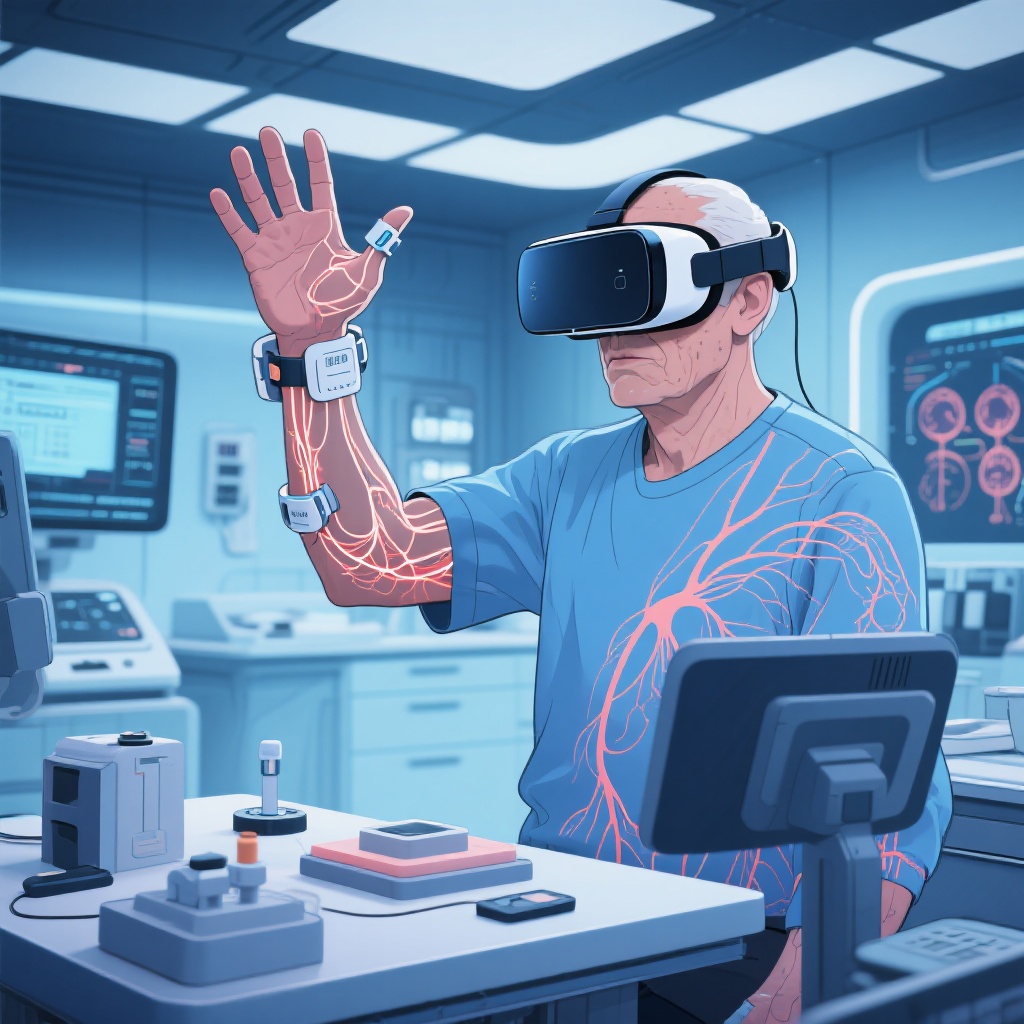
1. The Ipsilesional Group: Received targeted training involving virtual reality (VR) tasks and physical manipulation training focused on the ipsilesional arm. These tasks were designed to improve reaching accuracy, grasping coordination, and complex motor sequencing.
2. The Contralesional Group: Received dose-matched, evidence-based “best practice” therapy for the paretic arm, serving as a robust control for the effects of general therapeutic engagement.
Key Results: Quantifying Motor Improvement
The trial’s primary outcome was the change in ipsilesional motor performance, measured by the Jebsen-Taylor Hand Function Test (JTHFT), excluding the writing subtest.
Primary Outcome: Motor Performance
At the immediate post-treatment assessment, the ipsilesional treatment group demonstrated a significant improvement in JTHFT scores, with a mean difference of -5.87 seconds (95% CI, -8.89 to -2.85; P = .003). This represents a clinically meaningful 12% improvement in the speed and efficiency of manual tasks. Perhaps more importantly, this improvement was maintained throughout the 6-month follow-up period, indicating that the training induced lasting changes in motor behavior.
Secondary Outcomes and Global Function
In contrast to the ipsilesional performance gains, the study found no significant differences between the groups in the Barthel Index (functional independence), the ABILHAND-Stroke (perceived manual ability), or the FMA (contralesional impairment). The lack of change in the Barthel Index may be attributed to its relative insensitivity to fine motor changes in patients with such high baseline disability, or it may suggest that improving the performance of the “good” arm does not automatically translate into perceived global independence without additional compensatory training.
Mechanistic Insights and Expert Commentary
From a neurophysiological perspective, the existence of ipsilesional deficits is explained by the bilateral nature of the motor system. While the majority of the corticospinal tract crosses at the decussation of the pyramids to control the contralateral side, approximately 10% to 15% of fibers remain uncrossed (the ventral corticospinal tract). Furthermore, higher-order motor areas, such as the premotor cortex and supplementary motor area, provide bilateral input for complex motor planning.
Expert commentary on this trial suggests that by focusing on the ipsilesional limb, clinicians are essentially optimizing the remaining “neural real estate.” In severe stroke, where the contralesional pathways are largely decimated, the ipsilesional hemisphere must take on a larger burden of daily functional control. Improving the efficiency of these uncrossed or reorganized pathways through targeted training—especially using high-repetition VR environments—appears to be an effective strategy for maximizing residual capacity.
However, some researchers caution that rehabilitation should remain holistic. While improving the ipsilesional limb is beneficial, it should not necessarily replace contralesional efforts if there is still potential for paretic limb recovery. Instead, this approach should be viewed as a specialized intervention for the severe chronic population.
Conclusion: Shifting the Rehabilitation Paradigm
This randomized clinical trial provides robust evidence that targeted remediation of the ipsilesional arm is both feasible and effective for individuals with chronic, severe stroke. The significant and sustained improvement in motor performance suggests that the current “one-sided” focus of stroke rehabilitation may be missing a vital opportunity to improve the lives of the most severely affected patients.
As the medical community moves toward personalized medicine, rehabilitation protocols should incorporate assessments of the ipsilesional limb. For patients who rely on this limb for their survival and dignity, improving its function by 12% could mean the difference between requiring total assistance and achieving a degree of manual autonomy in daily tasks.
Funding and Registration
This research was supported by grants from the National Institutes of Health (NIH) and various institutional research funds at Penn State and USC.
ClinicalTrials.gov Identifier: NCT03634397.
References
1. Maenza C, Winstein CJ, Murphy TE, et al. Targeted Remediation of the Ipsilesional Arm in Chronic Stroke: A Randomized Clinical Trial. JAMA Neurol. 2026; doi:10.1001/jamaneurol.2025.5496.
2. Sainburg RL, Duff SV. Does the ipsilesional hand provide a window into the motor planning deficits of stroke? J Neurol Phys Ther. 2006;30(1):31-38.
3. Winstein CJ, Wolf SL, Dromerick AW, et al. Effect of a 28-Day Rehabilitative Program on Upper Limb Function After Stroke: The ICARE Randomized Clinical Trial. JAMA. 2016;315(6):571-581.