Nearly 40 Percent of Indian Adults Impacted by MASLD: New Evidence from the Phenome India Cohort

Nearly 40 Percent of Indian Adults Impacted by MASLD: New Evidence from the Phenome India Cohort

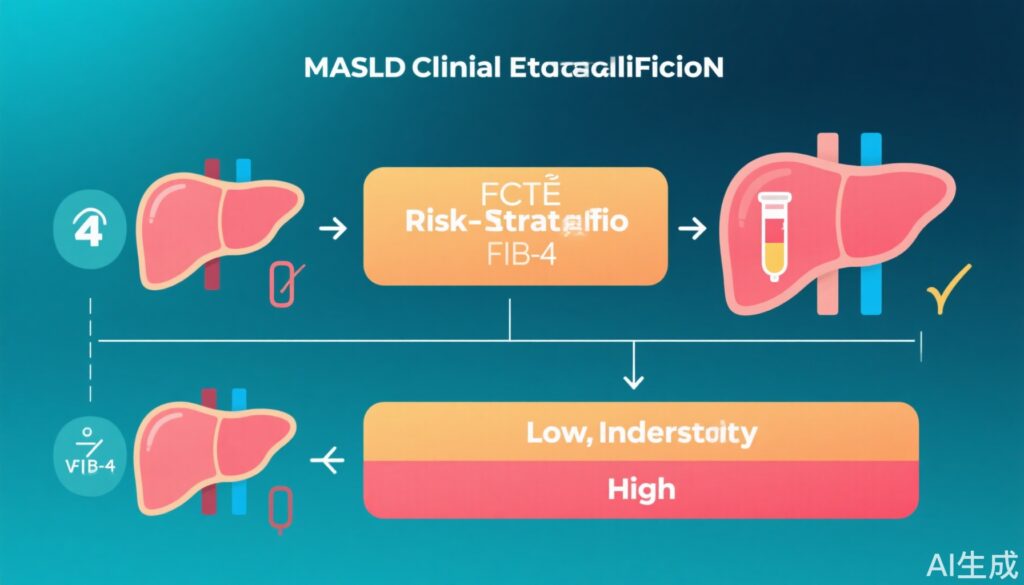
The Phenome India study identifies a 38.9% age-adjusted prevalence **Constructing the JSON Object** Now, I'm carefully constructing the JSON object, which needs to be a valid, parseable string. I'm focusing on incorporating the main findings of the Phenome India cohort study, adding the detailed clinical context. I'm creating a comprehensive discussion on the implications of MASLD and liver fibrosis. I am making sure the summary is under 50 words, and double-checking that all the fields comply with the expected schema, and I'm prepared to handle the references and image prompt. of MASLD and significant liver fibrosis in high-risk metabolic groups, underscoring a major public health challenge in the region.
SGLT2 Inhibitors Linked to Lower Fibrosis Progression than DPP‑4 Inhibitors in MASLD with T2DM: Target‑Trial Emulation of Real‑World Cohorts

SGLT2 Inhibitors Linked to Lower Fibrosis Progression than DPP‑4 Inhibitors in MASLD with T2DM: Target‑Trial Emulation of Real‑World Cohorts

A multicenter target‑trial emulation found SGLT2 inhibitor initiation was associated with a 22% lower risk of progression to advanced fibrosis (confirmed FIB‑4 >2.67) versus DPP‑4 inhibitors in adults with MASLD and T2DM and low‑to‑intermediate baseline fibrosis.
Pemvidutide Produces Rapid Reductions in Liver Fat and AI‑Quantified Fibrosis in Early Phase Trials — Promise and Unanswered Questions

Pemvidutide Produces Rapid Reductions in Liver Fat and AI‑Quantified Fibrosis in Early Phase Trials — Promise and Unanswered Questions

Pemvidutide, a dual GLP‑1/glucagon receptor agonist, reduced liver fat markedly and produced small but statistically significant reductions in AI‑quantified fibrosis over 24 weeks in phase 2 studies, but longer trials with clinical endpoints are needed to establish meaningful benefit.
Enhancing Prognostication in Chronic Liver Disease: The Role of Liver Corrected T1 and Magnetic Resonance Elastography in Real-World Clinical Practice

Enhancing Prognostication in Chronic Liver Disease: The Role of Liver Corrected T1 and Magnetic Resonance Elastography in Real-World Clinical Practice

This study highlights the complementary utility of liver corrected T1 (cT1) and magnetic resonance elastography (MRE) for predicting chronic liver disease progression, emphasizing the critical prognostic role of disease activity beyond fibrosis severity, especially in steatotic liver disease.
Intermittent Fasting vs Low-Calorie Diet in Managing Metabolic-Associated Fatty Liver Disease: Comparative Effects on Inflammation, Lipids, Glycemic Control, and Liver Fibrosis

Intermittent Fasting vs Low-Calorie Diet in Managing Metabolic-Associated Fatty Liver Disease: Comparative Effects on Inflammation, Lipids, Glycemic Control, and Liver Fibrosis

This RCT compares 16:8 intermittent fasting and low-calorie diets in MAFLD patients, revealing both improve liver enzymes and anthropometrics, but low-calorie diet shows superior reduction in liver steatosis, fibrosis, and triglycerides.