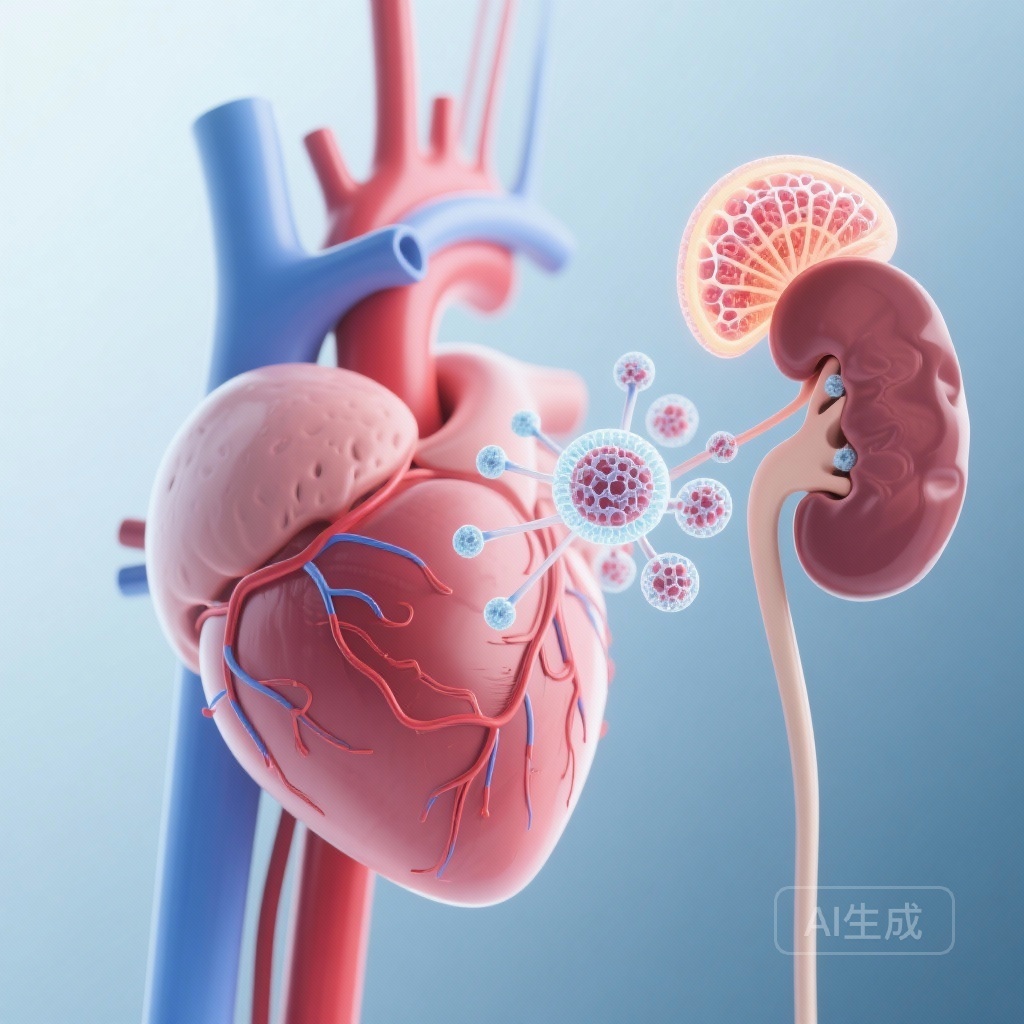
Finerenone Extends Cardiorenal Protection Across the Kidney Risk Spectrum in HFmrEF and HFpEF: Insights from FINEARTS-HF

Finerenone Extends Cardiorenal Protection Across the Kidney Risk Spectrum in HFmrEF and HFpEF: Insights from FINEARTS-HF

A prespecified analysis of the FINEARTS-HF trial demonstrates that the mineralocorticoid receptor antagonist finerenone consistently reduces cardiovascular death and heart failure events in patients with HFmrEF/HFpEF, regardless of baseline KDIGO kidney risk category, while maintaining a manageable safety profile.

Sex-Specific Phenotypes and the Evolving Landscape of Aldose Reductase Inhibition in Diabetic Cardiomyopathy: Insights from ARISE-HF

Sex-Specific Phenotypes and the Evolving Landscape of Aldose Reductase Inhibition in Diabetic Cardiomyopathy: Insights from ARISE-HF

This analysis of the Phase 3 ARISE-HF trial explores sex differences in diabetic cardiomyopathy (DbCM) and the efficacy of AT-001. While women presented with worse exercise capacity and health status at baseline, the novel aldose reductase inhibitor AT-001 showed consistent safety and efficacy across both sexes.
Reversing Prediabetes Halves 30-Year Risk of Cardiovascular Death and Heart Failure: New Insights from DPPOS and DaQing

Reversing Prediabetes Halves 30-Year Risk of Cardiovascular Death and Heart Failure: New Insights from DPPOS and DaQing

A landmark post-hoc analysis of the DPPOS and DaQing studies reveals that achieving prediabetes remission reduces the risk of cardiovascular death and heart failure hospitalization by approximately 50% over three decades, highlighting a profound legacy effect of early glycemic normalization.
M-TEER Benefits in Secondary Mitral Regurgitation: Consistent Clinical and Quality-of-Life Improvements Regardless of Baseline Health Status

M-TEER Benefits in Secondary Mitral Regurgitation: Consistent Clinical and Quality-of-Life Improvements Regardless of Baseline Health Status

The RESHAPE-HF2 trial reveals that mitral transcatheter edge-to-edge repair (M-TEER) significantly reduces cardiovascular risks and enhances health status across all baseline patient conditions, reinforcing its role as a key intervention for symptomatic heart failure and secondary mitral regurgitation.
Oral Magnesium Reduces Risk of Death and Hospitalization in Heart Failure Patients with Hypomagnesemia

Oral Magnesium Reduces Risk of Death and Hospitalization in Heart Failure Patients with Hypomagnesemia

A large-scale study of US veterans demonstrates that oral magnesium therapy significantly improves outcomes in heart failure patients with hypomagnesemia, especially those with levels below 1.3 mg/dL. Conversely, supplementation in normomagnesemic patients may increase risks, highlighting the necessity of baseline-guided clinical intervention.
Intensive Lifestyle Intervention Reduces HFpEF Risk in High-Risk Diabetes: The Prescriptive Power of NT-proBNP

Intensive Lifestyle Intervention Reduces HFpEF Risk in High-Risk Diabetes: The Prescriptive Power of NT-proBNP

A post-hoc analysis of the Look AHEAD trial demonstrates that NT-proBNP levels can identify patients with type 2 diabetes who benefit most from intensive lifestyle interventions. ILI significantly reduced HFpEF risk in those with elevated or stable/decreasing NT-proBNP, supporting a biomarker-guided approach to prevention.
Sacubitril-Valsartan Shows Biological Activity in Chagasic Heart Failure: Insights from the ANSWER-HF Trial

Sacubitril-Valsartan Shows Biological Activity in Chagasic Heart Failure: Insights from the ANSWER-HF Trial

The ANSWER-HF trial compared sacubitril-valsartan to enalapril in patients with Chagasic heart failure. Although the primary endpoint of LVEF improvement was not met at 6 months, significant reductions in NT-proBNP and a favorable win ratio suggest biological activity and safety in this neglected population.