Frailty Amplifies Mortality Risk Across the PaO2/FiO2 Spectrum: Insights from a 497,185‑Patient ANZICS Cohort

Frailty Amplifies Mortality Risk Across the PaO2/FiO2 Spectrum: Insights from a 497,185‑Patient ANZICS Cohort

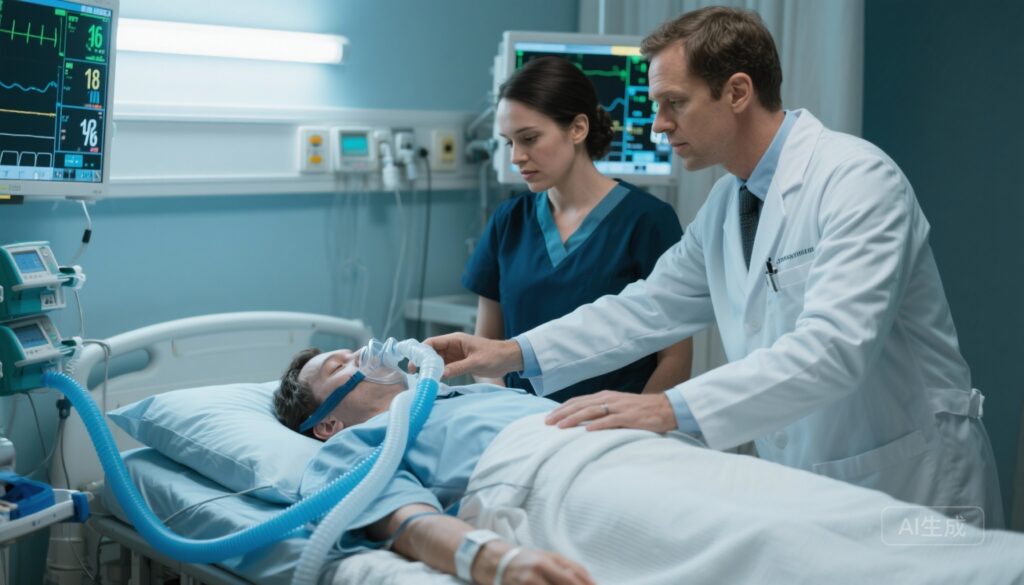
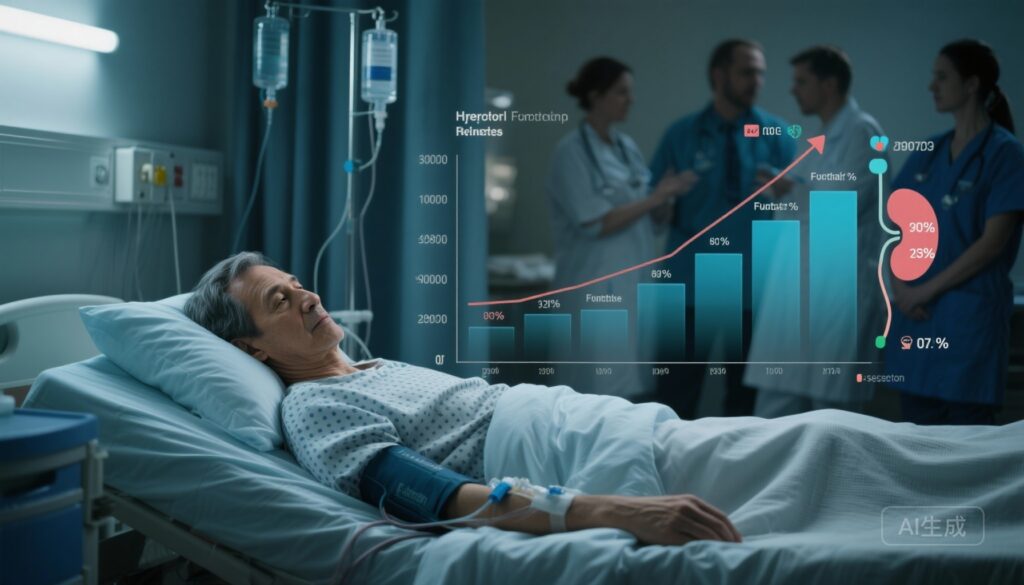
In a 497,185‑patient registry study, frailty (CFS ≥5) was common and associated with substantially higher in‑hospital mortality across all severities of acute hypoxemic respiratory failure (AHRF). The relationship between PaO2/FiO2 and death was nonlinear and distinctly separated by frailty category.
Why Emergency Medicine Residents Rarely Choose Surgical Critical Care — A Nationwide Survey and a Roadmap to Increase EM-SCC Matriculation

Why Emergency Medicine Residents Rarely Choose Surgical Critical Care — A Nationwide Survey and a Roadmap to Increase EM-SCC Matriculation

A national survey of 111 emergency medicine trainees identifies limited exposure to surgical critical care, institutional and geographic factors, and program characteristics (ECMO, multidisciplinary teams) as key modifiable drivers of low EM matriculation into surgical critical care fellowships.
Paracetamol Lowers Cerebral Temperature Modestly but Meaningfully in Febrile Brain‑Injured Patients: Results of the NEUROTHERM Randomized Pharmacodynamic Trial

Paracetamol Lowers Cerebral Temperature Modestly but Meaningfully in Febrile Brain‑Injured Patients: Results of the NEUROTHERM Randomized Pharmacodynamic Trial

In a double‑blind RCT of 99 febrile brain‑injured patients with intracerebral thermal probes, a single IV dose of paracetamol reduced mean cerebral temperature by 0.6°C versus placebo and kept cerebral temperature <38.5°C for a median 3.6 hours; one‑third of patients did not respond.
Conservative Dialysis Strategy Accelerates Kidney Recovery in Dialysis-Requiring AKI — Early Randomized Evidence from LIBERATE-D

Conservative Dialysis Strategy Accelerates Kidney Recovery in Dialysis-Requiring AKI — Early Randomized Evidence from LIBERATE-D

The LIBERATE-D randomized trial found that a conservative, indication-triggered dialysis strategy increased unadjusted kidney-recovery rates at hospital discharge and shortened time to dialysis independence compared with routine thrice-weekly dialysis in patients with dialysis-requiring AKI.
Targeting Capillary Refill Time in Early Septic Shock Reduced Duration of Organ Support: Key Findings from ANDROMEDA‑SHOCK‑2

Targeting Capillary Refill Time in Early Septic Shock Reduced Duration of Organ Support: Key Findings from ANDROMEDA‑SHOCK‑2

ANDROMEDA‑SHOCK‑2 randomized 1,501 patients with early septic shock to a personalized CRT‑guided hemodynamic protocol versus usual care. A hierarchical composite outcome favored the CRT strategy (win ratio 1.16; 95% CI 1.02–1.33; P = .04), driven mainly by shorter duration of organ support rather than lower mortality.
Resistance Training in the ICU Improves Muscle, Function, and Survival — HMB Adds Only Modest Benefit

Resistance Training in the ICU Improves Muscle, Function, and Survival — HMB Adds Only Modest Benefit

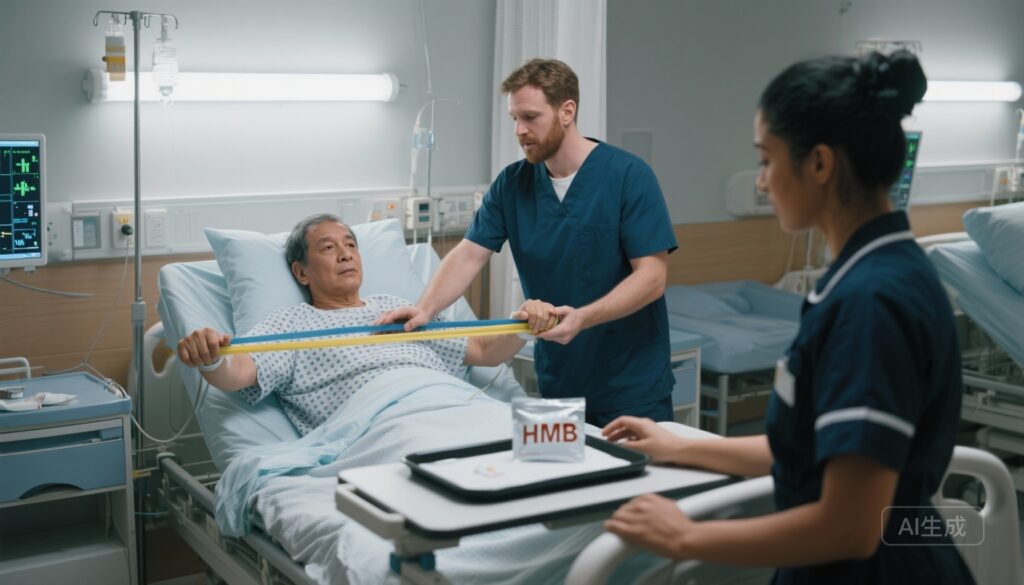
A multicenter 2×2 factorial RCT in 266 critically ill adults shows that in‑ICU resistance training improves discharge physical function, muscle mass, patient‑reported outcomes, and lowers 6‑ and 12‑month mortality; HMB supplementation produced only small gains in phase angle and fatigue with no additive effect.
Continuous Intravenous Sedation Produces Novel EEG ‘Ups’ in Early Acute Hypoxemic Respiratory Failure — Implications for Monitoring and Outcomes

Continuous Intravenous Sedation Produces Novel EEG ‘Ups’ in Early Acute Hypoxemic Respiratory Failure — Implications for Monitoring and Outcomes

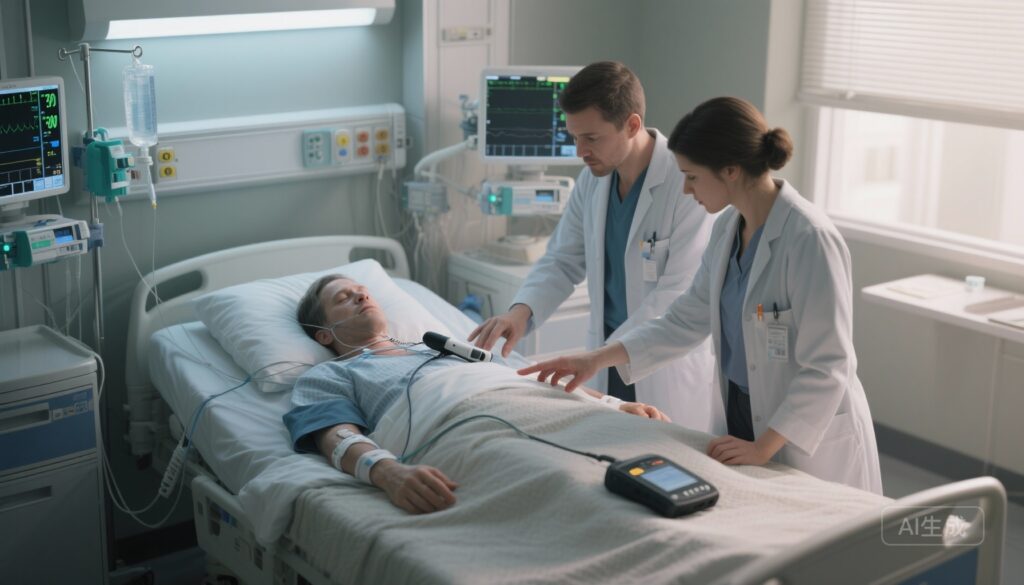
In mechanically ventilated patients with early acute hypoxemic respiratory failure, continuous IV sedation produces EEG patterns (EEG Ups) not seen in natural sleep; these patterns correlate with sedation dose, drug combinations, clinical sedation depth, and ICU mortality.