Trastuzumab Deruxtecan Redefines Postneoadjuvant Care for High-Risk HER2-Positive Early Breast Cancer: Insights from DESTINY-Breast05

Trastuzumab Deruxtecan Redefines Postneoadjuvant Care for High-Risk HER2-Positive Early Breast Cancer: Insights from DESTINY-Breast05

The DESTINY-Breast05 trial demonstrates that Trastuzumab Deruxtecan significantly improves invasive disease-free survival compared to Trastuzumab Emtansine in patients with residual HER2-positive early breast cancer, establishing a new potential standard of care while highlighting the need for vigilant monitoring of interstitial lung disease.
Ifinatamab Deruxtecan Shows Promising Activity in Previously Treated Extensive‑Stage SCLC: Primary Analysis of Phase II IDeate‑Lung01

Ifinatamab Deruxtecan Shows Promising Activity in Previously Treated Extensive‑Stage SCLC: Primary Analysis of Phase II IDeate‑Lung01

In the phase II IDeate‑Lung01 trial, ifinatamab deruxtecan (I‑DXd) at 12 mg/kg every 3 weeks produced a confirmed ORR of 48.2% and median PFS 4.9 months in heavily pretreated extensive‑stage small cell lung cancer (ES‑SCLC), with an adjudicated treatment‑related ILD rate of 12.4%. Results support further development with careful ILD monitoring.
Neoadjuvant TQB2102 (Bispecific HER2-Directed ADC) Produces High Pathologic Complete Response Rates in Early and Locally Advanced HER2-Positive Breast Cancer

Neoadjuvant TQB2102 (Bispecific HER2-Directed ADC) Produces High Pathologic Complete Response Rates in Early and Locally Advanced HER2-Positive Breast Cancer

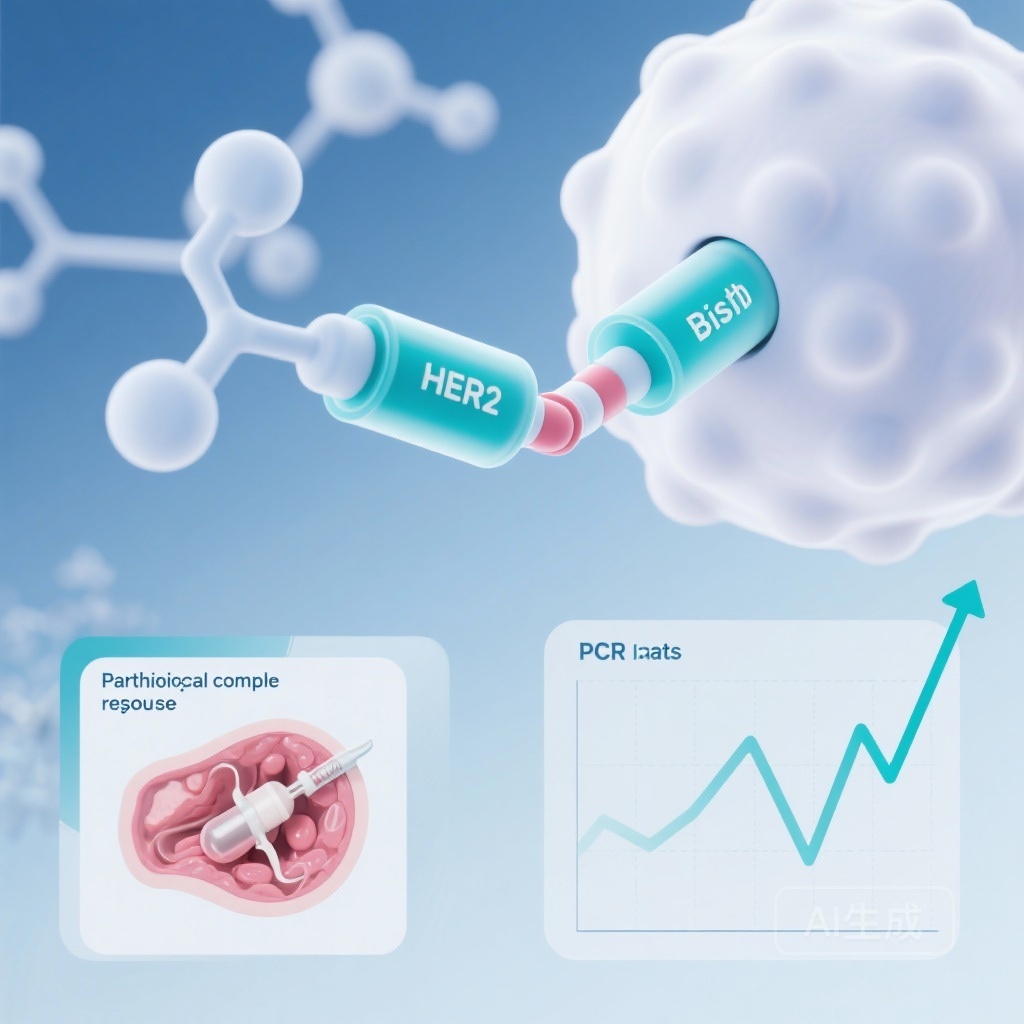
A randomized phase II trial of the bispecific HER2-directed ADC TQB2102 (n=104) showed robust total pathologic complete response rates (tpCR 57.7–76.9% across cohorts) with manageable grade ≥3 toxicity and no treatment‑related deaths, supporting further comparative evaluation.
Izalontamab Brengitecan Doubles Response Rates Versus Chemotherapy in Heavily Pretreated Recurrent or Metastatic Nasopharyngeal Carcinoma

Izalontamab Brengitecan Doubles Response Rates Versus Chemotherapy in Heavily Pretreated Recurrent or Metastatic Nasopharyngeal Carcinoma

A phase 3 randomized trial in China showed the EGFR/HER3 bispecific antibody‑drug conjugate izalontamab brengitecan produced a 54.6% objective response rate versus 27.0% with chemotherapy in heavily pretreated recurrent or metastatic nasopharyngeal carcinoma, though hematologic toxicity was substantial.