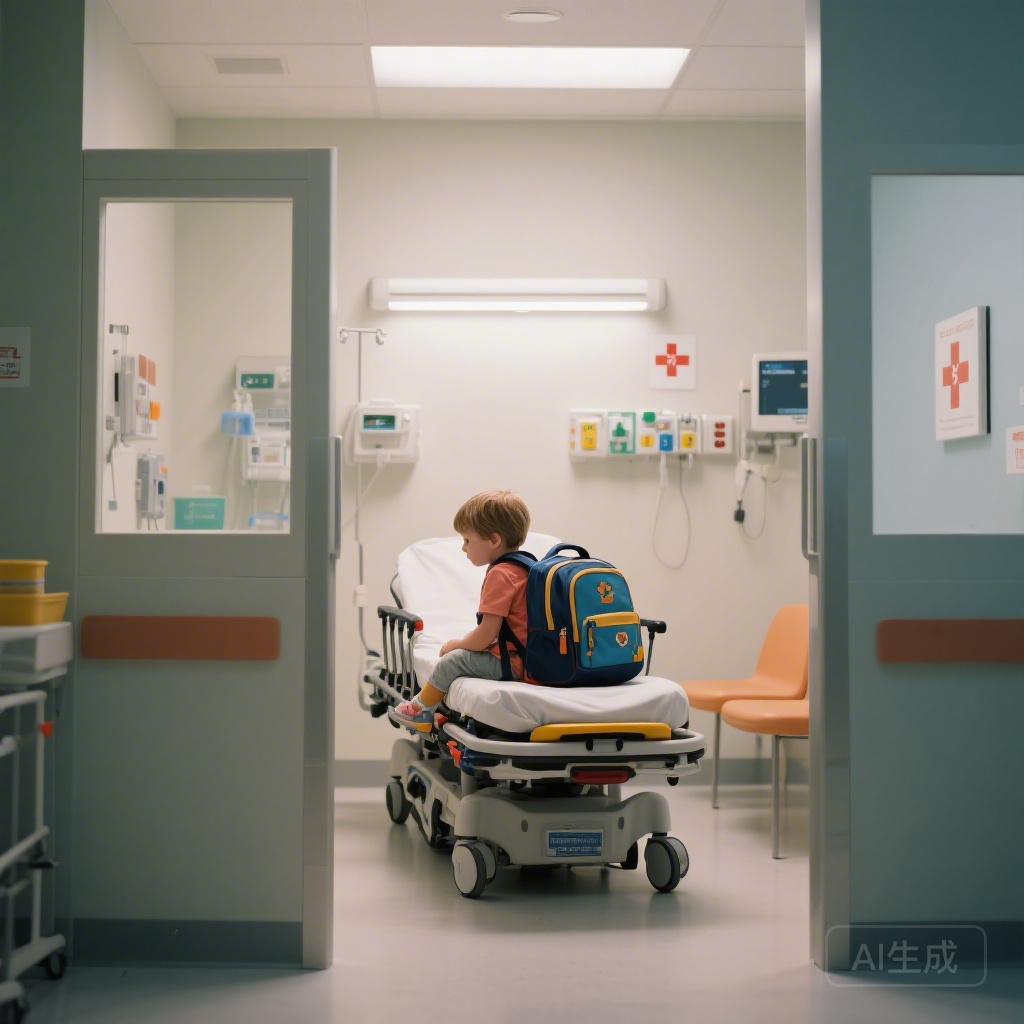
Introduction: The Growing Pediatric Mental Health Crisis
Over the last decade, the landscape of pediatric healthcare has been increasingly dominated by a burgeoning crisis in mental health. Emergency Departments (EDs) across the United States have become the de facto front lines for children and adolescents experiencing acute psychiatric distress. While the surge in ED utilization is well-documented, clinical attention is now shifting toward identifying the specific populations most at risk for poor outcomes within these settings. Among the most vulnerable are youths with a history of out-of-home placement (OOHP), including those in foster care, group homes, or residential treatment facilities.
A seminal study recently published in JAMA Network Open by Kelly et al. (2026) provides a rigorous examination of how a history of OOHP influences the clinical trajectory of pediatric psychiatric patients. The findings suggest that these children do not just stay longer in the ED—they are also subject to higher rates of physical and pharmacological interventions, raising profound questions about systemic equity and the adequacy of our current mental health infrastructure.
The Burden of Out-of-Home Placement (OOHP)
Children in OOHP often enter the healthcare system with a complex tapestry of trauma, including early childhood neglect, physical or sexual abuse, and the inherent instability of being separated from primary caregivers. These factors frequently manifest as severe emotional and behavioral dysregulation. When these youths present to the ED in crisis, they often face a double-edged sword: high clinical acuity combined with a lack of stable discharge options. This phenomenon, known as “boarding,” occurs when a patient remains in the ED after the initial assessment because an appropriate inpatient bed or community-based placement is unavailable.
Study Design and Methodology
The research conducted at Mayo Clinic Rochester employed a retrospective, electronic health record (EHR)-based, cross-sectional design. The study period spanned from January 1, 2021, to June 30, 2024, focusing on patients aged 17 years or younger who received a psychiatric consultation within the ED. As a tertiary referral center and regional hub, the Mayo Clinic provides a robust data set reflecting both primary and specialized care needs.
The investigators analyzed 1,572 care encounters involving 1,119 unique patients. The primary outcome was the length of stay (LOS) in the ED, while secondary outcomes included the use of physical and pharmacological restraints. To ensure the findings were robust, the team utilized linear mixed-effects regression models, log-transforming the LOS data and adjusting for a variety of potential confounders, including age, sex, insurance type, number of prior diagnoses, and specific reasons for boarding.
Key Findings: Prolonged Length of Stay
The results of the study are striking. Of the total encounters, 328 (approximately 21%) involved patients with a history of OOHP. Demographically, the OOHP group showed a higher prevalence of Black (16% vs 10%) and American Indian or Alaska Native (4% vs 2%) youths compared to the non-OOHP group, reflecting broader societal disparities in child welfare involvement.
The most significant finding was that children and adolescents with a history of OOHP spent 24% (95% CI, 12%-36%) more time in the ED than their peers with no such history. Crucially, this association remained significant even after adjusting for the severity of the presenting concerns and the logistical reasons for prolonged boarding (P = .004). This suggests that the history of OOHP itself acts as an independent predictor of longer stays, likely due to the complexities of coordinating care with state agencies and the relative scarcity of placement options willing to accept children with high behavioral needs.
Restraint Use: A Secondary Crisis
Beyond the duration of stay, the study examined the clinical management of these patients while in the ED. The data revealed a deeply concerning trend regarding the use of restraints. Youths with a history of OOHP had 2.05 times higher odds (95% CI, 1.69-2.48) of being physically restrained and 2.15 times higher odds (95% CI, 1.79-2.58) of receiving pharmacological restraints (P < .001 for both).
Restraint use in pediatric populations is a highly sensitive issue. For a child with a history of trauma—common in the OOHP population—the experience of being physically or chemically restrained can be retraumatizing, potentially exacerbating the very symptoms that led to the ED visit. The significantly higher odds of restraint use in this group suggest a need for more specialized, trauma-informed de-escalation strategies tailored for youths with complex placement histories.
Clinical Implications and Expert Commentary
The findings by Kelly et al. highlight a systemic failure to provide timely and appropriate care for one of society’s most vulnerable groups. From a clinical perspective, the prolonged LOS is not merely a logistical inconvenience; it is a period of high risk. EDs are often loud, bright, and chaotic environments that are poorly suited for psychiatric stabilization. For a child in foster care, spending days in an ED cubicle can heighten feelings of abandonment and anxiety.
Expert commentary suggests that the “boarding crisis” for OOHP youth is driven by several factors. First, there is often a breakdown in communication between medical providers and social service agencies. Second, many residential facilities are hesitant to accept youths who have demonstrated aggressive or self-harming behaviors, leading to a “revolving door” effect where the ED becomes the only place left to go. Finally, the higher rate of restraint use may reflect a lack of specialized training among ED staff in managing the specific behavioral phenotypes associated with complex developmental trauma.
Biological Plausibility and Mechanistic Insights
The increased LOS and restraint use can also be viewed through the lens of neurobiology. Chronic stress and trauma associated with OOHP can lead to dysregulation of the hypothalamic-pituitary-adrenal (HPA) axis and changes in the prefrontal cortex and amygdala. This often results in a heightened “fight or flight” response. In a high-stress environment like the ED, these patients may exhibit more intense behavioral reactions to perceived threats, which clinicians may then meet with pharmacological or physical interventions. Understanding this biological underpinning is essential for moving toward care models that prioritize stabilization over sedation.
Strengths and Limitations
The study’s strengths include its large sample size and the use of a tertiary center’s EHR, which provided detailed demographic and clinical data. The adjustment for multiple confounders adds significant weight to the conclusion that OOHP is a primary driver of LOS. However, as a cross-sectional, retrospective study, it cannot definitively establish a causal relationship. Furthermore, being a single-center study at the Mayo Clinic, the findings might not be fully generalizable to smaller community hospitals or different geographic regions with varying social service infrastructures.
Conclusion: A Call for Systemic Reform
The study by Kelly and colleagues serves as a critical wake-up call for healthcare administrators, policymakers, and clinicians. History of OOHP is a significant risk factor for extended ED boarding and increased use of restraints. Addressing this disparity requires a multi-pronged approach: increasing the availability of specialized psychiatric beds, improving the coordination between hospitals and child welfare agencies, and implementing trauma-informed care training for all ED staff.
Ultimately, the goal is to ensure that a child’s history of placement does not dictate the quality or duration of their medical care. By recognizing OOHP as a high-risk clinical marker, we can begin to develop targeted interventions that mitigate the trauma of the ED experience and move toward more equitable health outcomes for all children.
References
1. Kelly CK, Saliba M, Park JH, et al. Prior Out-of-Home Placement and Length of Stay Among Youths Receiving Mental Health Services in the ED. JAMA Netw Open. 2026;9(1):e2555339. doi:10.1001/jamanetworkopen.2025.55339.
2. Glied S, Little SE, Solis-Roman C, et al. Trends in Pediatric Emergency Department Visits for Mental Health, 2011-2020. Health Affairs. 2022;41(10):1457-1466.
3. Newton AS, Soleimani A, Kirkland SW, et al. A Systematic Review of Management Strategies for Children’s Mental Health Care in the Emergency Department. Annals of Emergency Medicine. 2017;70(4):516-527.