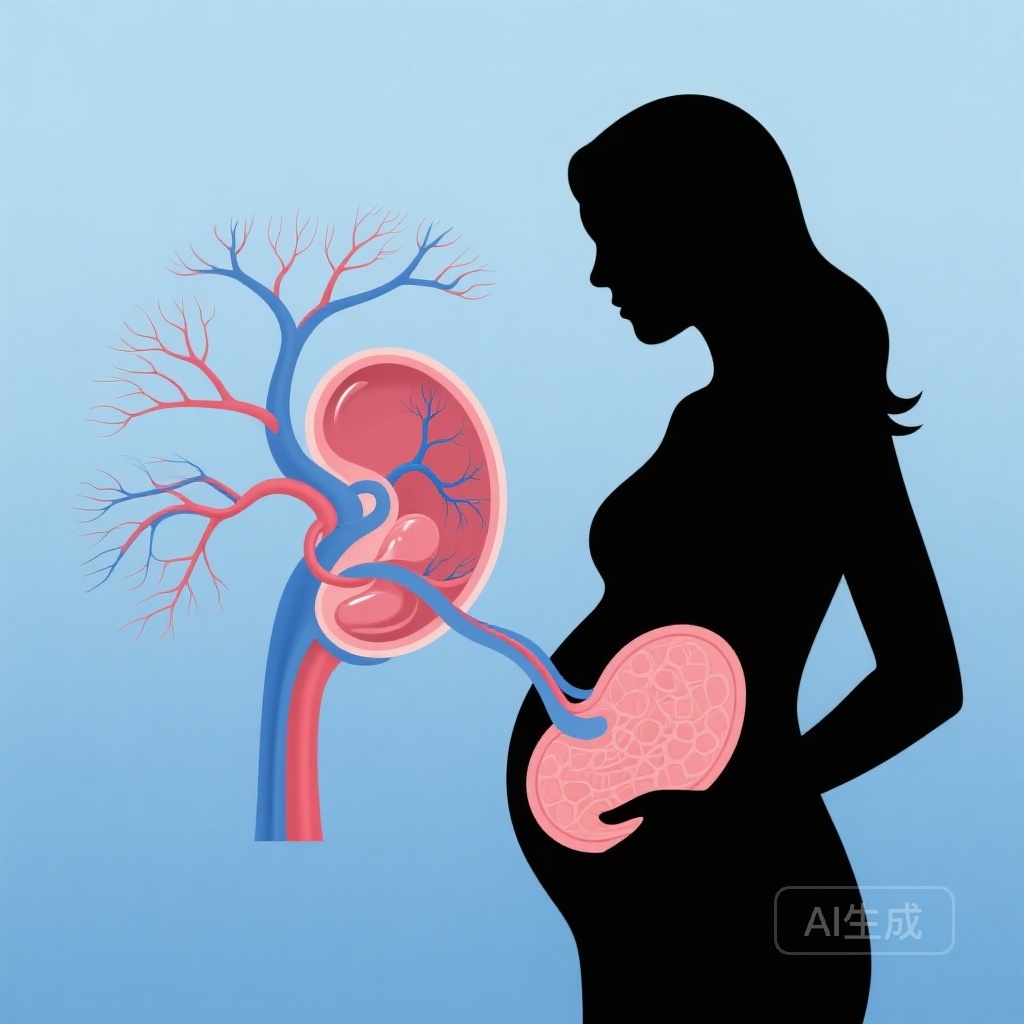
High Livebirth Success Amidst Persisting Clinical Challenges
For decades, systemic sclerosis (SSc) was considered a relative contraindication to pregnancy due to fears of renal crisis and poor fetal outcomes. However, as management strategies for connective tissue diseases have evolved, more women with SSc are pursuing biological motherhood. While recent retrospective data suggested improved outcomes, prospective evidence has remained scarce. The GR2 French prospective study, recently published in The Lancet Rheumatology, provides a critical update on the landscape of pregnancy in systemic sclerosis, including those with very early diagnosis of the disease (VEDOSS). The findings offer a nuanced perspective: while the vast majority of pregnancies reach a successful livebirth, the rates of obstetric complications and maternal disease progression remain alarmingly higher than those in the general population.
Highlights of the GR2 Study
The study highlights several key clinical takeaways for the management of SSc in the reproductive years:
- Livebirths occurred in 91.4% of pregnancies, demonstrating that successful delivery is the norm rather than the exception.
- The incidence of pre-eclampsia was more than four times higher than in the general population (13.2% vs 3.0%).
- Severe postpartum hemorrhage occurred in over 11% of cases, a stark contrast to the 1.4% seen in age-matched controls.
- Maternal disease progression was observed in approximately 40% of patients, with the postpartum period identified as a window of high vulnerability.
Study Design and Patient Population
The GR2 study (Grossesse et Maladies Rares) is a French nationwide prospective observational study. For this specific analysis, researchers included pregnant women meeting the American College of Rheumatology-European League Against Rheumatism (ACR-EULAR) 2013 classification criteria for SSc or the VEDOSS (Very Early Diagnosis of Systemic Sclerosis) criteria. Between 2014 and 2020, 58 pregnancies in 52 women were analyzed.
The primary objectives were to evaluate a composite of adverse pregnancy outcomes (APO)—defined as preterm birth at 34 weeks or less, placental insufficiency complications (pre-eclampsia or fetal growth restriction), small for gestational age (SGA), or fetal/neonatal death—and to monitor the maternal disease course. Outcomes were compared with age-matched controls from the 2016 French Perinatal Survey (ENP), representing the general population.
Obstetric and Fetal Outcomes: The Burden of Placental Insufficiency
The data underscore a significant burden of placental-mediated complications. Among the 53 pregnancies that progressed beyond 22 weeks of gestation, 26.4% reached the composite APO endpoint. Specifically, placental insufficiency complications (pre-eclampsia or fetal growth restriction) were documented in 22.6% of pregnancies. Small for gestational age (SGA) infants were identified in 11.3% of cases.
When compared to the general population, the disparities were statistically and clinically significant. Pre-eclampsia occurred in 13.2% of the SSc cohort compared to 3.0% in the control group (p=0.0010). Preterm birth before 37 weeks was also more frequent (13.2% vs 5.8%), as was the frequency of infants born with a birthweight of less than 2500 g (21.1% vs 4.3%). These findings suggest that the underlying vasculopathy of systemic sclerosis likely impairs normal placentation, even in patients who appear clinically stable before conception.
Maternal Disease Course: The Postpartum Risk Window
A major concern in managing SSc during pregnancy is the potential for the physiological stress of gestation to trigger disease flares or progression. The GR2 study found that SSc or VEDOSS worsened in 23 (39.7%) of the 58 pregnancies. Interestingly, this worsening was most frequently observed during the postpartum period rather than during the pregnancy itself.
Univariate analysis identified several risk factors for disease progression. Women with diffuse cutaneous systemic sclerosis (dcSSc) had a significantly higher risk (OR 3.7 [95% CI 1.1-12.4]), as did those with a history of cutaneous vascular involvement (OR 3.7 [1.2-11.5]). Conversely, the presence of anticentromere antibodies was associated with a more stable disease course (OR 0.2 [0.1-0.8]), providing a potential prognostic marker for clinicians during pre-conception counseling.
Expert Commentary: Interpreting the Data for Clinical Practice
The high rate of severe postpartum hemorrhage (11.3%) is one of the most striking findings of this study. This suggests a need for heightened vigilance during the third stage of labor and the immediate postpartum hours. Whether this risk is due to uterine vasculopathy, subclinical coagulopathy, or interactions with medications remains an area for further investigation. Clinicians should ensure that delivery occurs in centers equipped to manage high-volume hemorrhage.
The high frequency of placental insufficiency also reinforces the importance of serial ultrasound monitoring for fetal growth and Doppler studies of the uterine and umbilical arteries. Given the increased risk of pre-eclampsia, the use of low-dose aspirin starting early in the second trimester should be considered for all patients with SSc, in line with broader obstetric guidelines for high-risk populations.
Regarding disease progression, the data highlight that patients with diffuse involvement require the most intensive monitoring. The fact that worsening often occurs postpartum suggests that rheumatological follow-up should not be relaxed after delivery. Instead, the first six months postpartum should be viewed as a critical period for assessing skin scores, pulmonary function, and vascular symptoms.
Conclusion and Future Directions
The GR2 study provides reassuring news regarding the high rate of livebirths in women with systemic sclerosis but serves as a sobering reminder of the obstetric and rheumatological risks involved. The significant associations between dcSSc and disease worsening, and the elevated risk of pre-eclampsia and postpartum hemorrhage, mandate a multidisciplinary approach involving rheumatologists, maternal-fetal medicine specialists, and anesthesiologists.
Future research should focus on whether specific therapeutic interventions, such as optimized vasodilator therapy or earlier immunosuppressive adjustments, can mitigate the risks of placental insufficiency and postpartum disease flares. For now, the GR2 study stands as a foundational piece of evidence for counseling and managing this complex patient population.
Funding and ClinicalTrials.gov
This study was supported by various organizations including Lupus France, Association des Sclérodermiques de France, Association Gougerot Sjögren, Association Francophone Contre la Polychondrite Chronique Atrophiante, AFM-Telethon, Société Nationale Française de Médecine Interne, Société Française de Rhumatologie, Cochin Hospital, the French Health Ministry, and others. The study is part of the GR2 (Grossesse et Maladies Rares) registry.
References
Murarasu A, Beaudeau L, Le Guern V, et al. Fetal and maternal outcome in the pregnancies of patients with systemic sclerosis and very early diagnosis of systemic sclerosis in France: a prospective study. Lancet Rheumatol. 2026 Jan;8(1):e33-e41. doi: 10.1016/S2665-9913(25)00185-7. Epub 2025 Oct 28. PMID: 41173018.