High-Level Highlights
Superior Efficacy of Combined Therapy
The combination of repetitive transcranial magnetic stimulation (rTMS) and transcranial direct current stimulation (tDCS) resulted in significantly greater reductions in Hamilton Depression Rating Scale (HDRS) and Hamilton Anxiety Scale (HAMA) scores compared to monotherapy or sham interventions.
High Response and Remission Rates
At the end of the treatment period, the combined rTMS+tDCS group achieved an anxiety response rate of 82.83% and a remission rate of 26.17%, both of which were statistically superior to the other study arms.
Safety and Tolerability
Despite the increased intensity of dual-modality stimulation, the protocol was well-tolerated with no serious adverse events reported, supporting its clinical scalability.
The Clinical Challenge of Anxious Depression
Major Depressive Disorder (MDD) is rarely a monolithic condition. When comorbid anxiety symptoms are present—often referred to as anxious depression—the clinical trajectory becomes significantly more complex. Patients with this phenotype typically experience greater functional impairment, a higher risk of suicidal ideation, and a poorer response to conventional antidepressant pharmacotherapy. These patients also face a higher likelihood of treatment resistance and relapse.
While non-invasive brain stimulation (NIBS) techniques like rTMS and tDCS have individually established themselves as viable alternatives or adjuncts to medication, their comparative and combined efficacy has remained a subject of intense investigation. The need for more potent, rapid-acting, and well-tolerated interventions for this high-risk population led to the current investigation into dual-modality neuromodulation.
Study Design and Methodology
This double-blind, randomised, sham-controlled trial (ChiCTR2100052122) enrolled 240 patients diagnosed with MDD and significant anxiety symptoms. To rigorously evaluate the interaction between different stimulation types, the researchers employed a four-arm design:
1. Active rTMS + Active tDCS
2. Active rTMS + Sham tDCS
3. Sham rTMS + Active tDCS
4. Sham rTMS + Sham tDCS
The intervention protocol consisted of 10 sessions administered over a 2-week period. Follow-up assessments were conducted 2 weeks after the completion of treatment (the 4-week mark). The primary endpoints were changes in the Hamilton Depression Rating Scale (HDRS) and the Hamilton Anxiety Scale (HAMA) from baseline. The study utilized mixed-design analysis of variance (ANOVA) to assess group differences and longitudinal changes.
Key Findings: A New Standard for Efficacy
Symptom Reduction Across Scales
After the 2-week intervention, the combined rTMS+tDCS group demonstrated a clear therapeutic advantage. The reduction in HDRS scores was significantly more pronounced in the combined group than in the rTMS monotherapy, tDCS monotherapy, or sham groups. This trend was mirrored in anxiety symptoms; HAMA score reductions in the combined group were significantly larger than those in the sham-sham group and remained superior to all other groups during the 4-week follow-up period.
Clinical Response and Remission
Beyond mean score reductions, the categorical clinical outcomes provided compelling evidence for synergy. The combined group reached a response rate for anxiety of 82.83% (p=0.014) and a remission rate of 26.17% (p=0.020) post-treatment. These figures suggest that the dual-modality approach may overcome the therapeutic ceiling often encountered with single-modality NIBS.
Safety Profile
Safety is a paramount concern when combining neurostimulation techniques. The study reported that the combined application of magnetic and electrical stimulation did not increase the incidence of serious adverse events. Common side effects were mild and transient, consistent with those observed in standard rTMS or tDCS applications, such as localized scalp discomfort or mild headaches.
Expert Commentary and Mechanistic Insights
The Rationale for Synergistic Stimulation
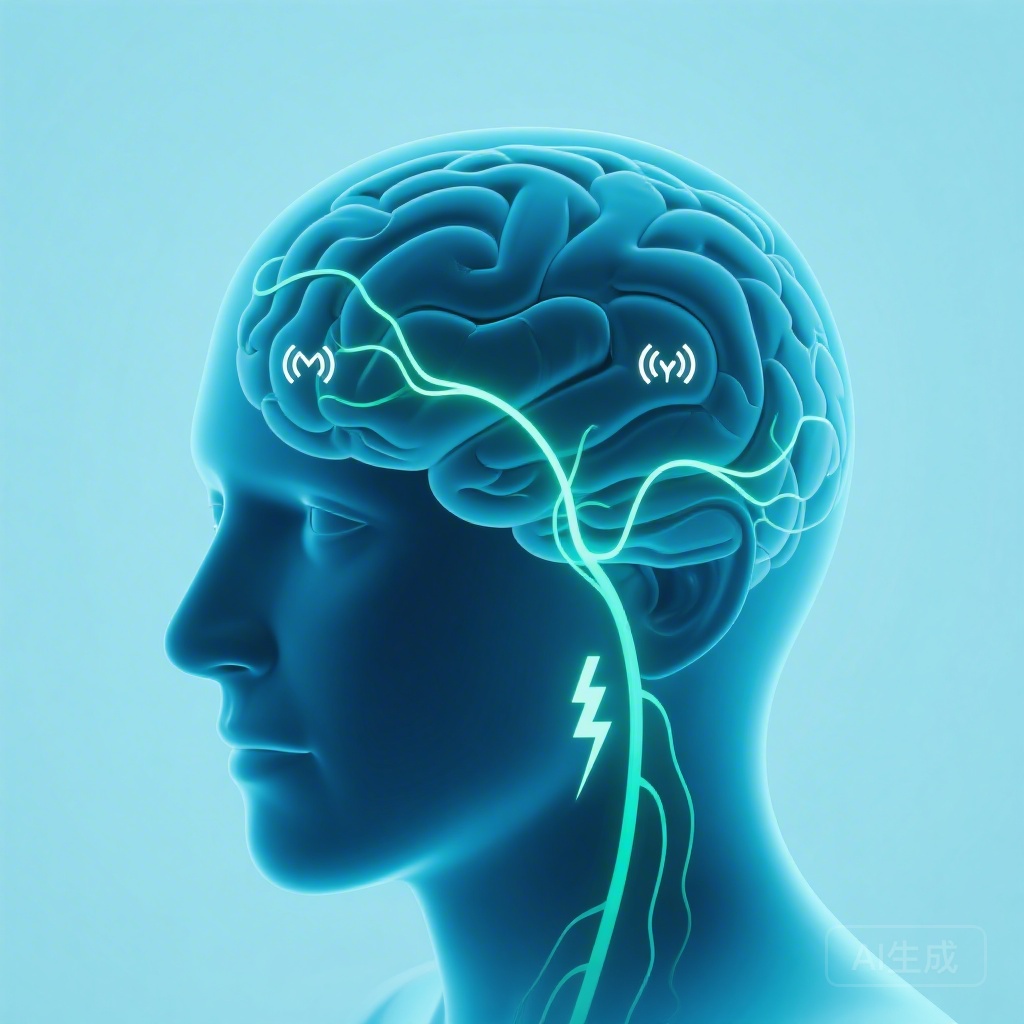
Why does the combination of rTMS and tDCS work better than either alone? From a neurophysiological perspective, the two modalities operate through distinct but complementary mechanisms. rTMS uses high-intensity magnetic pulses to induce electrical currents in specific cortical regions (typically the dorsolateral prefrontal cortex, or DLPFC), triggering action potentials and modulating synaptic plasticity. tDCS, conversely, uses low-intensity direct current to shift the resting membrane potential of neurons, making them more or less likely to fire—essentially ‘priming’ the neural environment.
By applying both simultaneously or sequentially, clinicians may be leveraging rTMS to drive focal activity while using tDCS to enhance the overall excitability and neuroplastic potential of the targeted circuit. This ‘prime and pump’ mechanism likely explains the deeper clinical response seen in the combined arm of the study.
Addressing Limitations
While the results are robust, experts note that the 4-week follow-up period is relatively short. Further research is required to determine the long-term durability of the combined effect and whether maintenance sessions are necessary to prevent relapse in this vulnerable population. Additionally, the study’s focus on a 10-session protocol over 2 weeks is shorter than some standard clinical rTMS protocols (which often span 4-6 weeks), suggesting that even greater gains might be possible with extended treatment courses.
Conclusion and Clinical Implications
This study provides high-level evidence that combined rTMS and tDCS is more effective than monotherapy for patients suffering from MDD with comorbid anxiety. For the clinician, these findings suggest a shift toward more integrated neuromodulation strategies. This approach offers a potent, non-pharmacological option that can be integrated into existing clinical workflows to address one of the most challenging patient populations in psychiatry.
As healthcare systems move toward personalized medicine, the ability to combine these well-tolerated technologies could significantly reduce the disease burden of anxious depression and improve the quality of life for millions of patients.
Trial Registration and Funding
Trial registration number: ChiCTR2100052122.
This research was supported by institutional grants focused on advancing non-invasive brain stimulation techniques for refractory mental health disorders.
References
Li D, Li J, Wei S, Li X, Liu J, Luo R, Li Y, Zhou D, Zhang X, Wang D. Efficacy of rTMS combined with tDCS in patients with major depressive disorder with anxiety: a randomised, double-blind, sham-controlled study. BMJ Ment Health. 2025 Dec 25;28(1):e301952. doi: 10.1136/bmjment-2025-301952. PMID: 41448837.