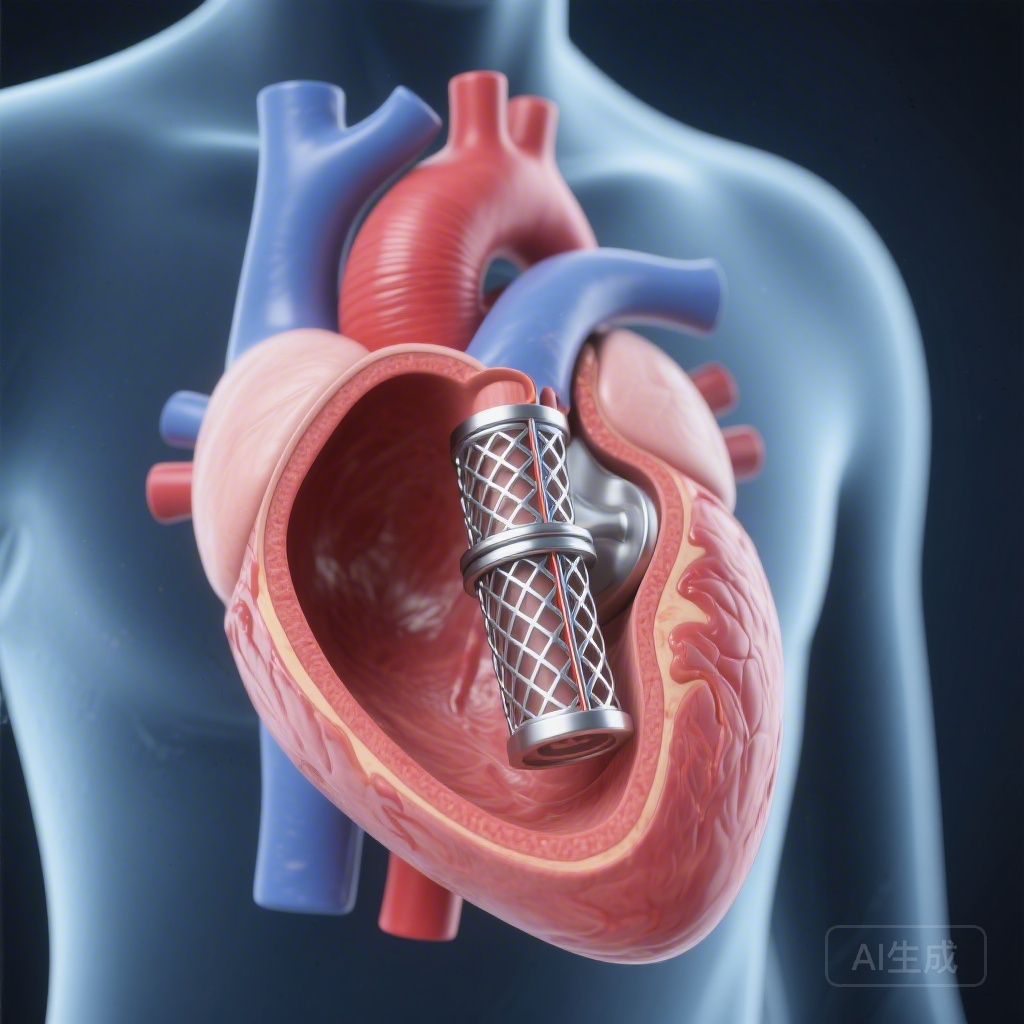
Highlights of the 3-Year ALTERRA Analysis
The long-term results from the pooled ALTERRA trials provide robust evidence for the use of the Alterra Adaptive Prestent in conjunction with the SAPIEN 3 transcatheter heart valve (THV). Key findings include:
- 97.3% freedom from reintervention at the 3-year mark, suggesting high procedural durability.
- 100% of patients maintained a mean right ventricular outflow tract (RVOT) gradient below 35 mm Hg.
- 93.3% of the cohort exhibited mild or lesser total pulmonary regurgitation (PR) at the 3-year follow-up.
- Zero reported cases of endocarditis, coronary artery compression, or hemopericardium throughout the study period.
Background: The Clinical Challenge of the Dysfunctional RVOT
Chronic pulmonary regurgitation is a frequent and serious complication for patients who have undergone surgical repair of congenital heart defects, most notably Tetralogy of Fallot. Over time, severe PR leads to progressive right ventricular (RV) dilation, dysfunction, and an increased risk of arrhythmias and heart failure. While transcatheter pulmonary valve implantation (TPVI) has revolutionized the treatment of these patients, a significant portion of the population—estimated at up to 80% in some registries—possesses an RVOT too large or irregularly shaped for standard transcatheter valves like the Melody or the standalone SAPIEN 3.
The Alterra Adaptive Prestent was designed specifically to address this ‘landing zone’ mismatch. By acting as a diameter reducer and a stable scaffold, it allows for the secure placement of a 29 mm SAPIEN 3 THV in large, native, or patched RVOTs that were previously considered only suitable for surgical pulmonary valve replacement (PVR).
Study Design and Methodology
The study presented is a multicenter, prospective, pooled analysis of patients enrolled in the ALTERRA pivotal trial, the Continued Access Protocol, and the Pulmonic Delivery System Registry. The primary objective was to evaluate the long-term safety and efficacy of the Alterra/SAPIEN 3 system.
Eligible participants were those with moderate or greater PR and RVOT anatomy suitable for the prestent. The investigators utilized a nonhierarchical composite end point for THV dysfunction at 6 months, which included RVOT/pulmonary valve reintervention, moderate or greater PR, and a mean gradient of 35 mm Hg or higher. Following the initial assessment, patients were tracked for 3 years to monitor clinical outcomes, echocardiographic stability, and safety events. A total of 118 patients across 14 specialized sites underwent successful implantation.
Key Findings: Efficacy and Durability at Three Years
The 3-year outcomes represent the longest follow-up data available for this specific device combination. The results underscore a high level of hemodynamic stability. At the 6-month mark, THV dysfunction was notably low at 3.5% (4 out of 113 patients). As the study progressed to 3 years, the efficacy remained remarkably consistent.
Hemodynamic Performance
The primary goal of TPVI is the reduction of PR and the maintenance of low transvalvular gradients. In this cohort, 100% of patients had mean RVOT gradients under 35 mm Hg at 3 years, with the majority maintaining gradients far below that threshold. Furthermore, the reduction in pulmonary regurgitation was sustained; 93.3% of patients had mild or lesser PR, a dramatic improvement from their baseline status of moderate-to-severe PR. This sustained reduction is critical for promoting RV remodeling and improving long-term exercise tolerance.
Reintervention Rates
Freedom from reintervention is a primary metric for the success of any valve therapy. The Alterra/SAPIEN 3 system demonstrated a 97.3% freedom from reintervention rate at 3 years. This suggests that the adaptive prestent provides a secure and stable environment that prevents valve migration or early structural failure, even in the dynamic and high-volume environment of the RVOT.
Safety Outcomes and Clinical Stability
Safety remains the paramount concern in transcatheter interventions. The pooled analysis reported a Kaplan-Meier estimate for all-cause mortality of 3.5% at 3 years. Crucially, the study observed no instances of coronary artery compression, a risk that often limits TPVI in certain anatomical configurations. Additionally, there were no cases of hemopericardium or, perhaps most significantly, endocarditis.
The absence of endocarditis at 3 years is particularly noteworthy. Previous generations of transcatheter pulmonary valves have been associated with varying rates of infective endocarditis. While a longer duration of follow-up is always desirable, these 3-year results provide significant reassurance regarding the biocompatibility and infection resistance of the Alterra/SAPIEN 3 system.
Expert Commentary and Clinical Implications
The ALTERRA trials represent a significant shift in the management of the ‘large RVOT’ population. By expanding the eligibility for TPVI, clinicians can offer a less invasive alternative to open-heart surgery for a broader range of patients. The use of a ‘prestent’ to create a landing zone is a sophisticated mechanical solution to a biological problem of anatomical variability.
However, experts note that while these results are excellent, patient selection remains vital. The 3.5% mortality rate, though low, highlights the complexity of the patient population being treated, many of whom have multiple prior sternotomies and significant comorbid conditions. The lack of coronary compression in this study is likely a testament to the rigorous pre-procedural screening and CT-based planning that are now standard in TPVI protocols.
Conclusion
The 3-year pooled outcomes of the ALTERRA trials confirm that the Alterra Adaptive Prestent combined with the SAPIEN 3 THV is a durable and effective solution for patients with dysfunctional, large RVOTs. With a high rate of PR reduction, excellent pressure gradients, and an impressive safety profile, this system establishes itself as a core component of the modern interventional cardiologist’s toolkit for treating adult and pediatric congenital heart disease.
Funding and Clinical Trial Information
The ALTERRA trials were supported by Edwards Lifesciences. The studies were registered at ClinicalTrials.gov under the unique identifier NCT03130777.
References
Torres AJ, Dimas VV, Shahanavaz S, Balzer D, Morgan G, Lim DS, Armstrong AK, Berman D, Babaliaros V, Kim D, Gillespie MJ, Sommer R, Aboulhosn J, Jones TK, Mahadevan VS, Stapleton G, Ma Y, Shirali G, Parthiban A, Blanke P, Leipsic J, Zahn E. Transcatheter Pulmonary Valve Implantation With the Alterra Adaptive Prestent and SAPIEN 3 Transcatheter Heart Valve: 3-Year Pooled Outcomes of the ALTERRA Trials. Circ Cardiovasc Interv. 2026 Feb 9:e015873. doi: 10.1161/CIRCINTERVENTIONS.125.015873. Epub ahead of print. PMID: 41657206.