Introduction: The Challenge of the Small Surgical Valve
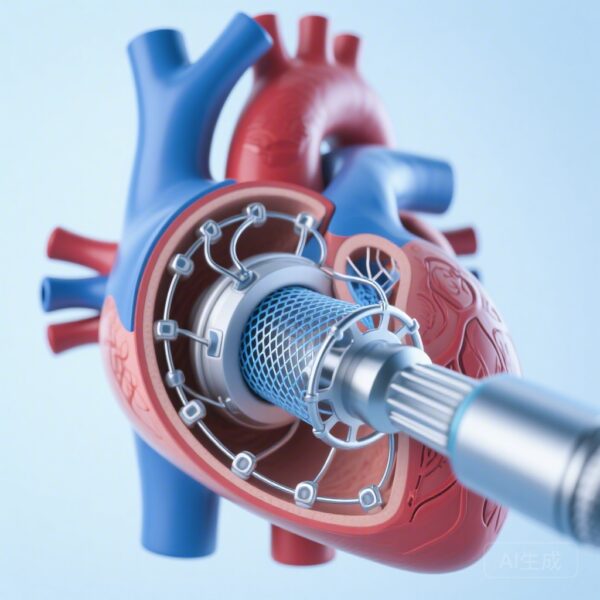
As the prevalence of bioprosthetic aortic valve replacement has increased, the medical community is facing a growing cohort of patients presenting with bioprosthetic valve dysfunction (BVD). Valve-in-valve (ViV) transcatheter aortic valve replacement (TAVR) has emerged as a less invasive alternative to redo surgical aortic valve replacement. However, patients with small surgical bioprostheses—typically defined as a labeled size of ≤23 mm—present a unique clinical challenge. The internal diameter of these valves is inherently restricted, which increases the risk of high post-procedural gradients and prosthesis-patient mismatch (PPM) after a ViV procedure.
While retrospective registries have suggested differences in performance between various transcatheter heart valve (THV) designs, prospective randomized data have been sparse. The LYTEN trial (Comparison of the Balloon-Expandable Edwards Valve and Self-Expanding CoreValve Evolut R or Evolut PRO System for the Treatment of Small, Severely Dysfunctional Surgical Aortic Bioprostheses) was designed to address this gap, providing much-needed evidence to guide device selection in this high-risk population.
Study Design and Methodology
The LYTEN trial is a randomized controlled trial focusing on patients with failed small surgical aortic valves (≤23 mm) who were candidates for ViV-TAVR. This specific secondary analysis reports the 3-year outcomes, comparing two dominant technologies in the field: the balloon-expandable valve (BEV) SAPIEN 3/ULTRA (Edwards Lifesciences) and the self-expanding valve (SEV) Evolut R/PRO/PRO+ (Medtronic).
A total of 98 patients were randomized, with 46 receiving a BEV and 52 receiving an SEV. The study utilized rigorous follow-up protocols, including clinical evaluations and Doppler echocardiography at the 3-year mark. Outcomes were adjudicated based on the Valve Academic Research Consortium (VARC)-2 and VARC-3 criteria. The primary endpoint of interest for this analysis was “intended valve performance,” defined as a composite of a mean gradient <20 mm Hg, peak velocity <3 m/s, Doppler velocity index ≥0.25, and the absence of moderate or severe aortic regurgitation (AR).
Key Findings: Hemodynamic Superiority of Self-Expanding Valves
The 3-year results underscore a significant disparity in hemodynamic performance between the two valve types. The rate of intended valve performance was dramatically higher in the SEV group compared to the BEV group (82.4% vs. 27.6%; P<0.001). This difference is largely driven by the supra-annular design of the self-expanding Evolut system, which allows for a larger effective orifice area (EOA) compared to the intra-annular design of the balloon-expandable SAPIEN platform.
Mean Gradients and Orifice Area
At the 3-year follow-up, the mean transvalvular gradient was significantly lower in the SEV group (13.12 ± 8.56 mm Hg) than in the BEV group (20.40 ± 9.12 mm Hg; P=0.002). Furthermore, the indexed effective orifice area (iEOA) was significantly larger in patients receiving an SEV (0.93 ± 0.32 cm²/m²) compared to those receiving a BEV (0.69 ± 0.27 cm²/m²; P=0.002). These metrics suggest that the SEV platform better mitigates the restrictive impact of the original small surgical frame.
Aortic Regurgitation and Safety
In terms of valvular regurgitation, the BEV group showed no instances of moderate aortic regurgitation (0%), while the SEV group had a rate of 2.9% (P=0.582). This difference was not statistically significant, suggesting that while SEVs offer better flow dynamics, BEVs provide excellent sealing within the surgical frame. Other adverse events, including the need for new permanent pacemakers or vascular complications, did not differ significantly between the two groups over the 3-year period.
Clinical and Functional Outcomes
Despite the marked differences in hemodynamics, the 3-year clinical outcomes remained statistically similar between the two groups. The composite endpoint of death, stroke, or heart failure-related hospitalization occurred in 32.6% of the BEV group and 25.5% of the SEV group (P=0.489). While the raw mortality rate was lower in the SEV group (15.7% vs. 23.3%), this did not reach statistical significance (P=0.375).
Both groups experienced significant and sustained improvements in functional status and quality of life (QoL) from baseline. NYHA functional class improved similarly across both cohorts, indicating that ViV-TAVR, regardless of the valve type used, provides substantial symptomatic relief for patients suffering from bioprosthetic failure.
Expert Commentary: Interpreting the Data
The LYTEN trial results highlight a critical discussion point in interventional cardiology: does hemodynamic superiority translate to clinical benefit? In the context of small surgical valves, the supra-annular SEV design clearly provides better fluid dynamics. The lower gradients observed with SEVs are particularly relevant because high residual gradients in ViV procedures have been linked in other registries to accelerated valve degeneration and poorer long-term survival.
However, the lack of a statistically significant difference in clinical outcomes at 3 years suggests several possibilities. First, the study may be underpowered to detect differences in hard clinical endpoints like mortality. Second, the elderly and comorbid nature of the ViV population might mean that non-cardiac factors contribute significantly to mortality, potentially masking the benefits of superior valve hemodynamics. Finally, it is possible that a mean gradient of ~20 mm Hg (as seen in the BEV group) is clinically “tolerable” for many patients in the medium term, even if it is not hemodynamically optimal.
Clinicians should also consider the technical aspects of the procedure. BEVs are often praised for their ease of delivery and precise positioning, which can be advantageous in complex coronary anatomies. Conversely, for patients with very small surgical valves (e.g., 19 mm or 21 mm frames), the hemodynamic advantage of an SEV might be the deciding factor to avoid severe PPM.
Conclusion and Future Directions
The 3-year results of the LYTEN trial provide robust evidence that self-expanding valves offer superior hemodynamic performance for ViV-TAVR in small failed surgical bioprostheses. While this has not yet translated into a significant clinical or survival advantage at the 3-year mark, the physiological benefit of larger orifice areas and lower gradients is undeniable.
For clinicians, these findings suggest that SEVs should be strongly considered in patients where post-procedural gradients are a primary concern. Long-term follow-up (up to 5 or 10 years) will be essential to determine if these hemodynamic advantages eventually lead to improved valve durability and reduced heart failure events. As the population of patients with failing bioprostheses continues to grow, the LYTEN trial serves as a cornerstone for personalized device selection in the evolving landscape of structural heart interventions.
Funding and Registration
The LYTEN trial is registered at ClinicalTrials.gov (NCT03520101). The study was supported by investigator-initiated grants and institutional funding.
References
1. Cepas-Guillén P, Abbas AE, Serra V, et al. Balloon- Versus Self-Expanding Transcatheter Valves for Failed Small Surgical Aortic Bioprostheses: 3-Year Results of the LYTEN Trial. Circ Cardiovasc Interv. 2026 Feb 2:e016255. doi: 10.1161/CIRCINTERVENTIONS.125.016255.
2. Webb JG, Mack MJ, White JM, et al. Transcatheter Aortic Valve Post-Dilatation With the SAPIEN 3 Valve: Lessons From the PARTNER 2 Experience. JACC Cardiovasc Interv. 2018;11(10):978-986.
3. Sharma R, Al-Kassou B, Reents W, et al. Hemodynamic performance and clinical outcomes of self-expanding vs balloon-expandable valves for valve-in-valve transcatheter aortic valve replacement. Catheter Cardiovasc Interv. 2021;97(3):E401-E409.