Highlights
- A meta-analysis of 19 double-blind RCTs involving over 120,000 participants found no evidence for 62 out of 66 adverse effects currently listed on statin labels.
- Beyond muscle symptoms and diabetes, only four outcomes—abnormal liver tests, urinary composition changes, and edema—showed a statistically significant increase.
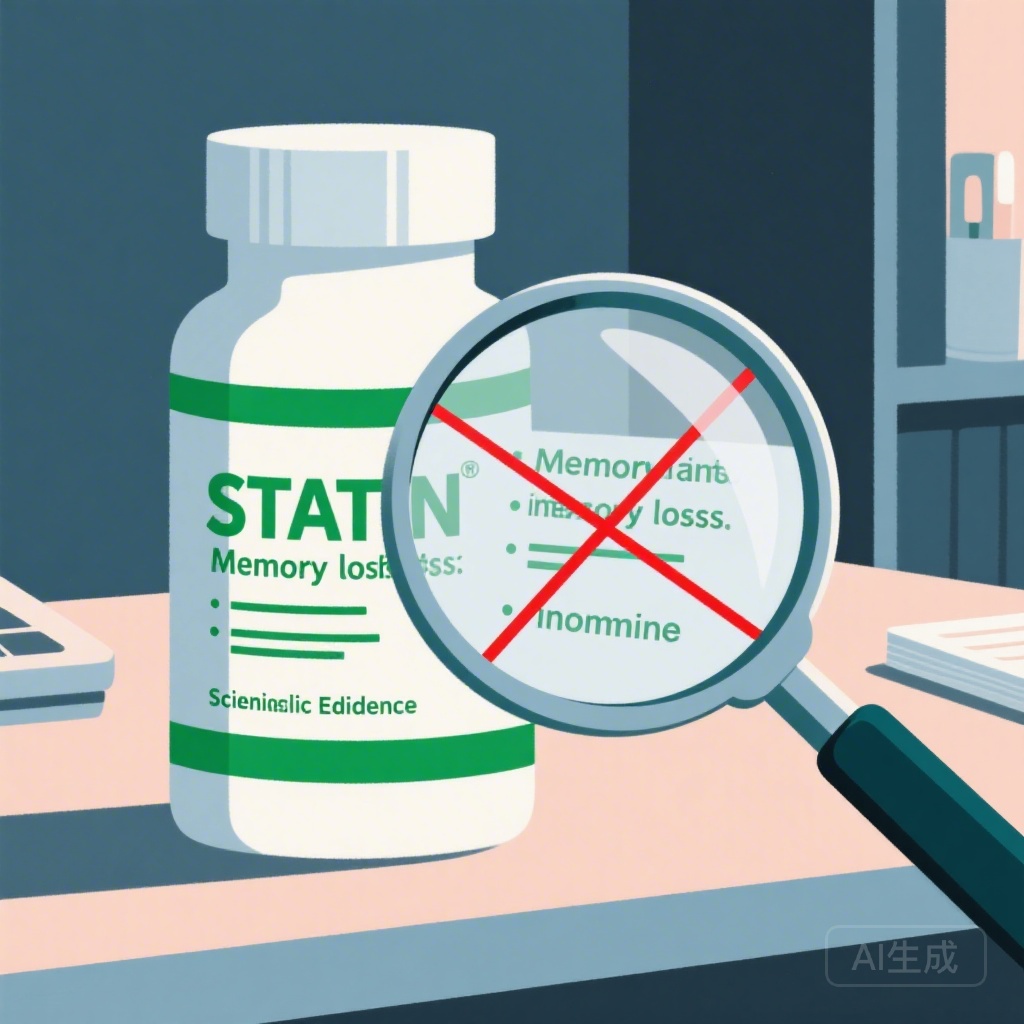
- Commonly reported issues such as cognitive impairment, depression, and sleep disturbances were not supported by the blinded data.
- The findings suggest that current product labels may unnecessarily contribute to the nocebo effect and treatment non-adherence.
Background: The Disconnect Between Labels and Evidence
Statins are among the most extensively studied and widely prescribed medications globally, proven to significantly reduce the risk of major vascular events. However, clinical use is frequently hampered by patient and physician concerns regarding adverse effects. Product labels, such as the Summaries of Product Characteristics (SmPCs), currently list a wide array of potential undesirable effects, ranging from insomnia and depression to cognitive impairment and peripheral neuropathy.Many of these associations were originally derived from case reports or non-randomized observational studies. Such studies are inherently prone to bias, particularly the ‘nocebo effect,’ where patients experience symptoms because they expect them. For clinicians, the challenge has been distinguishing true pharmacological side effects from coincidental symptoms. The Cholesterol Treatment Trialists’ (CTT) Collaboration sought to resolve this ambiguity by performing a meta-analysis of individual participant data (IPD) from large-scale, double-blind, randomized controlled trials (RCTs).
Study Design: The Gold Standard of Individual Participant Data
The researchers conducted a systematic meta-analysis of IPD from double-blind RCTs. To ensure high-quality evidence, trials were required to have at least 1,000 participants and a scheduled treatment duration of at least two years. The analysis compared statin therapy versus placebo or more intensive versus less intensive statin regimens.The study began by identifying all undesirable effect terms currently listed in SmPCs for five common statins: atorvastatin, fluvastatin, pravastatin, rosuvastatin, and simvastatin. This resulted in a list of 66 potential outcomes. To account for the risk of false positives when testing multiple hypotheses, the researchers applied a False Discovery Rate (FDR) control at 5%. This statistical rigor is essential when analyzing dozens of different health outcomes to ensure that any observed associations are likely to be genuine.
Key Findings: What the Data Actually Reveals
The meta-analysis included 19 trials of statin versus placebo, encompassing 123,940 participants with a median follow-up of 4.5 years. The results provide a stark contrast to the extensive lists found on current drug labels.
The Refuted Risks
The most significant finding was that for 62 of the 66 undesirable outcomes listed on product labels, there was no statistically significant excess risk associated with statin therapy in double-blinded conditions. Crucially, conditions that are frequently cited by patients as reasons for discontinuation—such as cognitive impairment, memory loss, depression, sleep disturbances, and peripheral neuropathy—showed no evidence of a causal link to statin use. The rate ratios for these conditions were near 1.0, with confidence intervals that crossed the line of no effect.
Confirmed Pharmacological Effects
Aside from the previously established risks of muscle-related symptoms and a modest increase in new-onset diabetes, only four other outcomes reached FDR significance in the statin-versus-placebo trials:1. Abnormal Liver Transaminases: Statin therapy was associated with a 41% relative increase (RR 1.41, 95% CI 1.26–1.57). This translated to 0.30% of participants per year on statins versus 0.22% on placebo.2. Other Liver Function Test Abnormalities: A 26% relative increase was observed (RR 1.26, 95% CI 1.12–1.41). The combined absolute annual excess for any liver function test abnormality was a mere 0.13%.3. Urinary Composition Alteration: There was an 18% relative increase (RR 1.18, 95% CI 1.04–1.33).4. Oedema: A slight 7% relative increase was noted (RR 1.07, 95% CI 1.02–1.12).
Dose-Response Relationships
In the analysis of four trials comparing intensive versus less intensive statin therapy, the researchers found that the excesses for abnormal liver transaminases and other liver function tests were sustained, supporting a dose-dependent pharmacological effect. However, the increases in urinary composition alterations and edema were not replicated in the intensive-dose trials, suggesting these may be less robust or specific to certain contexts.
Expert Commentary: Implications for Clinical Practice
The CTT Collaboration’s findings represent a pivotal moment in lipidology and cardiovascular prevention. The fact that the vast majority of ‘label-listed’ side effects vanished under the scrutiny of double-blind conditions strongly suggests that these symptoms are either coincidental or driven by the nocebo effect.
The Nocebo Effect and Patient Adherence
When a patient reads a drug label that lists ‘depression’ or ‘insomnia’ as a potential side effect, they are more likely to attribute those common symptoms to the medication. This leads to unnecessary drug discontinuation and, consequently, an increased risk of heart attacks and strokes. The researchers emphasize that current labeling may be doing more harm than good by providing patients with a list of symptoms that are not scientifically supported as being statin-caused.
Clinical Significance of Liver Enzyme Elevations
While the study confirmed an increase in liver transaminase abnormalities, it is important for clinicians to note that these are typically asymptomatic and rarely lead to clinically significant liver injury. The absolute annual excess of 0.13% is very low, especially when weighed against the substantial reduction in cardiovascular mortality provided by statins.
Conclusion: A Call for Regulatory Revision
The study concludes that the current regulatory approach to statin labeling needs an overhaul. Product labels and official health information sources should be revised to distinguish between outcomes that have been proven to be caused by statins in blinded trials and those that are merely coincidental.By aligning labels with the evidence from double-blind RCTs, the medical community can provide patients with more accurate information. This would help reduce the prevalence of the nocebo effect, improve treatment adherence, and ensure that patients at high risk of cardiovascular disease continue to benefit from these life-saving therapies. The gap between observational ‘signals’ and randomized ‘truth’ has been bridged, and it is now the responsibility of health authorities to update their guidance accordingly.
Funding and Trial Information
This research was funded by the British Heart Foundation, the UK Medical Research Council, and the Australian National Health and Medical Research Council. The analysis was conducted by the Cholesterol Treatment Trialists’ (CTT) Collaboration.
References
1. Cholesterol Treatment Trialists’ (CTT) Collaboration. Assessment of adverse effects attributed to statin therapy in product labels: a meta-analysis of double-blind randomised controlled trials. Lancet. 2026 Feb 14;407(10529):689-703. doi: 10.1016/S0140-6736(25)01578-8.2. Cholesterol Treatment Trialists’ (CTT) Collaboration. Effect of statin therapy on muscle symptoms: an individual participant data meta-analysis of 19 double-blind randomised controlled trials. Lancet. 2022;400(10355):832-845.3. Collins R, Reith C, Emberson J, et al. Interpretation of the evidence for the efficacy and safety of statin therapy. Lancet. 2016;388(10059):2532-2561.