Highlights
- Replacing artificially sweetened beverages (ASBs) with water did not lead to improvements in glycemic control over 24 weeks in adults with type 2 diabetes.
- The water-substitution arm showed a statistically significant 0.29% higher HbA1c compared to the group that continued ASB consumption.
- No significant differences were observed in secondary measures such as body weight, fasting insulin, or continuous glucose monitor metrics.
- The findings challenge the clinical assumption that water is always a superior substitute for ASBs in the context of diabetes management.
Introduction: The Sweetener Dilemma in Diabetes Management
The dietary management of type 2 diabetes (T2D) often focuses on the reduction of free sugars to mitigate glycemic variability and promote weight loss. For decades, artificially sweetened beverages (ASBs)—also known as diet or non-nutritive sweetened beverages—have been marketed as a healthier alternative to sugar-sweetened beverages (SSBs). However, the metabolic impact of ASBs remains a subject of intense scientific debate. While they provide the sweet taste without the caloric load, concerns have been raised regarding their effects on insulin sensitivity, gut microbiota, and appetite regulation.
Clinical guidelines, including those from the American Diabetes Association (ADA), generally suggest that while ASBs may serve as a short-term replacement for SSBs, the ultimate goal should be the consumption of plain water. Despite this recommendation, there has been a lack of high-quality, long-term randomized controlled trials (RCTs) specifically testing whether substituting water for ASBs actually improves clinical outcomes in patients with established T2D. The Study of Drinks with Artificial Sweeteners (SODAS) was designed to address this evidence gap.
Study Design: The SODAS Trial
The SODAS trial was a randomized, two-arm, parallel-group study conducted at two academic health centers. The primary objective was to determine if substituting plain water for habitual ASB intake would improve HbA1c levels in adults with T2D.
Population and Eligibility
The study enrolled 181 adults aged 35 years or older with a diagnosis of type 2 diabetes. Participants were required to have a baseline HbA1c between 6.5% and 8.5% and be regular consumers of ASBs (at least 24 oz daily). By focusing on regular ASB users, the researchers aimed to observe the impact of a direct behavioral substitution.
Intervention and Control
Following a 2-week run-in period, participants were randomized into two groups for a 24-week active intervention:
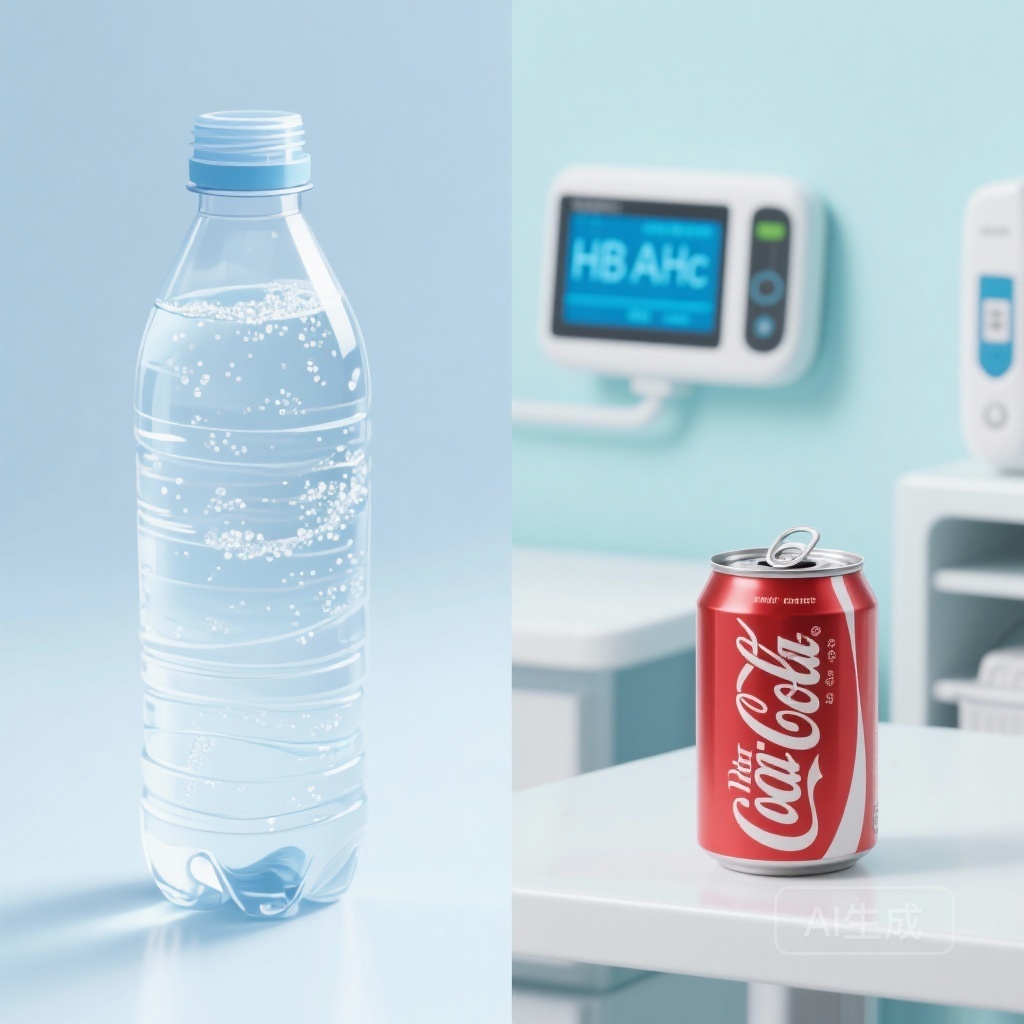
1. ASB Group (Control): Participants were provided with 24 oz daily of their preferred commercial ASB.
2. Water Group (Intervention): Participants were provided with 24 oz daily of their choice of unflavored water (still or sparkling, bottled or canned) to replace their usual ASB intake.
Endpoints
The primary outcome measure was the change in HbA1c from baseline to 24 weeks. Secondary outcomes included fructosamine levels, fasting glucose and insulin, body weight, and metrics derived from continuous glucose monitors (CGM).
Key Findings: Challenging the Water-as-Superior Model
The results of the SODAS trial were unexpected and provide a significant contribution to the literature on non-nutritive sweeteners.
Primary Outcome: HbA1c Levels
Out of the 181 randomized participants, 179 provided complete data for the 24-week analysis. Contrary to the initial hypothesis that water would improve glycemic control, the study found that the mean difference in the change of HbA1c was 0.29% (SE 0.12; P = 0.013) higher in the water substitution arm compared with the group that continued consuming ASBs. This indicates that participants who switched to water experienced a relative worsening of their glycemic control compared to those who remained on diet beverages.
Secondary Metabolic Measures
The secondary clinical measures did not show statistically significant differences between the two groups, yet they remained directionally consistent with the primary finding. There were no significant effects on:
– Fasting glucose and insulin levels
– Fructosamine (a measure of shorter-term glycemic control)
– Body weight and BMI
– CGM metrics (time in range, mean glucose)
The lack of weight loss in the water group is particularly noteworthy, as it suggests that the caloric void left by removing ASBs (which are already calorie-free) did not translate into an overall reduction in energy intake or improvements in metabolic efficiency.
Expert Commentary: Mechanistic Insights and Clinical Nuance
The findings of the SODAS trial raise critical questions about the behavioral and physiological response to sweet-tasting, calorie-free liquids. Several hypotheses may explain why water substitution failed to improve, and potentially worsened, HbA1c levels.
The Compensation Hypothesis
One of the most prominent theories is behavioral compensation. ASBs provide a high intensity of sweetness without calories. When patients with a habitual preference for sweet tastes switch to plain water, they may subconsciously seek out sweetness or energy from other dietary sources, such as carbohydrate-rich snacks or larger meal portions. This “sweet tooth” compensation could lead to higher postprandial glucose excursions and a subsequent rise in HbA1c.
Appetite and Satiety Signals
Some researchers suggest that the sensory experience of sweetness in ASBs might play a role in appetite signaling. While the long-term effects of ASBs on the gut-brain axis are still being mapped, the SODAS trial suggests that for those already habituated to these drinks, removing them does not yield an immediate metabolic benefit and may disrupt an established dietary equilibrium.
Study Limitations and Generalizability
It is important to note that the participants in this study had relatively well-controlled diabetes (HbA1c < 8.5%). The results may not apply to patients with higher levels of hyperglycemia or those who do not regularly consume ASBs. Furthermore, the 24-week duration, while substantial for a clinical trial, may not capture the very long-term adaptations of the gut microbiome or metabolic rate.
Conclusion: Re-evaluating Dietary Guidance
For clinicians, the SODAS trial provides a cautionary note against a one-size-fits-all approach to beverage recommendations in type 2 diabetes. While water remains the healthiest beverage for the general population, this trial provides no evidence that forcing a substitution from ASBs to water will improve glycemic-related clinical care measures in regular ASB consumers over a 6-month period.
Instead, the focus of medical nutrition therapy should perhaps remain on the total carbohydrate intake and overall dietary quality rather than the specific removal of non-nutritive sweeteners, provided they are used to replace sugar-sweetened options. Future research should investigate the long-term behavioral patterns of individuals who successfully transition from ASBs to water to identify why some may experience compensatory eating.
Funding and Registration
This research was supported by grants from the National Institutes of Health (NIH). The trial is registered at ClinicalTrials.gov.
References
1. Odegaard AO, Chang J, Jiang L, et al. The Effect of Substituting Water for Artificially Sweetened Beverages on Glycemic and Weight Measures in People With Type 2 Diabetes: The Study of Drinks With Artificial Sweeteners (SODAS), a Randomized Trial. Diabetes Care. 2026;49(2):239-246. doi:10.2337/dc25-1516.
2. American Diabetes Association Professional Practice Committee. 5. Facilitating Positive Health Behaviors and Well-being to Improve Health Outcomes: Standards of Care in Diabetes—2024. Diabetes Care. 2024;47(Supplement_1):S77-S110.
3. Rogers PJ, Appleton KM. The effects of low-energy sweeteners on energy intake and body weight: a systematic review and meta-analysis of sustained consumption studies. Int J Obes. 2021;45(3):464-478.