Highlights
Clinically Significant Improvements
The intervention group demonstrated a significant reduction in the COPD Assessment Test (CAT) scores and a marked increase in physical activity levels compared to standard care over a 12-week period.
High Usability and Patient Satisfaction
Approximately 80 percent of participants found the digital platform easy to navigate, with over 60 percent reporting subjective improvements in dyspnea symptoms.
Primary Care Feasibility
Successful implementation in community-based primary health clinics suggests a scalable model for decentralizing specialized respiratory care to older populations.
The Adherence Challenge
While effective for those who remained compliant, fewer than 50 percent of participants demonstrated high adherence, highlighting a critical area for future digital health optimization.
Introduction: The Pulmonary Rehabilitation Paradox
Pulmonary rehabilitation is a cornerstone of management for chronic respiratory diseases (CRD), including chronic obstructive pulmonary disease (COPD), interstitial lung disease (ILD), and bronchiectasis. The clinical benefits are well-documented: improved exercise capacity, reduced dyspnea, enhanced quality of life, and decreased hospitalization rates. However, a significant paradox exists in modern medicine. Despite its proven efficacy, center-based pulmonary rehabilitation remains underutilized due to geographical barriers, transportation costs, physical limitations of patients, and the limited capacity of specialized facilities.
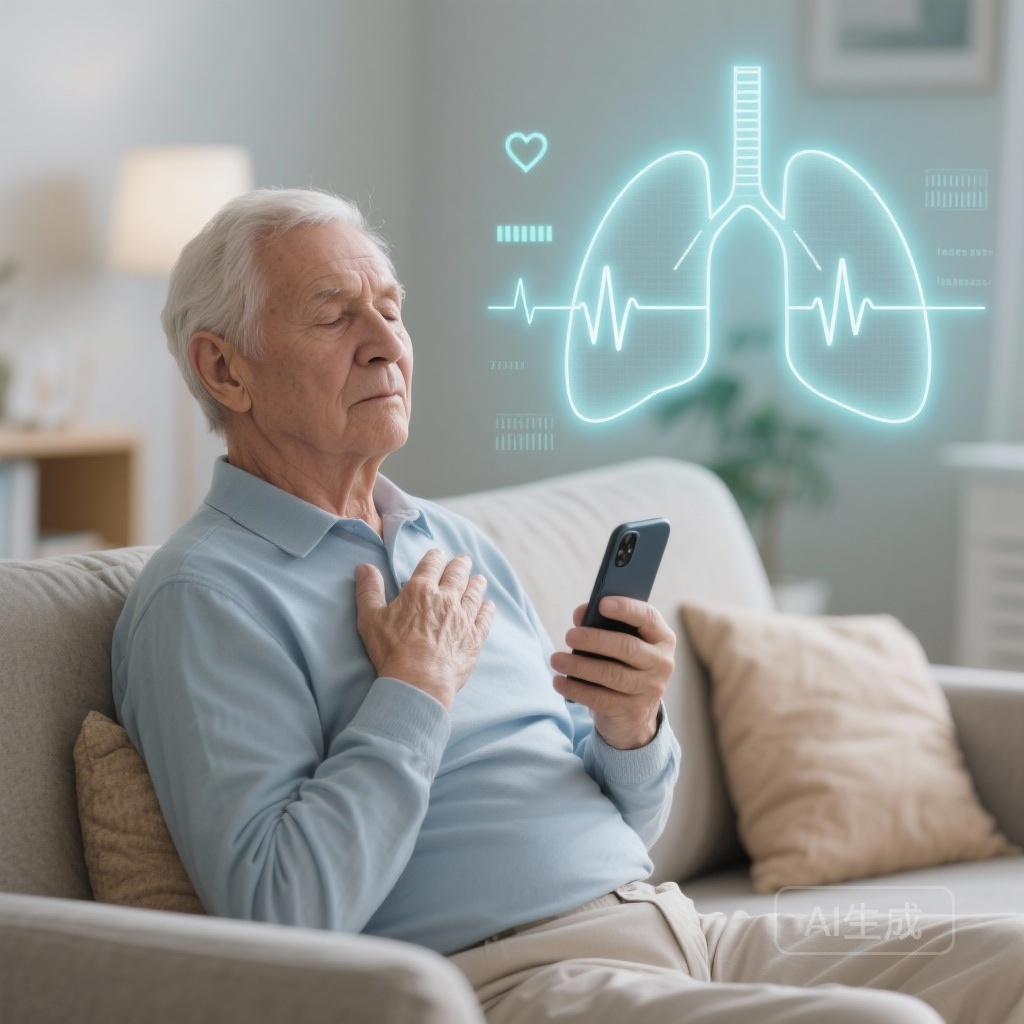
To address this unmet medical need, digital health interventions—specifically smartphone-based programs—have emerged as a potential solution to bridge the gap between tertiary hospital care and the patient’s home environment. A recent study published in the Journal of Medical Internet Research (JMIR) provides a rigorous evaluation of this digital transition, assessing whether a mobile application can replicate or supplement the benefits of traditional rehabilitation.
Study Design and Methodology
The researchers conducted a dual-phase investigation consisting of a 12-week randomized controlled trial (RCT) and a subsequent feasibility trial. The RCT recruited 90 participants with various chronic respiratory diseases, randomly allocating them in a 2:1 ratio to an intervention group (n=60) receiving a smartphone-based rehabilitation program or a control group (n=30) receiving standard outpatient care.
The digital intervention was comprehensive, encompassing guided exercise routines, education, and symptom monitoring. The primary endpoints were maximal oxygen consumption (VO2 max) measured via cardiopulmonary exercise testing (CPET) and the COPD Assessment Test (CAT) score at the 12-week mark. Secondary endpoints included the International Physical Activity Questionnaire (IPAQ) scores, quality-adjusted life years (QALYs), and a detailed cost-utility analysis. The feasibility phase extended the program into four community primary healthcare clinics to test real-world implementation among older adults.
Key Findings: Clinical Efficacy and Patient Adherence
Of the participants who completed the follow-up, 67 were included in the per-protocol analysis. The results indicate that while some physiological markers remained stable, patient-reported outcomes improved significantly.
Quality of Life and Symptom Burden
The intervention group achieved a median CAT score of 7.0 (IQR 4.0-15.0), which was significantly lower (better) than the control group’s median of 10.0 (IQR 6.5-18.5; P=.04). This suggests that the smartphone app was effective in reducing the perceived burden of respiratory symptoms on daily life.
Physical Activity Levels
Functional activity, measured by the IPAQ score, showed a significant advantage for the intervention group (median 1488.0 vs 1164.0; P=.04). This finding is particularly relevant for clinicians, as maintaining physical activity is a key predictor of long-term survival in CRD patients. Interestingly, the study did not find a significant difference in maximal oxygen consumption (VO2 max). This discrepancy suggests that while the app successfully modified behavior and symptom perception, it may require more intensive or personalized aerobic training to induce measurable changes in peak physiological capacity.
Safety and User Experience
Safety is a paramount concern for home-based exercise in elderly populations. Notably, no participants experienced disease exacerbation or musculoskeletal injuries related to the rehabilitation activities. User experience was overwhelmingly positive, with 82 percent of users reporting the app was easy to use, a critical metric given the median participant age of 65.5 years.
Cost-Utility and Feasibility in Primary Care
From a health policy perspective, the economic data provided a reassuring outlook. The mean total healthcare costs were comparable between the groups (US $523 for intervention vs US $495 for control), with no notable difference in the QALY distribution. This indicates that digital rehabilitation is a cost-neutral way to provide enhanced care without placing an undue burden on the healthcare system.
The feasibility trial in primary care clinics was particularly successful. Participants in this setting showed a dramatic reduction in CAT scores from a median of 8.5 to 5.0 (P<.001). This suggests that the primary care environment, which is often more accessible to older patients than tertiary centers, is an ideal setting for deploying digital health tools.
Expert Commentary: Navigating the Digital Transition
The results of this trial underscore a pivotal shift toward decentralized, patient-centric respiratory care. The improvement in CAT and IPAQ scores validates the smartphone app as a legitimate therapeutic tool. However, the study also highlights a recurring theme in digital medicine: the adherence gap. With less than 50 percent of participants maintaining high compliance, it is clear that technology alone is not a ‘silver bullet.’
Clinicians should view these apps as part of a ‘hybrid’ model. The successful integration of digital tools requires more than just a download; it necessitates ongoing clinical oversight, motivational interviewing, and perhaps social features within the app to foster a sense of community. The lack of change in VO2 max also suggests that for patients requiring significant physiological conditioning, digital programs might serve best as a maintenance phase following an initial supervised, center-based induction.
Conclusion: A Scalable Model for the Future
This randomized controlled trial demonstrates that smartphone-based pulmonary rehabilitation is safe, feasible, and clinically effective in improving the quality of life and physical activity levels of patients with chronic respiratory diseases. By bridging the gap between hospital-based expertise and community-based accessibility, this digital approach offers a scalable solution to the long-standing barriers of traditional rehabilitation.
Future research should focus on enhancing patient engagement to improve compliance and exploring the long-term impact of digital interventions on mortality and exacerbation rates. For now, the integration of such apps into primary care settings represents a significant step forward in the management of chronic lung disease.
Funding and Clinical Trial Registration
This research was registered at ClinicalTrials.gov under the identifier NCT05610358. The study was supported by institutional grants focused on digital health innovation and respiratory medicine.
References
Chung C, Kim AR, Kang DY, Kim S, Oh J, Kim HJ, Park B, Lee SH, Kim D, Kwon H, Jo MW, Lee SW. Clinical Efficacy of Smartphone App-Based Pulmonary Rehabilitation in Chronic Respiratory Diseases: Randomized Controlled and Feasibility Trials. J Med Internet Res. 2025 Nov 28;27:e76801. doi: 10.2196/76801. PMID: 41313804; PMCID: PMC12701351.