Highlights
- The IVAM-ED randomized clinical trial found that a 12-week intervention using an interactive virtual assistant significantly reduced mental distress in older adults with type 2 diabetes (MD -1.46; P = .02).
- Participants in the intervention group achieved a mean reduction in hemoglobin A1c of 0.48% compared to the usual care group (P = .01).
- The study demonstrated broad benefits across secondary endpoints, including improved quality of life and enhanced adherence to diabetes self-care behaviors.
The Dual Burden of Diabetes and Mental Distress in Geriatrics
Older adults living with type 2 diabetes (T2D) face a complex clinical landscape that extends far beyond glycemic management. The intersection of chronic metabolic disease and mental health is particularly pronounced in the geriatric population. Mental distress—encompassing symptoms of anxiety, depression, and psychological burden—is not merely a comorbid condition; it is a primary barrier to effective self-management. High levels of distress are associated with reduced medication adherence, poor dietary choices, and physical inactivity, creating a feedback loop that leads to suboptimal glycemic control and increased risk of microvascular and macrovascular complications.
Despite the known efficacy of behavioral interventions, many older patients encounter significant barriers to accessing mental health services, including mobility limitations, cognitive decline, and the social stigma sometimes associated with traditional psychiatric care. As the global population ages and the prevalence of T2D continues to rise, there is an urgent clinical need for scalable, low-cost, and easily accessible interventions that can support both the psychological and physiological needs of these patients in their home environments.
Study Design: The IVAM-ED Architecture
The Interactive Virtual Assistant for Health Promotion Among Older Adults With Type 2 Diabetes (IVAM-ED) trial was a randomized clinical trial designed to evaluate the impact of voice-activated technology on health outcomes. Conducted at an academic medical center in Brazil between June 2023 and February 2024, the study enrolled 112 participants aged 65 years or older with a confirmed diagnosis of type 2 diabetes.
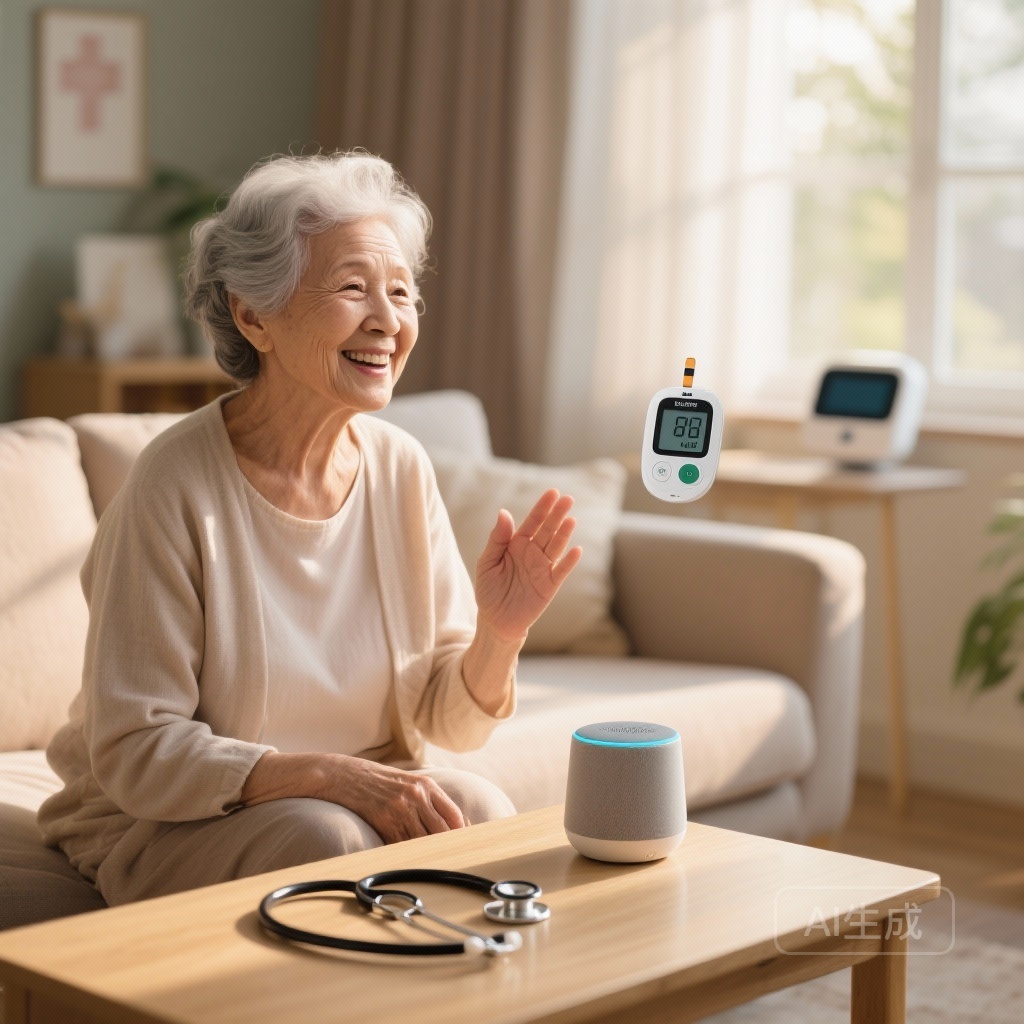
Participants were randomized in a 1:1 ratio to either the intervention group or a usual care control group. The intervention group received a third-generation Amazon Echo Dot device for home use over a 12-week period. These devices were programmed with a specific behavioral intervention model focused on health promotion, providing reminders for medication and glucose monitoring, offering education on diabetes management, and facilitating exercises designed to improve mental wellbeing. The control group continued with their standard medical management. The primary endpoint was the change in mental distress, measured by the Self-Reporting Questionnaire (SRQ). Secondary outcomes included the 36-Item Short Form Health Survey (SF-36) for quality of life, the Self-Care Inventory Revised (SCI-R) for behavioral adherence, and laboratory-confirmed hemoglobin A1c (HbA1c) levels.
Key Findings: Significant Improvements in Mental and Metabolic Health
The results of the IVAM-ED trial provide compelling evidence for the efficacy of virtual assistants in this demographic. Of the 112 participants (mean age 72.5 years; 63.4% female), 103 completed the follow-up assessments. At the 12-week mark, the intervention group showed a statistically significant reduction in mental distress compared to the usual care group.
Primary Outcome: Mental Distress
The fully adjusted mean SRQ score for the intervention group was 6.29, compared to 7.75 in the usual care group. This resulted in a mean difference (MD) of -1.46 (95% CI, -2.73 to -0.19; P = .02). Subgroup analyses indicated that this benefit was consistent regardless of age, sex, or baseline glycemic levels, suggesting the intervention’s broad applicability across the geriatric spectrum.
Secondary Outcome: Glycemic Control
Perhaps most striking for clinicians was the impact on metabolic health. The intervention group experienced a significant reduction in HbA1c levels compared to the control group (MD, -0.48%; 95% CI, -0.85 to -0.11; P = .01). In clinical practice, a nearly 0.5% reduction in HbA1c is considered highly relevant, often comparable to the addition of a second-line oral antidiabetic medication. This improvement suggests that by addressing psychological distress and providing self-care prompts, the virtual assistant facilitated better physiological management of the disease.
Quality of Life and Self-Care Behaviors
The study also reported significant gains in quality of life, with a mean difference of 9.46 points on the SF-36 scale (P = .001). Furthermore, adherence to self-care behaviors—such as blood glucose monitoring and dietary adherence—improved significantly (MD, 3.40; P < .001). While the Perceived Stress Scale (PSS) scores trended downward, the difference did not reach statistical significance (MD, -3.00; P = .07), possibly indicating that while distress and self-care improved, broader life stressors remained present.
Expert Commentary: Bridging the Digital Divide
The IVAM-ED trial addresses a critical question in modern medicine: can technology effectively serve the elderly? Traditionally, digital health interventions have been criticized for favoring younger, tech-savvy populations. However, voice-activated assistants bypass many of the barriers associated with smartphones or computers, such as small touchscreens and complex user interfaces. For a 75-year-old with diabetic retinopathy or peripheral neuropathy, a voice-interface is often more accessible than a mobile app.
From a mechanistic perspective, the reduction in mental distress likely serves as the catalyst for the other observed improvements. By reducing the cognitive load of diabetes management through automated reminders and providing a sense of companionship or routine, these devices may lower cortisol levels and improve executive function, leading to better dietary and medication adherence. The safety profile was also exemplary, with no withdrawals due to adverse events, suggesting high levels of patient acceptability.
Conclusion and Clinical Implications
In this randomized clinical trial, the use of a smart speaker-based behavioral intervention led to significant improvements in mental health, quality of life, and glycemic control among older adults with type 2 diabetes. These findings suggest that interactive virtual assistants represent a low-cost, easily implemented tool that can be integrated into the primary care of geriatric patients.
Future research should focus on the long-term sustainability of these improvements and whether such interventions can reduce the incidence of long-term diabetes complications or hospitalizations. For now, clinicians should consider voice-activated technology as a viable adjunct to traditional diabetes education and mental health support.
Funding and ClinicalTrials.gov
This study was registered at ClinicalTrials.gov (Identifier: NCT05329376). Funding was provided by institutional academic grants from the participating medical center in Brazil.
References
Matzenbacher LS, da Costa FL, de Barros LGB, et al. Interactive Virtual Assistant for Health Promotion Among Older Adults With Type 2 Diabetes: The IVAM-ED Randomized Clinical Trial. JAMA Netw Open. 2026;9(1):e2553508. doi:10.1001/jamanetworkopen.2025.53508