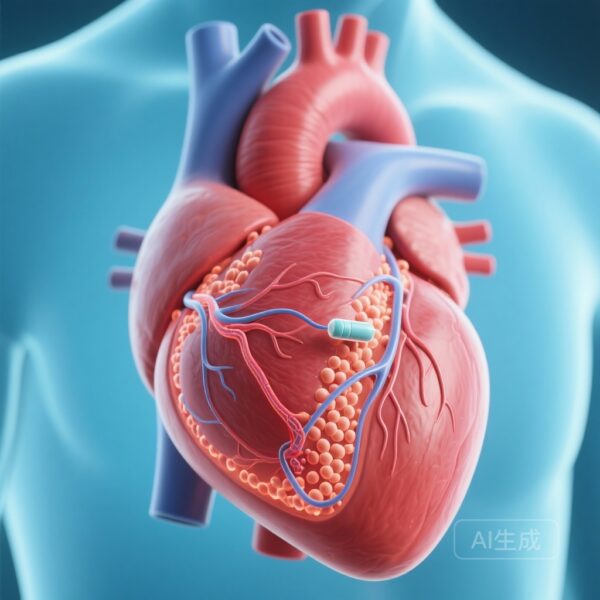
The Clinical Challenge of Diabetic Cardiomyopathy
Diabetic cardiomyopathy (DbCM) represents a distinct clinical entity characterized by structural and functional myocardial changes in individuals with diabetes, independent of coronary artery disease or hypertension. As the global prevalence of type 2 diabetes mellitus (T2DM) continues to rise, DbCM has emerged as a significant precursor to overt heart failure (HF), particularly heart failure with preserved ejection fraction (HFpEF). Despite its clinical importance, the early stages of DbCM are often underdiagnosed, frequently manifesting as a progressive decline in exercise capacity and peak oxygen uptake (peak VO2).
Recent years have seen a surge in research focused on sex-specific differences in cardiovascular disease. In the context of heart failure, women often present with different pathophysiological profiles and therapeutic responses compared to men. However, whether these sex-based nuances extend to the preclinical stages of DbCM—and whether they influence the efficacy of novel metabolic interventions—remains a critical question for precision medicine. The ARISE-HF (Aldose Reductase Inhibition for Stabilization of Exercise Capacity in Heart Failure) trial was designed to address these gaps by evaluating AT-001, a highly selective aldose reductase inhibitor.
The ARISE-HF Study Design
ARISE-HF (NCT04083339) was a Phase 3, randomized, international, double-blind, placebo-controlled study. The trial enrolled 691 participants with DbCM who were at high risk for progression to symptomatic heart failure. Inclusion criteria focused on individuals with T2DM and reduced peak VO2, indicating early-stage functional impairment.
Participants were randomized to receive either a placebo or ascending doses of AT-001 (a novel, highly selective aldose reductase inhibitor) twice daily. The primary endpoint was the proportional change in peak VO2 from baseline to 15 months, a robust measure of cardiopulmonary fitness and disease progression. Secondary endpoints included changes in the Kansas City Cardiomyopathy Questionnaire (KCCQ) scores, the Physical Activity Scale for the Elderly (PASE), and NT-proBNP concentrations. A prespecified analysis was conducted to evaluate sex-based differences in baseline characteristics and treatment response.
Sex-Specific Baseline Characteristics
One of the most striking findings from the ARISE-HF trial was the significant disparity in baseline profiles between men and women. Of the 691 participants, 348 (50.4%) were women. Despite similar inclusion criteria, women presented with a more advanced clinical phenotype across several domains:
Biomarkers and Exercise Capacity
Women exhibited significantly higher concentrations of N-terminal pro-B-type natriuretic peptide (NT-proBNP) compared to men (92 vs 60 ng/L; P < 0.001). Furthermore, women had markedly lower peak VO2 (13.87 vs 17.59 mL/kg/min; P < 0.001) and shorter cardiopulmonary exercise testing (CPET) durations (8.47 vs 11.05 minutes; P < 0.001).
Quality of Life and Functional Status
The burden of disease was also more pronounced in women’s self-reported health status. Women had lower KCCQ overall summary scores (87.79 vs 92.55; P < 0.001) and lower PASE scores (137.87 vs 171.09; P < 0.001), indicating worse quality of life and lower levels of daily physical activity compared to their male counterparts.
These baseline differences suggest that for a given degree of diabetic metabolic derangement, women may experience more severe functional limitations and myocardial stress than men, highlighting the need for sex-aware screening and intervention strategies.
Efficacy and Safety of AT-001
Overall Trial Results
In the total study population, the primary endpoint was not met. By 15 months, peak VO2 declined in the placebo group by -0.31 mL/kg/min (P = 0.005), while the decline in the high-dose AT-001 group was nearly stabilized at -0.01 mL/kg/min (P = 0.21). Although the numerical difference favored AT-001 (0.30 mL/kg/min), it did not reach statistical significance (P = 0.19). This suggests that while AT-001 may slow the decline of exercise capacity, the effect size in the broad population was modest.
Impact of Background Therapies
A critical secondary finding emerged from subgroup analyses. In participants not receiving modern glucose-lowering therapies such as sodium-glucose cotransporter 2 (SGLT2) inhibitors or glucagon-like peptide-1 (GLP-1) receptor agonists at baseline, the treatment effect of AT-001 was more pronounced. In this subgroup, the difference in peak VO2 between placebo and high-dose AT-001 at 15 months was 0.62 mL/kg/min (P = 0.04). This suggests a potential interaction where the potent cardioprotective effects of SGLT2 inhibitors and GLP-1 RAs may mask or overlap with the benefits of aldose reductase inhibition.
Consistency Across Sexes
Despite the baseline differences in disease severity, the response to AT-001 was consistent between men and women. The placebo-corrected change in peak VO2 was 0.26 mL/kg/min for women and 0.27 mL/kg/min for men (P = 0.58). Similarly, no significant sex-based differences were observed in the changes in KCCQ or PASE scores. From a safety perspective, AT-001 was well-tolerated in both groups, with no sex-specific safety signals identified.
Expert Commentary: Mechanistic Insights
The polyol pathway, where aldose reductase converts glucose to sorbitol, is a key mediator of diabetic complications. Under hyperglycemic conditions, increased flux through this pathway leads to the depletion of NADPH, increased oxidative stress, and the accumulation of advanced glycation end-products (AGEs). In the myocardium, these processes contribute to fibrosis, microvascular dysfunction, and impaired calcium handling—the hallmarks of DbCM.
AT-001’s ability to selectively inhibit aldose reductase aims to mitigate this metabolic insult. The ARISE-HF data suggest that while the biological driver (aldose reductase activity) likely operates similarly in both sexes, the clinical manifestation of the resulting cardiomyopathy is more severe in women. This could be due to differences in microvascular density, hormonal influences on collagen metabolism, or sex-specific patterns of myocardial remodeling.
The observation that AT-001 showed greater benefit in those not on SGLT2 inhibitors is particularly noteworthy. SGLT2 inhibitors have redefined the management of heart failure in diabetes; however, for patients who cannot tolerate these drugs or who require additional metabolic modulation, aldose reductase inhibition remains a pathway of interest. The lack of sex-based differences in efficacy is reassuring, suggesting that AT-001 can be applied broadly if its clinical niche is further refined.
Conclusion
The ARISE-HF trial provides critical insights into the sex-specific landscape of diabetic cardiomyopathy. Women with DbCM present with higher levels of myocardial stress and significantly lower functional capacity than men, even at similar stages of diabetes progression. While the trial did not meet its primary endpoint in the overall cohort, the stabilization of peak VO2 in the AT-001 group—particularly in the absence of SGLT2 inhibitors—points toward a potential therapeutic role for aldose reductase inhibition in specific patient subsets.
Importantly, the efficacy and safety of AT-001 were comparable across sexes, indicating that the drug’s metabolic mechanism is not sex-dependent. Future research should focus on identifying the patients most likely to benefit from AT-001 and investigating why women experience a more profound functional decline in the setting of DbCM.
Funding and Clinical Trial Registration
The ARISE-HF trial was funded by Applied Therapeutics, Inc. The trial is registered at clinicaltrials.gov (NCT04083339).
References
1. Blumer V, Januzzi JL Jr, Liu Y, et al. Sex Differences in Diabetic Cardiomyopathy and Treatment Response to AT-001: Insights From the ARISE-HF Study. JACC Heart Fail. 2026 Jan;14(1):102433. doi: 10.1016/j.jchf.2025.02.015.
2. Januzzi JL Jr, Butler J, Del Prato S, et al. Randomized Trial of a Selective Aldose Reductase Inhibitor in Patients With Diabetic Cardiomyopathy. J Am Coll Cardiol. 2024 Jul 9;84(2):137-148. doi: 10.1016/j.jacc.2024.03.380.
3. Seferovic PM, Petrie MC, Filippatos GS, et al. Type 2 diabetes mellitus and heart failure: a position statement from the Heart Failure Association of the European Society of Cardiology. Eur J Heart Fail. 2018;20(5):853-872.