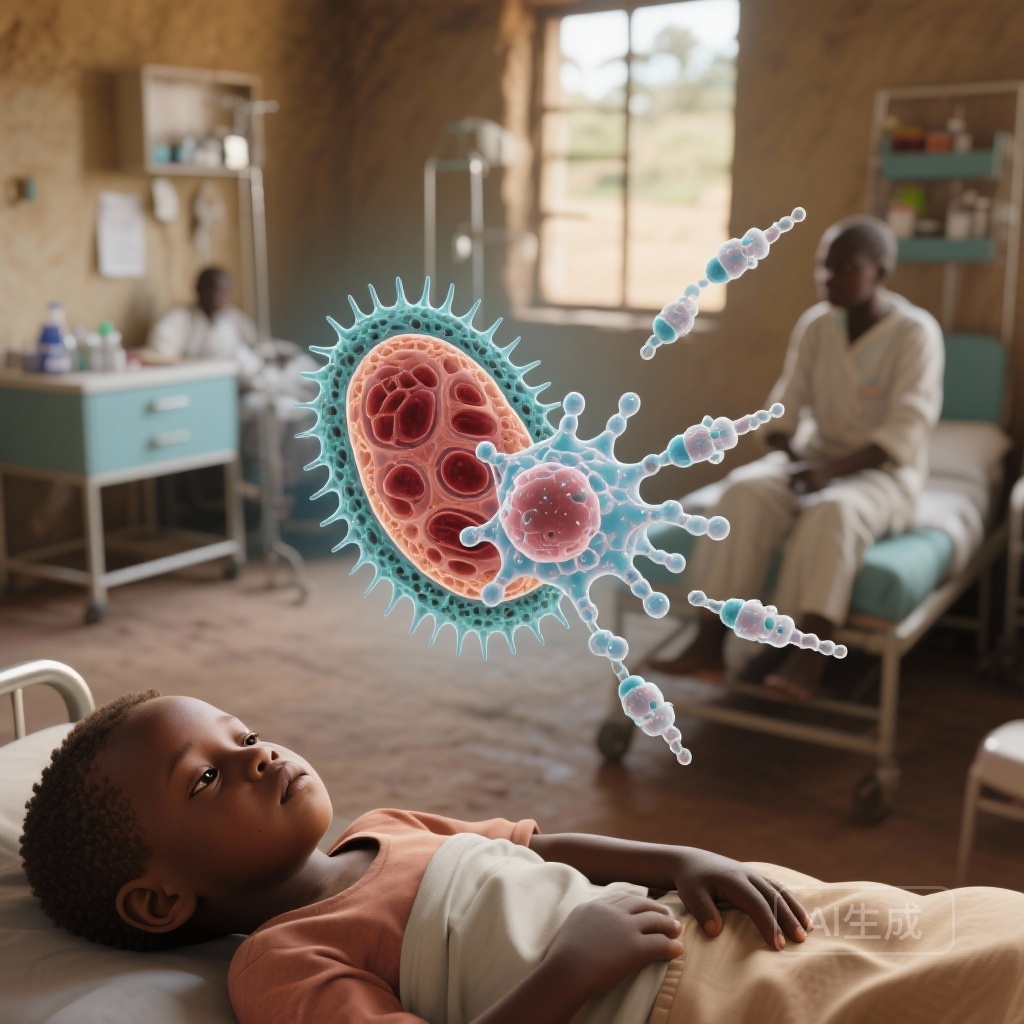
Highlights
Interim results from the phase 4 EPI-MAL-003 study provide robust evidence of the real-world effectiveness of the RTS,S/AS01E vaccine. Key findings include:
- A 58% reduction in the incidence of severe malaria among vaccinated children compared to unvaccinated cohorts.
- A 36% reduction in malaria-related hospitalizations and a 21% decrease in all-cause hospitalizations, indicating a significant reduction in health system burden.
- A 19% reduction in the odds of anemia among hospitalized children, highlighting the vaccine’s impact on secondary morbidity.
- Consistent effectiveness across diverse epidemiological settings in Ghana, Kenya, and Malawi during the first year of follow-up after the primary three-dose series.
Background: The Challenge of Malaria in Sub-Saharan Africa
Malaria remains a primary driver of childhood mortality and morbidity in sub-Saharan Africa, with Plasmodium falciparum being the most prevalent and lethal parasite in the region. Despite the scale-up of traditional interventions such as insecticide-treated nets (ITNs) and seasonal malaria chemoprevention (SMC), the progress in reducing malaria cases has plateaued in several high-burden countries. The RTS,S/AS01E vaccine, the first malaria vaccine to receive World Health Organization (WHO) recommendation, represents a landmark achievement in vaccinology.
While phase 3 clinical trials established the efficacy of RTS,S/AS01E under controlled conditions, demonstrating its performance in routine medical practice—where vaccine cold chains, delivery schedules, and healthcare access may vary—is essential for long-term policy and implementation. The Malaria Vaccine Implementation Programme (MVIP) was designed to address these real-world questions, providing the framework for the EPI-MAL-003 study.
Study Design and Methodology
The EPI-MAL-003 study was a phase 4, multi-center, disease surveillance study employing prospective cohort event monitoring. The study was conducted at 12 sites across Ghana, Kenya, and Malawi, representing a range of malaria transmission intensities. The primary objective was to assess the safety and effectiveness of the vaccine when integrated into routine Expanded Program on Immunization (EPI) schedules.
Study Population and Enrollment
The study enrolled children younger than 18 months. These children were categorized into two main groups: those residing in “exposed clusters” (areas where the RTS,S/AS01E vaccine was introduced as part of the MVIP) and those in “unexposed clusters” (areas where the vaccine was not yet available). A total of 45,000 children were enrolled, with 39,463 children meeting the criteria for the effectiveness analysis set. The gender distribution was balanced, with 49.8% female and 50.2% male participants.
Interventions and Endpoints
The intervention consisted of the primary three-dose schedule of RTS,S/AS01E. The effectiveness was evaluated over a 1-year follow-up period following the third dose. The analyzed endpoints included:
- Incidence of any malaria and severe malaria.
- Malaria-related hospitalizations and all-cause hospitalizations.
- Prevalence of anemia among hospitalized children.
- All-cause mortality.
Data were collected via active surveillance at the study sites, and country-adjusted incidence rate ratios (IRRs) were calculated to compare vaccinated children in exposed clusters with unvaccinated children in unexposed clusters.
Key Findings: Significant Reductions in Disease Burden
The interim analysis, with a cutoff date of November 2, 2023, revealed substantial public health benefits associated with the RTS,S/AS01E vaccine. The results underscore the vaccine’s ability to prevent not only infection but also the most severe clinical manifestations of malaria.
Malaria Incidence and Severity
The study found a highly significant reduction in malaria incidence. For “any malaria,” the country-adjusted incidence rate ratio (IRR) was 0.70 (95% CI 0.67-0.73; p<0.001), representing a 30% reduction in the clinical malaria burden. More strikingly, the IRR for severe malaria was 0.42 (95% CI 0.30-0.60; p<0.001), indicating that vaccinated children were 58% less likely to develop life-threatening forms of the disease.
Hospitalization and Health System Impact
The impact on hospital resources was equally pronounced. Malaria-related hospitalizations saw a 36% reduction (IRR 0.64; 95% CI 0.56-0.72; p<0.001). Furthermore, all-cause hospitalizations were reduced by 21% (IRR 0.79; 95% CI 0.74-0.84; p<0.001). This suggests that the vaccine prevents a significant proportion of the total pediatric inpatient burden in these regions, potentially freeing up healthcare capacity for other critical needs.
Anemia and Mortality
Malaria is a leading cause of severe anemia in African children. The study reported that the adjusted odds ratio (OR) for the prevalence of anemia among hospitalized children was 0.81 (95% CI 0.73-0.90; p<0.001), suggesting a 19% protective effect. Regarding mortality, the IRR for all-cause mortality was 0.83 (95% CI 0.64-1.09; p=0.18). While the trend favored the vaccinated group, the difference did not reach statistical significance in this interim analysis, likely due to the limited follow-up duration and the relatively low number of mortality events during the first year post-vaccination.
Expert Commentary and Clinical Interpretation
The EPI-MAL-003 findings are highly encouraging for the global health community. The 58% reduction in severe malaria is particularly noteworthy, as it exceeds the efficacy figures often cited from the phase 3 trials for this specific endpoint. This suggests that in real-world settings, where access to prompt treatment may be delayed, the vaccine’s role in preventing the progression to severe disease is even more critical.
Biological Plausibility and Mechanism
The RTS,S/AS01E vaccine targets the pre-erythrocytic stage of the Plasmodium falciparum life cycle. By inducing high titers of antibodies against the circumsporozoite protein (CSP) and stimulating T-cell responses, the vaccine prevents the parasite from infecting the liver. This mechanism is bolstered by the AS01E adjuvant system, which enhances the magnitude and durability of the immune response. The reduction in anemia further validates that the vaccine successfully limits the parasite’s transition to the blood stage, where red blood cell destruction occurs.
Study Limitations
As an interim analysis, this study focuses on the first year after the primary three-dose series. Malaria vaccine immunity is known to wane over time, and the fourth dose (booster) is considered essential for sustaining protection. Long-term follow-up will be necessary to determine the vaccine’s effectiveness over 3-5 years. Additionally, while the cluster-based design is robust for real-world assessment, it may be subject to residual confounding that randomized controlled trials avoid. However, the consistency of these results with the before-after comparison from the EPI-MAL-002 study adds significant weight to the findings.
Conclusion and Public Health Impact
The interim results of the EPI-MAL-003 study confirm that RTS,S/AS01E is a highly effective tool for malaria control when implemented through routine healthcare systems. The significant reductions in severe disease and hospitalizations demonstrate that the vaccine can drastically improve child survival and reduce the economic and operational strain on health facilities in endemic regions.
As the WHO and Gavi, the Vaccine Alliance, continue to support the rollout of malaria vaccines across Africa, these data provide the clinical and epidemiological justification required for national health ministries to prioritize RTS,S/AS01E integration. Future strategies should focus on optimizing the delivery of the fourth dose and exploring the synergistic effects of combining vaccination with next-generation ITNs and seasonal chemoprevention.
Funding and Clinical Registration
This study was funded by GSK. The trial is registered with ClinicalTrials.gov, number NCT03855995.
References
- Ndeketa L, et al. Effectiveness of the RTS,S/AS01E malaria vaccine in a real-world setting over 1 year of follow-up after the three-dose primary schedule: an interim analysis of a phase 4 study in Ghana, Kenya, and Malawi. Lancet Glob Health. 2026;14(1):e61-e69.
- WHO. World Malaria Report 2023. Geneva: World Health Organization; 2023.
- RTS,S Clinical Trials Partnership. Efficacy and safety of RTS,S/AS01 malaria vaccine with or without a booster dose in infants and children in Africa: final results of a phase 3, individually randomised, controlled trial. Lancet. 2015;386(9988):31-45.
- Adepoju P. RTS,S/AS01E: a breakthrough in the fight against malaria. Lancet Infect Dis. 2019;19(11):1176.