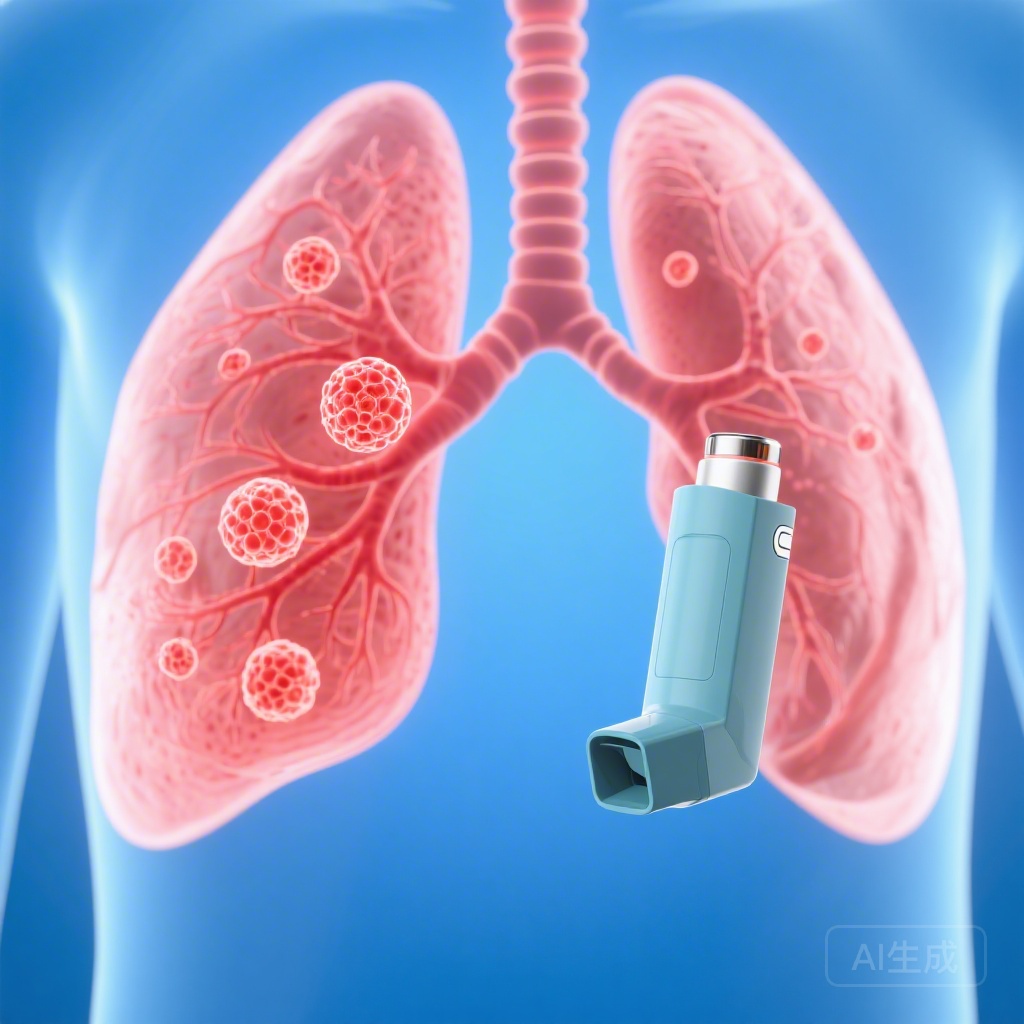
Highlights of the INFORM ASTHMA Trial
The INFORM ASTHMA trial provides pivotal evidence regarding the management of persistent asthma. The study’s primary highlights include:
1. Budesonide-formoterol as a reliever therapy resulted in an 18.5% greater reduction in geometric mean fractional exhaled nitric oxide (FeNO) compared to terbutaline reliever therapy over 26 weeks.
2. This is the first randomized controlled trial (RCT) specifically evaluating the efficacy of budesonide-formoterol as a reliever in a population already utilizing maintenance inhaled corticosteroids (ICS).
3. The safety profile of budesonide-formoterol was comparable to that of short-acting β2-agonist (SABA) therapy, with no significant increase in adverse events despite the additional corticosteroid exposure.
4. The findings support the shift toward anti-inflammatory reliever (AIR) therapy as a superior alternative to SABA for patients across the asthma severity spectrum.
Background: The Evolution of Asthma Management
For decades, the cornerstone of acute asthma symptom relief was the use of short-acting β2-agonists (SABA) such as salbutamol or terbutaline. While effective at inducing rapid bronchodilation, SABAs do nothing to address the underlying pathophysiology of asthma: airway inflammation. Over-reliance on SABA has been clinically linked to increased risks of severe exacerbations and asthma-related mortality.
In recent years, the Global Initiative for Asthma (GINA) has radically shifted its recommendations, favoring the use of low-dose ICS-formoterol as the preferred reliever. This strategy, often referred to as Single Maintenance and Reliever Therapy (SMART) or Anti-inflammatory Reliever (AIR) therapy, ensures that every time a patient reaches for symptom relief, they also receive a dose of anti-inflammatory medication. However, much of the robust evidence for this approach came from patients not using daily maintenance ICS or those on specific MART regimens.
There remained a distinct clinical evidence gap: Does adding budesonide-formoterol as a reliever provide additional anti-inflammatory benefit for patients who are already adherent to a daily maintenance ICS regimen? Furthermore, the impact of this approach on Type 2 (T2) airway inflammation—measured through biomarkers like FeNO—had not been extensively characterized in a randomized controlled setting. The INFORM ASTHMA trial was designed to address these specific questions.
Study Design and Methodology
The INFORM ASTHMA trial was an open-label, parallel-group, randomised, controlled, phase 4 trial conducted across three sites in New Zealand, including Wellington Hospital and community-based primary care facilities. The study population consisted of adults aged 16 to 75 years with a physician-confirmed diagnosis of asthma.
To be eligible, participants had to be using either reliever-only therapy or maintenance ICS with SABA. Crucially, they had to demonstrate active airway inflammation at screening, defined as a FeNO level of ≥25 parts per billion (ppb), and report frequent reliever use (at least twice weekly in the preceding 12 weeks). This ensured the study targeted patients with suboptimal inflammatory control.
Participants were randomized 1:1 into two groups:
1. The Budesonide-Formoterol Group: Received budesonide 200 μg and formoterol 6 μg as needed for symptom relief.
2. The Terbutaline Group: Received terbutaline 250 μg as needed for symptom relief.
All participants in both arms were prescribed a standardized maintenance dose of budesonide (200 μg twice daily) to isolate the effect of the reliever medication. The primary endpoint was the FeNO level at week 26, which serves as a non-invasive surrogate marker for eosinophilic airway inflammation. Secondary endpoints included asthma control scores, exacerbation rates, and safety assessments.
Key Findings: Impact on Airway Inflammation
Between March 2023 and August 2024, 181 participants were randomized (93 to the budesonide-formoterol group and 88 to the terbutaline group). The baseline characteristics were well-balanced, with a mean age of approximately 34 years and a predominantly female cohort (66%).
Primary Outcome: FeNO Reduction
At the end of the 26-week treatment period, the differences in inflammatory control were statistically and clinically significant. The geometric mean FeNO in the budesonide-formoterol group dropped from 62.18 ppb at baseline to 39.65 ppb. In the terbutaline group, the FeNO dropped from 68.03 ppb to 52.98 ppb.
When adjusted for baseline values, budesonide-formoterol reliever therapy resulted in an 18.5% greater reduction in FeNO compared to terbutaline (95% CI 2.72–31.73; p=0.024). This indicates that the “as-needed” administration of ICS via the combination inhaler provides a cumulative anti-inflammatory effect that surpasses maintenance therapy alone when supplemented by a SABA.
Safety and Tolerability
Safety is a paramount concern when increasing the frequency of corticosteroid exposure. The trial found that 83% of the budesonide-formoterol group and 78% of the terbutaline group experienced at least one adverse event. The relative risk was 1.06, which was not statistically significant (p=0.46). Most adverse events were mild to moderate, and no deaths occurred during the study. This confirms that the AIR approach does not introduce an unacceptable burden of side effects compared to traditional SABA use in this population.
Expert Commentary: Clinical Implications and Mechanistic Insights
The results of the INFORM ASTHMA trial reinforce the biological plausibility of the AIR strategy. Type 2 inflammation in asthma is dynamic; it fluctuates based on allergen exposure, viral triggers, and environmental stressors. By using budesonide-formoterol as a reliever, patients provide an immediate “top-up” of anti-inflammatory medication precisely when their symptoms—and likely their underlying inflammation—are surging.
From a clinical perspective, this study validates GINA’s preference for ICS-formoterol even in patients who are nominally adherent to maintenance therapy. It suggests that even for those on regular ICS, the addition of SABA as a reliever represents a missed opportunity to further suppress eosinophilic inflammation.
However, some limitations must be considered. The open-label nature of the trial could theoretically introduce bias in symptom reporting, though FeNO is an objective physiological measurement, which strengthens the validity of the primary outcome. Furthermore, the study was conducted in New Zealand, and while the results are broadly generalizable, different healthcare systems and environmental triggers in other regions could influence outcomes.
Practitioners should also note that the study utilized budesonide 200 μg as the maintenance dose. In patients on higher-dose maintenance therapy (e.g., Step 4 or 5 treatment), the incremental benefit of an ICS-containing reliever on FeNO might be less pronounced, though its role in preventing severe exacerbations remains well-established in other literature.
Conclusion
The INFORM ASTHMA trial marks a significant step forward in evidence-based respiratory medicine. By demonstrating a superior reduction in FeNO, the study proves that budesonide-formoterol reliever therapy offers better control of T2 airway inflammation than terbutaline for adults already on maintenance ICS. This finding simplifies the treatment message for clinicians: the use of anti-inflammatory relievers is not just for those avoiding maintenance therapy; it is a superior physiological approach for most patients with persistent asthma. Transitioning patients from SABA relievers to budesonide-formoterol should now be considered a standard of care to optimize inflammatory control and reduce the long-term burden of the disease.
Funding and Trial Registration
This study was funded by AstraZeneca. The trial is registered with the Australian New Zealand Clinical Trials Registry, identification number ACTRN12622001304729.
References
1. Noble JH, Bean O, Perry M, et al. Budesonide-formoterol versus terbutaline reliever in adults with asthma using maintenance inhaled corticosteroids in New Zealand (INFORM ASTHMA): an open-label, parallel-group, randomised, controlled, phase 4 trial. Lancet Respir Med. 2026;14(2):151-162.
2. Global Initiative for Asthma (GINA). Global Strategy for Asthma Management and Prevention, 2024. Available from: ginasthma.org.
3. Beasley R, Holliday M, Reddel HK, et al. Controlled Trial of Budesonide-Formoterol as Needed for Mild Asthma. N Engl J Med. 2019;380(21):2020-2030.
4. O’Byrne PM, FitzGerald JM, Bateman ED, et al. Inhaled Combined Budesonide-Formoterol as Needed in Mild Asthma. N Engl J Med. 2018;378(20):1865-1876.