Highlight
- Selective calcium supplementation guided by 4-hour postoperative parathyroid hormone (PTH) levels is not superior to routine prophylaxis but achieves comparable clinical outcomes.
- The study found no statistically significant difference in symptomatic hypocalcemia (7.8% in the PTH group vs. 11.1% in the routine group) or biochemical hypocalcemia.
- Adopting a selective strategy significantly reduces the volume of calcium and calcitriol supplementation required post-thyroidectomy, potentially lowering costs and side effects.
Background: The Burden of Post-Thyroidectomy Hypocalcemia
Postoperative hypocalcemia remains the most prevalent complication following total thyroidectomy, affecting a significant proportion of patients regardless of surgical expertise. This condition arises primarily from transient or permanent injury to the parathyroid glands or their vascular supply during the procedure. To mitigate the risk of tetany and other neuromuscular symptoms, many institutions have adopted routine prophylactic supplementation with calcium and calcitriol (C+C) for all patients undergoing total thyroidectomy.
While routine prophylaxis simplifies postoperative protocols and reduces the immediate risk of symptomatic drops in serum calcium, it is not without drawbacks. Overtreatment can lead to gastrointestinal side effects, potential hypercalcemia, and increased pharmacy costs. Furthermore, it may mask the early detection of permanent hypoparathyroidism. Consequently, researchers have sought to determine if selective supplementation, triggered by early postoperative parathyroid hormone (PTH) levels, could provide a more tailored and efficient approach without compromising patient safety.
Study Design: A Pragmatic Multicenter Approach
To address this clinical dilemma, researchers conducted a multicenter, pragmatic, randomized clinical trial across three tertiary hospitals between June 2022 and July 2024. The study enrolled 258 adult patients undergoing total thyroidectomy for both benign and malignant indications. Participants were randomized into two distinct intervention arms:
Selective Supplementation (PTH Group)
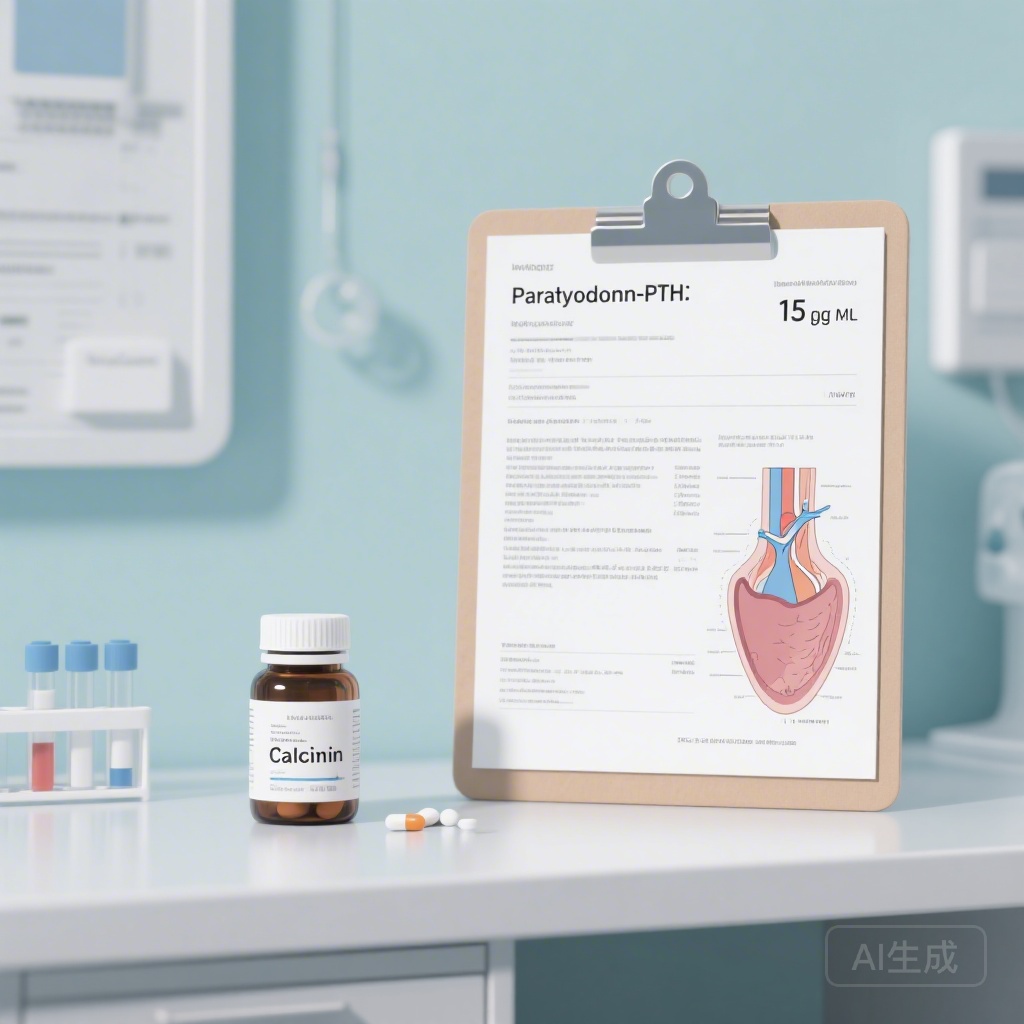
In this arm, patients received calcium and calcitriol only if their 4-hour postoperative PTH level was less than 15 pg/mL. Patients with PTH levels above this threshold did not receive routine prophylaxis, moving directly to standard monitoring.
Routine Prophylactic Supplementation (C+C Group)
Patients in this arm received a standard 15-day course of calcium and calcitriol supplementation regardless of their postoperative laboratory values.
The primary outcome was the incidence of symptomatic hypocalcemia at 15 days post-surgery, assessed using a standardized symptom scale. Secondary outcomes included biochemical hypocalcemia (serum calcium levels), adverse events related to supplementation, and hospital readmission rates.
Key Findings: Clinical and Biochemical Equivalence
The trial included 117 patients in the PTH group and 141 in the C+C group. The demographic and clinical characteristics, including the prevalence of Bethesda III to VI nodules, were well-balanced between the two cohorts. The analysis yielded several critical insights for the management of thyroid surgery patients.
Symptomatic Outcomes
The overall incidence of symptomatic hypocalcemia was 9.3%. When broken down by group, 11 patients (7.8%) in the PTH-guided group experienced symptoms compared to 13 patients (11.1%) in the routine prophylaxis group. The difference was not statistically significant (Odds Ratio [OR], 0.68; 95% CI, 0.29-1.57; P = .36), indicating that selective supplementation does not lead to a higher rate of clinical symptoms.
Biochemical Outcomes and Safety
In the subgroup of patients with complete biochemical follow-up, biochemical hypocalcemia occurred in 21.6% of the PTH group and 17.6% of the C+C group (OR, 1.29; 95% CI, 0.57-2.93; P = .53). Again, no statistical superiority was found for either approach. Adverse events, such as gastrointestinal distress or surgical site complications, were similar across both groups, and readmission rates did not vary significantly.
Reduced Medication Burden
One of the most notable findings was the reduction in medication use within the PTH group. By utilizing the 15 pg/mL PTH threshold, clinicians were able to avoid unnecessary supplementation in a substantial number of patients who maintained adequate parathyroid function, thereby streamlining postoperative care.
Expert Commentary: Contextualizing the Results
The results of this trial suggest that the choice between routine and selective supplementation may be dictated more by institutional resources and patient-specific factors than by a clear clinical superiority of one method over the other. The 4-hour PTH threshold of 15 pg/mL appears to be a robust marker for identifying patients at low risk for hypocalcemia.
For high-volume centers with rapid laboratory turnaround times, the PTH-guided approach offers a pathway toward personalized medicine, reducing the pill burden for patients. Conversely, in settings where PTH testing is expensive or not immediately available, routine prophylaxis remains a safe and effective backup that does not significantly increase the risk of adverse outcomes compared to selective therapy.
However, it is important to note the study’s limitations. As a pragmatic trial, variations in local practice and the reliance on a symptom scale for the primary endpoint may introduce some subjectivity. Additionally, while the 15-day duration for the C+C group is standard in many protocols, some clinicians may prefer shorter or longer durations based on individual risk assessments.
Conclusion: Practical Implications for Surgeons
This randomized clinical trial provides high-level evidence that selective calcium supplementation based on early postoperative PTH levels is a viable alternative to routine prophylaxis after total thyroidectomy. While the selective strategy did not prove superior in preventing hypocalcemia, it demonstrated clinical equivalence while reducing the need for universal medication.
Clinicians should feel confident in utilizing either strategy. The decision should be based on the availability of rapid PTH assays, the cost-effectiveness of the testing versus the medication, and patient preference regarding prophylactic treatment versus laboratory-guided intervention.
Funding and ClinicalTrials.gov
This study was conducted across three tertiary medical centers. ClinicalTrials.gov Identifier: NCT05252884. Analysis was performed between October 2024 and March 2025.
References
- Garcia-Lozano C, Betancourt C, Sanchez JG, et al. Routine vs Selective Calcium Supplementation After Total Thyroidectomy: A Randomized Clinical Trial. JAMA Otolaryngol Head Neck Surg. 2026 Feb 19. doi: 10.1001/jamaoto.2025.5514.
- Orloff LA, Wiseman SM, Bernet VJ, et al. American Thyroid Association Statement on Postoperative Hypocalcemia Management. Thyroid. 2018;28(7):830-841.
- Noordzij JP, Zhao AF, Bernet VJ, et al. Early prediction of hypocalcemia after thyroidectomy using parathyroid hormone: an analysis of pooled individual patient data from nine observational studies. Otolaryngol Head Neck Surg. 2007;136(2):170-175.