Highlights
High Safety Profile
In a cohort of 947 patients, procainamide infusion demonstrated a negligible risk of adverse events, with only 0.2% experiencing asymptomatic ventricular arrhythmias that resolved promptly upon cessation of the drug.
Variable Diagnostic Yield
The yield of a type 1 Brugada pattern is strongly influenced by pre-test probability, ranging from 7.2% in unexplained cardiac arrest survivors to 46.6% in those with non-specific baseline ECG abnormalities.
Favorable Long-Term Prognosis
Asymptomatic patients with a procainamide-induced type 1 pattern have an excellent prognosis, with 0% meeting the primary arrhythmic endpoint over a mean follow-up of nearly six years.
The Clinical Context: The Diagnostic Challenge of Brugada Syndrome
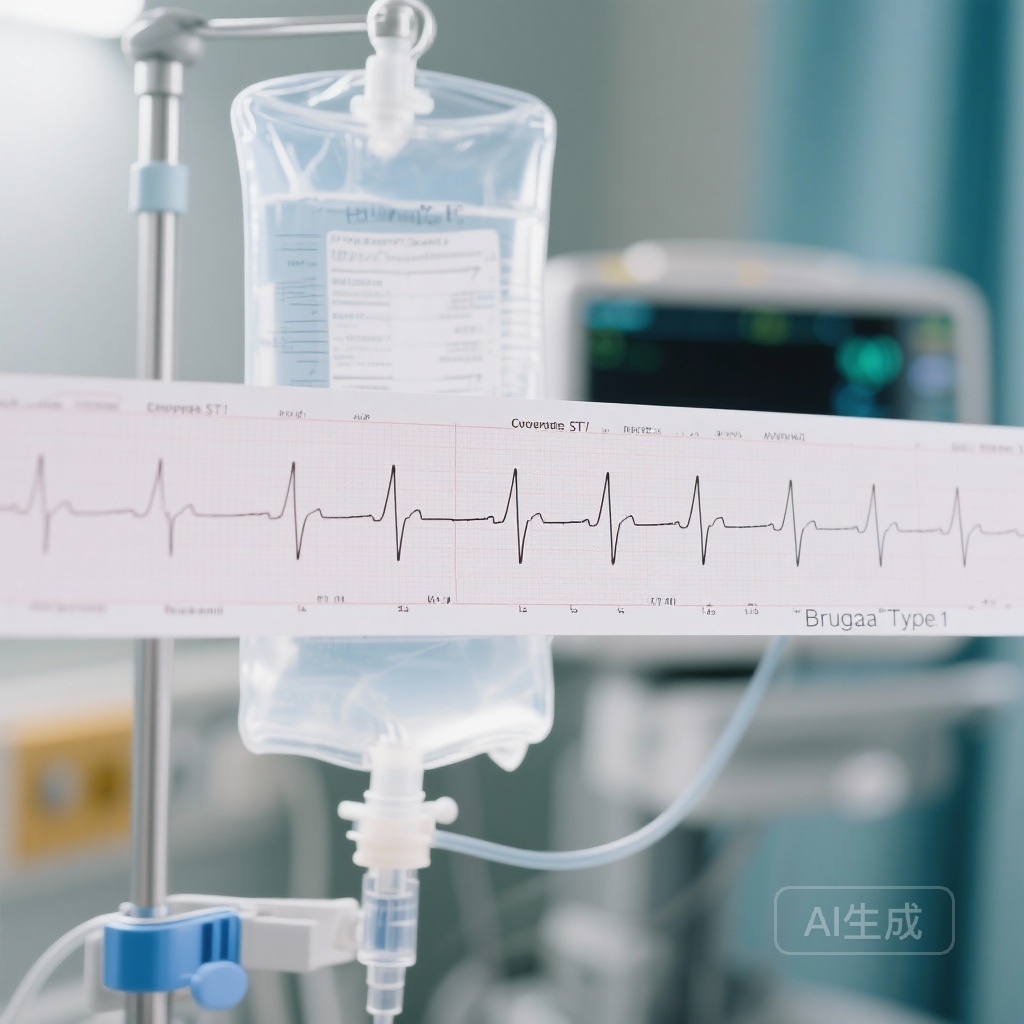
Brugada Syndrome (BrS) is a primary electrical disorder characterized by a specific electrocardiographic (ECG) pattern and an increased risk of ventricular fibrillation and sudden cardiac death. However, the pathognomonic ‘type 1’ pattern—coved ST-segment elevation ≥2 mm in the right precordial leads—is often intermittent or entirely concealed. In such cases, sodium channel blocker (SCB) provocation tests are the gold standard for unmasking the phenotype.
While ajmaline is frequently used in Europe, procainamide remains a primary diagnostic tool in North America. Despite its long history, questions have persisted regarding its comparative sensitivity, the safety of the infusion protocol, and, most importantly, the long-term clinical significance of a positive test in patients who have never experienced a cardiac event. The study by Moore et al., published in Circulation (2025), provides much-needed clarity on these parameters using data from the Canadian Hearts in Rhythm Organization (CHiro) registry.
Study Design and Methodology
This comprehensive study analyzed 947 consecutive patients undergoing procainamide challenge. The primary objectives were threefold: to assess the safety of the infusion, to determine the diagnostic yield across different clinical indications, and to evaluate the long-term outcomes of those with induced patterns.
The researchers categorized patients based on their indication for testing: unexplained cardiac arrest (UCA), family history of BrS, family history of unexplained sudden death, or the presence of non-specific (type 2 or 3) Brugada patterns on baseline ECG. A subset of patients with known intermittent type 1 patterns was also tested to estimate the sensitivity of procainamide. Outcomes were compared between those with drug-induced patterns and those with spontaneous type 1 patterns.
Key Findings: Safety and Diagnostic Yield
Safety and Tolerability
The safety data were overwhelmingly positive. Only two patients (0.2%) developed ventricular arrhythmias during the infusion. Both cases were asymptomatic and terminated spontaneously once the infusion was stopped. This suggests that procainamide may have a superior safety profile compared to more potent sodium channel blockers like ajmaline, which have been associated with higher rates of pro-arrhythmia in some series.
Diagnostic Utility and Sensitivity
The diagnostic yield varied significantly based on the clinical context:
- Unexplained Cardiac Arrest (UCA): 7.2%
- Family History of BrS: 22.2%
- Family History of Sudden Death: 6.9%
- Baseline Type 2/3 Pattern: 46.6%
Notably, procainamide correctly identified a type 1 pattern in 92% of patients with a known intermittent spontaneous pattern, suggesting high sensitivity. The specificity was also estimated to be very high, reinforcing the test’s utility in confirming a diagnosis rather than just unmasking a non-specific drug effect.
Prognostic Significance: Low Risk for Asymptomatic Induced Patients
Perhaps the most clinically impactful finding of the study involves the long-term follow-up of 137 patients with a procainamide-induced type 1 pattern who had no history of cardiac arrest. Over a mean follow-up period of 5.9 ± 4.5 years, the rate of malignant ventricular arrhythmias was 0%.
In contrast, among patients with a spontaneous type 1 pattern, the event rate was 1%. While still low, this confirms the established clinical hierarchy where spontaneous patterns carry a higher risk than those unmasked only by pharmacological challenge. The study also noted that while 13% of the induced group received primary prevention implantable cardioverter defibrillators (ICDs) at baseline, none of the patients who received an ICD during follow-up (typically for syncope) actually required appropriate therapy. This suggests a potential for over-treatment in this population.
Expert Commentary: Implications for Clinical Practice
Refining Risk Stratification
The findings by Moore et al. support a more conservative approach to asymptomatic patients who only manifest a Brugada pattern during a procainamide challenge. For clinicians, this means that a positive procainamide test, in the absence of high-risk features like syncope or a family history of premature sudden death, should be met with reassurance rather than aggressive intervention.
Procainamide vs. Ajmaline
There is ongoing debate regarding which sodium channel blocker is ideal. While ajmaline is often cited as having higher sensitivity due to its higher potency, this study suggests that procainamide’s sensitivity (92%) is robust and its safety profile is excellent. The clinical choice may ultimately depend on regional availability, but the CHiro registry data validates procainamide as a high-performance diagnostic tool.
Limitations and Considerations
Despite the large sample size, the low event rate in the induced group makes it difficult to identify subtle risk factors. Furthermore, the decision-making process for ICD implantation was at the discretion of the treating physicians, which may introduce selection bias. Long-term follow-up beyond six years is still necessary to ensure that the risk does not increase later in life.
Conclusion
Procainamide infusion is an extremely safe and effective method for the diagnosis and exclusion of Brugada syndrome. The diagnostic yield is highest when used to investigate non-specific baseline ECG changes or in those with a strong family history of the disease. Crucially, for the asymptomatic patient, a procainamide-induced type 1 pattern indicates an exceptionally low risk of life-threatening arrhythmias. These results should empower electrophysiologists to adopt a more nuanced approach to risk stratification, prioritizing lifestyle modifications and clinical monitoring over invasive interventions for this specific low-risk subgroup.
References
Moore BM, Chan D, Davies B, et al. Safety, Utility, and Outcomes of Procainamide Challenge for the Diagnosis and Exclusion of Brugada Syndrome. Circulation. 2025 Dec 4. doi: 10.1161/CIRCULATIONAHA.125.076011. PMID: 41342099.