Highlights
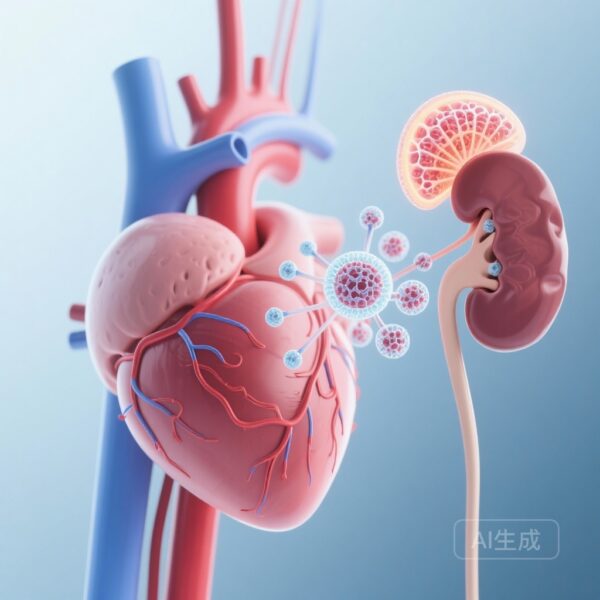
Danicamtiv, a selective cardiac myosin agonist, demonstrated significant improvements in left ventricular ejection fraction (LVEF) in patients with dilated cardiomyopathy (DCM) driven by genetic variants.
The phase 2a trial revealed a genotype-dependent response, with the MYH7 and TTN variant cohorts showing more robust improvements in contractile function compared to participants with other causes of DCM.
The drug was generally well-tolerated, although a small subset of patients exhibited asymptomatic increases in cardiac troponin, necessitating further investigation into long-term safety profiles.
Introduction: The Quest for Precision in Dilated Cardiomyopathy
Dilated cardiomyopathy (DCM) remains a leading cause of heart failure and the most common indication for cardiac transplantation worldwide. Characterized by left ventricular enlargement and systolic dysfunction, DCM is not a single disease but rather a final common pathway for a diverse array of genetic and environmental insults. Despite the proliferation of neurohormonal therapies such as ACE inhibitors, beta-blockers, and SGLT2 inhibitors, these treatments are largely agnostic to the underlying etiology of the disease. For many patients, particularly those with strong genetic predispositions, current standard-of-care therapies fail to arrest the progression of the disease.
In recent years, the focus of cardiovascular research has shifted toward precision medicine—targeting the specific molecular defects that drive myocardial failure. Among the most frequent genetic culprits in DCM are variants in the MYH7 gene, which encodes the cardiac beta-myosin heavy chain, and the TTN gene, which encodes the giant protein titin. These proteins are fundamental components of the sarcomere, the heart’s basic contractile unit. Pathogenic variants in these genes often lead to reduced myosin availability or impaired motor function, resulting in the diminished force production that defines DCM. Danicamtiv represents a novel therapeutic approach designed to bypass neurohormonal signaling and directly enhance the function of the cardiac motor itself.
Mechanism of Action: Reinvigorating the Cardiac Motor
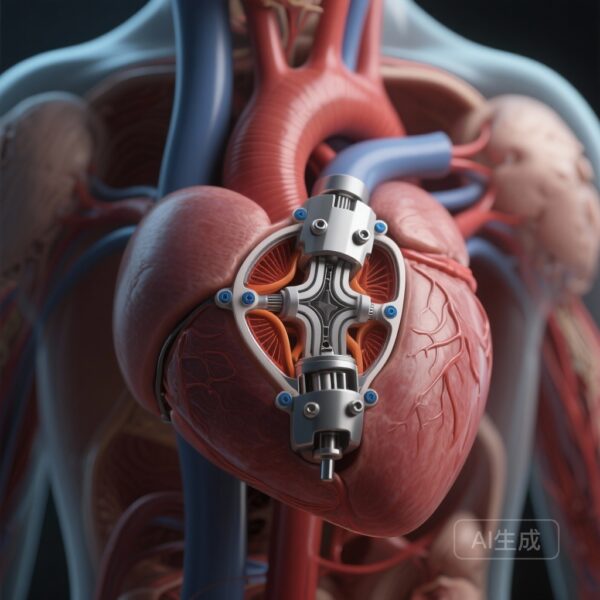
Danicamtiv is an investigational small-molecule selective cardiac myosin agonist. Unlike traditional inotropes, such as phosphodiesterase inhibitors or beta-agonists, which increase contractility by elevating intracellular calcium levels—often at the cost of increased oxygen demand and arrhythmic risk—danicamtiv acts through a calcium-independent mechanism. It binds selectively to cardiac myosin, shifting the equilibrium toward the ‘on’ state (the disordered relaxed state) and increasing the number of myosin heads available to interact with actin during systole.
By increasing the number of active cross-bridges, danicamtiv enhances the force of contraction without significantly altering the calcium transient. This mechanism is particularly relevant for DCM patients with MYH7 or TTN variants, where the primary defect lies in the structural or functional integrity of the myofilament. In vitro assessments preceding the clinical trial confirmed that danicamtiv increases the enzymatic activity of both wild-type and DCM-variant cardiac myosin, providing a strong translational rationale for human studies.
Study Design: The Phase 2a Open-Label Trial
The study, published in the Journal of the American College of Cardiology (JACC), was a phase 2a, baseline-controlled, open-label trial (NCT04572893) designed to evaluate the safety, tolerability, and preliminary efficacy of danicamtiv across different DCM etiologies. The researchers enrolled 41 participants, who were stratified into three distinct cohorts: those with MYH7 variants (n=12), those with TTN variants (n=14), and those with DCM due to other causes, including both negative genetic results and other genetic variants (n=15).
The trial was structured into two treatment periods. In Treatment Period 1 (TP1), all participants received 25 mg of oral danicamtiv twice daily for one week. Based on individual responses and tolerability, the dose was adjusted in Treatment Period 2 (TP2) to either 10 mg or 50 mg twice daily. The primary focus was safety and tolerability, while secondary endpoints included echocardiographic measures of cardiac structure and function, specifically changes in LVEF and stroke volume.
Key Findings: Genotype-Driven Responses
The results of the trial provide compelling evidence that the efficacy of danicamtiv may be influenced by the patient’s genetic background. The mean baseline LVEF for the entire study population was 33.4% ± 8.0%, reflecting a cohort with significant systolic impairment. Following treatment in TP2, participants in the MYH7 and TTN cohorts showed substantial improvements from baseline.
Contractile Improvements
The MYH7 cohort experienced the most pronounced benefit, with a mean increase in LVEF of 8.8% (95% CI: 5.03%-12.64%). The TTN cohort followed closely, showing a mean increase of 5.9% (95% CI: 2.59%-9.28%). In contrast, the cohort representing ‘other causes’ of DCM showed a more modest and statistically non-significant improvement of 4.4% (95% CI: -0.90% to 9.73%). These findings suggest that danicamtiv may be particularly effective in stabilizing or ‘rescuing’ the function of sarcomeres compromised by specific MYH7 or TTN mutations.
Safety and Tolerability
On the safety front, danicamtiv was generally well-tolerated. Treatment-emergent adverse events (TEAEs) occurred in 53.7% of the participants, but the majority were classified as mild or moderate. Only one participant discontinued the study due to an adverse event. However, a notable safety signal emerged in the ‘other causes’ cohort, where three participants experienced asymptomatic increases in cardiac troponin. While these elevations did not correlate with clinical symptoms or acute cardiac injury in this short-term study, they highlight the need for careful monitoring of myocardial strain or potential off-target effects as the drug moves into longer-duration trials.
Expert Commentary: A New Era of Targeted Inotropy
The danicamtiv trial represents a landmark in the transition from ‘one-size-fits-all’ heart failure management to a more nuanced, genotype-specific approach. Clinical experts note that the success of danicamtiv in the MYH7 and TTN cohorts validates the sarcomere as a primary therapeutic target in genetic DCM. By directly addressing the molecular deficit, danicamtiv avoids many of the pitfalls associated with traditional inotropic agents.
However, several questions remain. The trial was open-label and baseline-controlled, which introduces the potential for bias, although the objective nature of echocardiographic endpoints mitigates this to some degree. Furthermore, the duration of the study was short. In chronic heart failure, the long-term impact of enhancing myosin function on myocardial energetics and remodeling is unknown. There is a delicate balance to be struck; while increasing the number of active myosin heads improves systole, it must not interfere with diastolic relaxation, as impaired relaxation can lead to increased filling pressures and symptoms of heart failure with preserved ejection fraction (HFpEF).
The asymptomatic troponin elevations seen in some patients are also a point of discussion among clinicians. These could reflect excessive myocardial wall stress or subtle metabolic imbalances caused by prolonged myosin-actin interaction. Future phase 2b and phase 3 trials will need to establish the ‘therapeutic window’ for danicamtiv to ensure that the gains in systolic function do not come at the expense of long-term myocardial health.
Conclusion: Shaping the Future of DCM Therapy
The phase 2a trial of danicamtiv provides a promising proof-of-concept for the use of cardiac myosin agonists in the treatment of dilated cardiomyopathy. The study successfully translated in vitro findings of enhanced myosin motor function into clinically measurable improvements in LVEF, particularly in patients with MYH7 and TTN variants. This genotype-specific response underscores the importance of genetic testing in the modern management of DCM, not just for prognosis and family screening, but increasingly for therapeutic decision-making.
As the field moves forward, larger, randomized, double-blind trials will be essential to confirm these findings and to evaluate the long-term safety and impact of danicamtiv on clinical outcomes such as hospitalization rates and survival. For now, danicamtiv stands as a beacon of hope for a more targeted and effective approach to treating one of cardiology’s most challenging conditions.
Funding and Clinical Trial Information
This study was supported by Bristol Myers Squibb. The clinical trial is registered at clinicaltrials.gov under the identifier NCT04572893: Exploratory Study of Danicamtiv in Patients With Primary Dilated Cardiomyopathy Due to Genetic Variants or Other Causalities.
References
Lakdawala NK, Hershberger RE, Garcia-Pavia P, Elliott PM, Ginns J, Meder B, Solomon S, Cunningham JW, Gimeno JR, Barriales-Villa R, Adler E, Gerull B, Pereira NL, Halliday BP, Li W, Jarugula P, Maruyama S, Mohran SE, Papadaki M, Anto AR, Anderson RL, Rodriguez HM, Del Rio CL, Edelberg JM, Kurio G, Maya J, Januzzi JL. Danicamtiv, a Selective Agonist of Cardiac Myosin, for Dilated Cardiomyopathy: A Phase 2 Open-Label Trial. J Am Coll Cardiol. 2025 Dec 23;86(25):2598-2612. doi: 10.1016/j.jacc.2025.09.1511. Epub 2025 Sep 29. PMID: 41217321.