

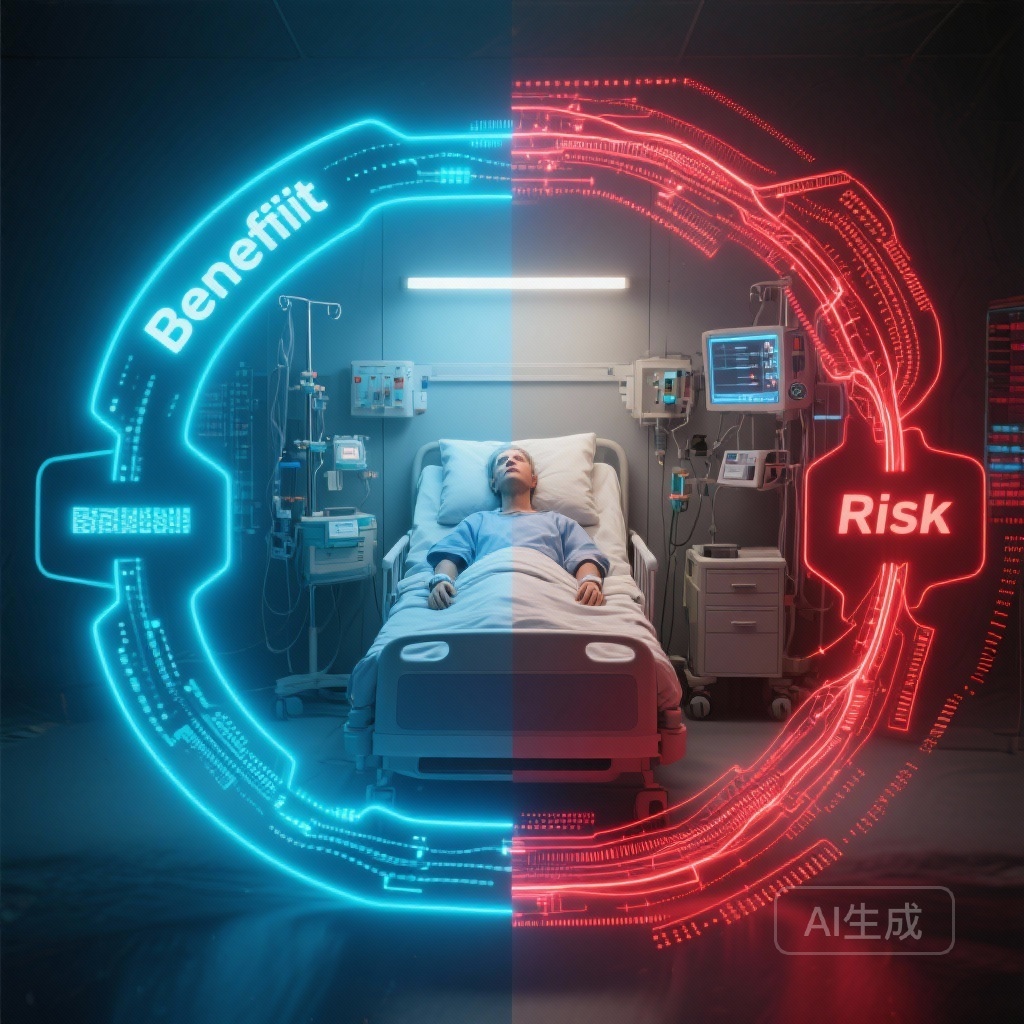
Introduction: The Paradox of Protocolized ICU Care
For the past decade, the ‘early mobilization’ (EM) paradigm has been a cornerstone of intensive care unit (ICU) rehabilitation research. The rationale is biologically plausible: immobility leads to rapid muscle atrophy, diaphragm weakness, and systemic inflammation. However, large-scale randomized controlled trials (RCTs), most notably the ‘Early Active Mobilization during Mechanical Ventilation in the ICU’ (TEAM) trial, have yielded neutral results regarding long-term survival. This discrepancy between physiological theory and clinical outcomes suggests a critical oversight in critical care research: the assumption that all mechanically ventilated patients respond to physical intervention in a uniform manner.
A groundbreaking secondary analysis of the TEAM trial, recently published in Intensive Care Medicine, challenges this ‘one-size-fits-all’ approach. By utilizing advanced machine learning to estimate individualized treatment effects (ITEs), researchers have revealed a staggering spectrum of response to enhanced EM. The findings suggest that for some patients, aggressive early exercise is life-saving, while for others, it may be life-threatening.
The Study Design: Moving Beyond Average Treatment Effects
The original TEAM trial compared ‘enhanced’ EM (higher intensity, earlier start) to ‘usual care’ EM. While the primary study found no difference in 180-day mortality, this secondary analysis sought to identify ‘Heterogeneity of Treatment Effect’ (HTE). The researchers employed a causal inference framework, leveraging machine learning to predict how any single patient would have fared under the alternative treatment arm.
Methodological Rigor
The study included 687 patients from 40 international sites. The researchers used a ‘split-sample’ approach, dividing the dataset into training and testing cohorts by site to ensure the model’s generalizability. Five-fold cross-validation was used to compare six different machine learning algorithms, including complex causal forest and gradient boosting models, to determine which could most accurately predict the primary outcome: death by day 180.
Patients were ultimately stratified into tertiles based on their predicted ITE. This allowed the investigators to compare the clinical characteristics of ‘benefit-responders’ versus those predicted to suffer ‘harm’ from enhanced mobilization.
Key Findings: A Spectrum of Benefit and Harm
The results of the analysis are both illuminating and cautionary. The interaction term between the machine learning model’s predictions and the actual treatment assignment was statistically significant (p = 0.006), confirming that the effect of EM is indeed heterogeneous.
Extreme Variation in Mortality Risk
In the test cohort, the predicted ITEs ranged from an absolute 34.0% reduction in mortality to a 39.3% increase in mortality when patients were subjected to enhanced EM compared to usual care. This suggests that the ‘neutral’ result of the original TEAM trial was actually an average of two opposing extremes: a group that derived massive benefit and a group that was significantly harmed by the intervention.
The Profile of the ‘At-Risk’ Patient
One of the most clinically relevant aspects of the study is the identification of baseline variables associated with poor response to enhanced EM. Patients predicted to experience harm or lack of benefit were more likely to exhibit the following characteristics at baseline:
- Higher Vasopressor Requirements: Indicating hemodynamic instability where the metabolic demand of physical exercise may outstrip oxygen delivery.
- Presence of Diabetes: Suggesting potentially altered metabolic responses to stress or pre-existing microvascular complications.
- Lower RASS (Richmond Agitation-Sedation Scale) Scores: Indicating deeper sedation or more severe neurological impairment at the time of enrollment.
In contrast, patients who benefited most from enhanced EM tended to be more hemodynamically stable and more alert, suggesting they possessed the ‘physiological reserve’ necessary to tolerate and adapt to the stress of early physical activity.
Expert Commentary: Toward a Personalized Approach to ICU Rehabilitation
This study marks a significant shift in how clinicians must view ICU rehabilitation. The finding that aggressive mobilization can increase mortality risk in certain subgroups—specifically those on vasopressors or in deep sedation—aligns with the ‘Goldilocks’ principle of critical care: interventions must be ‘just right’ in timing and intensity.
Biological Plausibility
The harm observed in the deep-sedation/vasopressor group may be explained by ‘stolen’ cardiac output. During exercise, blood flow is diverted to skeletal muscles. In a patient already struggling with shock or multi-organ failure, this diversion may compromise perfusion to vital organs like the kidneys or the gut. Furthermore, the metabolic cost of mobilization in a patient with diabetes—who may have impaired mitochondrial function—could exacerbate cellular stress.
Limitations and Future Directions
While the study is methodologically robust, it remains a secondary analysis and is thus hypothesis-generating. The sample size of 687, while large for an ICU trial, is relatively modest for complex machine learning models. Additionally, the baseline variables used (vasopressors, RASS) are snapshots in time; in the dynamic environment of the ICU, a patient’s ‘phenotype’ for mobilization may change daily or even hourly.
Conclusion: The End of the Protocolized Era?
The TEAM trial secondary analysis provides a compelling argument for personalizing ICU mobilization. We can no longer assume that ‘more is better’ for every patient on a ventilator. Instead, the focus must shift to identifying the ‘window of opportunity’—the point at which a patient’s physiological stability allows them to benefit from the anabolic signals of exercise without being overwhelmed by the catabolic stress of the intervention.
Future clinical trials should consider using these machine learning insights to ‘enrich’ study populations, perhaps by excluding those at high risk of harm or by tailoring the intensity of mobilization to the individual’s predicted response. Until then, clinicians should exercise caution when pushing for aggressive mobilization in patients with significant hemodynamic or neurological compromise.
Funding and ClinicalTrials.gov
The TEAM trial was supported by grants from the National Health and Medical Research Council of Australia (NHMRC) and the Health Research Council of New Zealand. ClinicalTrials.gov Identifier: NCT03133377.
References
- Hodgson CL, Spicer AB, Broadley T, et al. Individualised treatment effects of enhanced early mobilisation in mechanically ventilated patients: a secondary analysis of the TEAM trial. Intensive Care Med. 2025. doi:10.1007/s00134-025-08217-0.
- TEAM Study Investigators and the ANZICS Clinical Trials Group. Early Active Mobilization during Mechanical Ventilation in the ICU. N Engl J Med. 2022;387(19):1747-1758.
- Iwashyna TJ, et al. Finding Heterogeneity of Treatment Effects in Clinical Trials. JAMA. 2018;319(14):1439-1440.

