Highlights
- Individualized prognostic counseling using online models significantly reduces decisional conflict in patients with primary head and neck squamous cell carcinoma (HNSCC).
- The use of personalized data promotes a transition from passive to more active or shared decision-making roles, particularly in complex HNSCC cases.
- Decisional regret is notably lower in the short-term (3–6 months) post-intervention, although these effects may attenuate by the 12-month mark.
- Integrating precision prognostic tools into routine oncology consultations does not negatively impact patient-reported quality of life, mitigating concerns about psychological distress from specific survival data.
Background
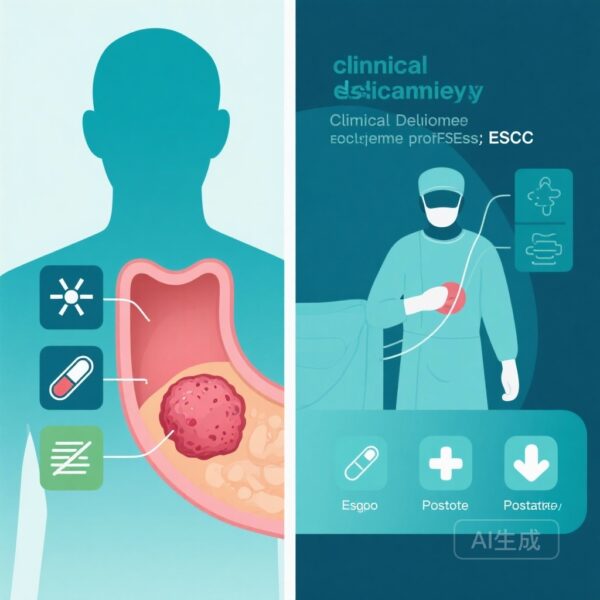
Head and neck squamous cell carcinoma (HNSCC) represents a heterogeneous group of malignancies that pose significant challenges to both clinicians and patients. Treatment for HNSCC often necessitates a delicate balance between achieving oncological control and preserving essential functions such as speech, swallowing, and airway patency. Consequently, the decision-making process is fraught with complexity, as patients must weigh the survival benefits of aggressive surgery or chemoradiotherapy against potential long-term morbidity and impacts on quality of life (QoL).
Historically, prognostic counseling in oncology has relied on clinicians’ subjective interpretations of TNM staging and population-level survival statistics. However, these generalized figures often fail to account for the unique clinical and demographic variables of the individual patient, leading to uncertainty and decisional conflict. Decisional conflict—defined as a state of uncertainty about which course of action to take when choices involve risk, loss, or regret—is a significant barrier to patient-centered care. While shared decision-making (SDM) is widely endorsed, its implementation is frequently hindered by a lack of accessible, personalized data. The recent trial by Dorr et al. (2026) addresses this gap by investigating whether individualized prognostic counseling, facilitated by an online prognostic model, can optimize the decision-making experience for patients with primary HNSCC.
Key Content
Chronological Development of Evidence in Prognostic Counseling
The evolution of prognostic tools has transitioned from static, clinician-facing staging systems to dynamic, patient-facing decision aids. Early iterations focused primarily on health literacy and basic education. By the mid-2010s, the oncology community began recognizing that patients desired more granular information about their specific outcomes. The Dutch Trial Register (NTR4106) initiated a sequential cohort study starting in 2014 to formally evaluate these tools. This progression reflects a broader shift in medicine toward “Precision Counseling,” where the delivery of information is as tailored as the molecular therapies themselves.
The Intervention: Online Prognostic Models vs. Standard Care
In the clinical trial conducted at an academic tertiary referral center, two cohorts were compared. Cohort 1 (Standard, 2014–2018) received traditional counseling, while Cohort 2 (Intervention, 2019–2022) received additional individualized prognostic counseling. The intervention utilized an online prognostic model that integrated specific patient factors (e.g., age, tumor site, stage, and comorbidities) to generate personalized survival probabilities.
The study population was stratified into two groups: small laryngeal squamous cell carcinoma (SLSCC) and other HNSCC. This stratification is crucial because treatment for SLSCC is often more standardized, whereas other HNSCC locations (e.g., oropharynx, oral cavity) involve more diverse and potentially debilitating treatment pathways.
Impact on Decisional Conflict and Subscale Analysis
The primary outcome, measured by the Decisional Conflict Scale (DCS), showed a clear benefit for the individualized counseling group. For the “other HNSCC” group, the effect size was moderate (Cohen d = 0.34), with significant improvements observed in three specific subscales:
- Informed: Patients felt they had a better grasp of the facts regarding their prognosis and treatment options.
- Values Clarity: Patients were better able to identify what mattered most to them (e.g., survival vs. function).
- Support: Patients felt more supported in the decision-making process.
Interestingly, the effect for SLSCC was smaller (Cohen d = 0.19), suggesting that in scenarios where treatment is more straightforward, the impact of precision data may be less pronounced but still beneficial.
Longitudinal Decisional Regret and Role Preferences
Decisional regret is a retrospective measure of whether a patient would make the same choice again. The study found that at 3 to 6 months post-treatment, patients in the individualized counseling cohort (Cohort 2) had significantly lower median regret scores compared to Cohort 1. Specifically, in the other HNSCC group, the median regret score dropped from 20 to 10 (rank-biserial r = 0.29).
Furthermore, the study utilized the Control Preferences Scale (CPS) to assess the patient’s role in decision-making. Those receiving individualized counseling were more likely to adopt an active or shared role rather than a passive one (Cramer V = 0.21). This suggests that providing patients with their own prognostic data empowers them to engage more deeply with their healthcare providers, moving away from a “doctor knows best” model toward a collaborative partnership.
Quality of Life and Safety Outcomes
A frequent concern among clinicians is that providing specific, potentially poor prognostic data might cause psychological harm or decrease the patient’s quality of life. However, the trial by Dorr et al. found no relevant differences in QoL outcomes between the two cohorts. This aligns with emerging evidence that patients generally prefer honesty and precision, and that uncertainty itself is often more distressing than a known, even if difficult, prognosis.
Expert Commentary
The Mechanistic Rationale for Personalized Data
From a psychological perspective, the reduction in decisional conflict via individualized counseling can be explained by the “Uncertainty Management Theory.” By replacing vague generalities with specific probabilities, the online model reduces the cognitive load on the patient. Instead of attempting to calculate their own risk, patients can focus on the trade-offs between different treatment modalities. This clarity facilitates a more robust alignment between a patient’s personal values and their clinical choices.
Clinical Applicability and Guidelines
Current NCCN and ASCO guidelines increasingly emphasize shared decision-making. The results of this trial suggest that prognostic models should be integrated into the standard of care for HNSCC. However, the expert consensus remains that these tools should *supplement* rather than *replace* the clinician’s expertise. The “human element”—interpreting the data and providing emotional context—remains indispensable.
Limitations and Controversies
The nonrandomized, sequential nature of the trial is a limitation, as it introduces potential temporal bias (e.g., improvements in general supportive care over the decade). Additionally, the attenuation of differences in decisional regret at 12 months suggests that while personalized counseling helps during the acute decision and recovery phase, long-term adjustment may be influenced by other factors such as treatment side effects and functional outcomes.
Conclusion
Individualized prognostic counseling represents a significant advancement in the management of head and neck cancer. By utilizing online prognostic models, clinicians can significantly reduce patient decisional conflict and short-term regret, while promoting a more active patient role in the treatment journey. As we move toward an era of increasingly complex therapeutic options, including immunotherapy and de-escalation protocols, the integration of precision counseling tools will be essential to ensure that treatment remains truly patient-centered. Future research should focus on multi-center randomized controlled trials and the inclusion of diverse populations to further validate these findings and optimize tool usability.
References
- Dorr MC, Hoesseini A, Sewnaik A, Dronkers EAC, Baatenburg de Jong RJ, Offerman MPJ. Individualized Prognostic Counseling for Decision-Making in Head and Neck Cancer: A Nonrandomized Clinical Trial. JAMA Otolaryngol Head Neck Surg. 2026 Jan 2:e254838. doi: 10.1001/jamaoto.2025.4838. PMID: 41481329.
- Stacey D, et al. Decision aids for people facing health treatment or screening decisions. Cochrane Database Syst Rev. 2017;4(4):CD001431.
- Vick AS, et al. Shared Decision Making in Head and Neck Oncology: A Systematic Review. Laryngoscope. 2021;131(4):E1140-E1148.