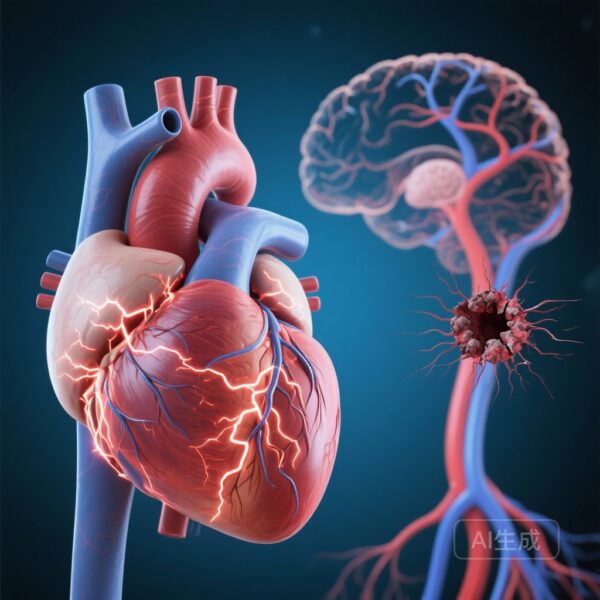
Highlights
- Intensive blood pressure control (target systolic <120 mmHg) significantly reduces the risk of composite cardiovascular disease in patients with type 2 diabetes who carry the haptoglobin 1 (Hp1) allele.
- In contrast, patients with the Hp2-2 phenotype showed no cardiovascular benefit from intensive therapy compared to standard therapy.
- The Hp1 allele was associated with a 47% reduction in stroke risk under intensive blood pressure management.
- These findings provide a biological explanation for the previously neutral results of the ACCORD Blood Pressure trial and advocate for a precision medicine approach in diabetic hypertension.
Background: The Challenge of Intensive Blood Pressure Control in Diabetes
The relationship between hypertension and the escalation of cardiovascular disease (CVD), coronary artery disease, and stroke in patients with type 2 diabetes is well-documented. For decades, clinicians have debated the optimal systolic blood pressure (SBP) target for this high-risk population. While the SPRINT (Systolic Blood Pressure Intervention Trial) demonstrated clear benefits for intensive SBP control (target <120 mmHg) in non-diabetic patients, the ACCORD (Action to Control Cardiovascular Risk in Diabetes) Blood Pressure trial yielded neutral results, failing to show a significant reduction in major cardiovascular events with intensive therapy.
This discrepancy has led researchers to search for unmeasured biological factors that might modulate the response to blood pressure lowering. One such candidate is the haptoglobin (Hp) phenotype. Haptoglobin is a plasma protein that binds free hemoglobin, preventing oxidative damage to the vasculature. In humans, the Hp gene is polymorphic, resulting in three common phenotypes: Hp1-1, Hp2-1, and Hp2-2. The Hp2-2 phenotype, present in approximately 36% to 50% of many populations, is a less efficient antioxidant and has been linked to increased vascular complications in the setting of hyperglycemia.
Study Design and Methodology
To investigate whether the Hp phenotype influenced the outcomes of the ACCORD trial, researchers conducted a post-hoc analysis using multivariable-adjusted Cox proportional hazards regression models. The study population consisted of ACCORD Blood Pressure trial participants with available genetic data, categorized into two groups: Hp2-2 phenotype (n=1,527) and Hp1 allele carriers (including both Hp1-1 and Hp2-1; n=2,748).
The primary objective was to assess the relationship between intensive (target SBP <120 mmHg) versus standard (target SBP <140 mmHg) blood pressure control and the risk of composite CVD, coronary artery disease, and stroke, stratified by Hp phenotype. The analysis adjusted for various baseline factors, including age, sex, race, body mass index, smoking status, and baseline glycated hemoglobin (HbA1c).
Key Findings: Phenotype-Specific Responses
The results of the analysis provide a striking contrast in treatment efficacy based on genetic markers. Among Hp1 allele carriers, intensive blood pressure therapy was associated with a 24% lower risk of composite cardiovascular disease (Hazard Ratio [HR], 0.76; 95% CI, 0.59-0.99). However, among participants with the Hp2-2 phenotype, intensive therapy provided no such protection (HR, 1.12; 95% CI, 0.80-1.55), with a P-interaction of 0.07.
Stroke Risk and Coronary Outcomes
The most profound effect was observed in stroke prevention. Hp1 allele carriers assigned to the intensive therapy arm experienced a 47% reduction in the risk of stroke (HR, 0.53; 95% CI, 0.31-0.91). For Hp2-2 participants, the reduction was not statistically significant (HR, 0.70; 95% CI, 0.33-1.46). Regarding coronary artery disease, while the trend favored intensive therapy in Hp1 carriers (HR, 0.85), it did not reach statistical significance, and no benefit was seen in the Hp2-2 group (HR, 1.12; P-interaction=0.11).
These data suggest that the original ACCORD trial’s neutral findings were likely a result of the heterogeneous response among different genetic subgroups. By pooling all phenotypes, the significant benefits experienced by Hp1 carriers were masked by the lack of response in the Hp2-2 subgroup.
Expert Commentary: Mechanistic Insights and Clinical Implications
The biological plausibility of these findings rests on the functional differences between haptoglobin proteins. The Hp1-1 and Hp2-1 proteins are smaller and more effective at entering the subendothelial space to neutralize hemoglobin-induced oxidative stress. In contrast, the Hp2-2 protein is a larger polymer with inferior antioxidant capacity. In patients with type 2 diabetes, high glucose levels further impair the ability of haptoglobin to bind hemoglobin, leading to the accumulation of iron and the generation of reactive oxygen species within the vessel wall.
From a clinical perspective, this study suggests that “one-size-fits-all” blood pressure targets may be obsolete. For clinicians, the ability to identify Hp1 carriers—who constitute the majority of the population—could justify more aggressive blood pressure management to achieve significant reductions in stroke and cardiovascular events. Conversely, for Hp2-2 individuals, the lack of benefit from intensive control suggests that clinicians might prioritize other risk-reduction strategies, such as antioxidant therapy or more stringent glycemic control, while maintaining a standard blood pressure target to avoid the adverse effects of polypharmacy and hypotension.
However, some limitations must be acknowledged. This was a post-hoc analysis, and while the interaction for composite CVD approached significance, it did not cross the traditional 0.05 threshold. Furthermore, the findings require replication in other large-scale clinical trials, such as SPRINT, to confirm whether the Hp phenotype serves as a universal predictor of antihypertensive treatment response.
Conclusion and Summary
The analysis of the ACCORD Blood Pressure RCT through the lens of haptoglobin phenotypes represents a significant step toward precision medicine in hypertension. By demonstrating that Hp1 allele carriers derive substantial cardiovascular and stroke protection from intensive blood pressure lowering, while Hp2-2 individuals do not, the study offers a compelling explanation for the historical inconsistencies in clinical trial data. If replicated, haptoglobin phenotyping could become a valuable tool in the clinical toolkit, allowing for personalized blood pressure targets that maximize benefit while minimizing unnecessary intervention.
Funding and clinicaltrials.gov
The ACCORD trial was supported by the National Heart, Lung, and Blood Institute (NHLBI) of the National Institutes of Health. This sub-study was registered at ClinicalTrials.gov with the identifier NCT00000620.
References
- Lavallée SK, Carew AS, Warren RA, et al. Haptoglobin Phenotype and Cardiovascular Risk: The ACCORD Blood Pressure RCT. Hypertension. 2026;83(1):189-198. doi:10.1161/HYPERTENSIONAHA.125.25021.
- The ACCORD Study Group. Effects of intensive blood-pressure control in type 2 diabetes mellitus. N Engl J Med. 2010;362(17):1575-1585.
- Levy AP, Purushothaman KR, Levy NS, et al. Haptoglobin phenotype and vascular complications in diabetes. J Am Coll Cardiol. 2008;52(14):1140-1144.
- The SPRINT Research Group. A randomized trial of intensive versus standard blood-pressure control. N Engl J Med. 2015;373(22):2103-2116.