Introduction: The Unmet Need in T-Cell Malignancies
The management of relapsed or refractory (R/R) T-cell acute lymphoblastic leukemia (T-ALL) remains one of the most formidable challenges in pediatric and adult oncology. Unlike B-cell malignancies, where CD19-targeted chimeric antigen receptor (CAR) T-cell therapy has revolutionized care, T-cell malignancies present unique biological hurdles. The primary obstacle is that CAR T cells and malignant T cells often share the same surface antigens, such as CD7. This leads to CAR-T cell fratricide—where the therapeutic cells kill each other before they can reach the patient—and profound T-cell aplasia. Furthermore, harvesting healthy T cells from patients with T-ALL is often impossible due to leukemic contamination. Recent breakthroughs, however, have charted a path from donor-derived cells to highly sophisticated, universal base-edited CAR T cells, offering new hope for this patient population.
The First Phase of Evolution: Donor-Derived CD7 CAR T Cells
The initial strategy to overcome the limitations of autologous CAR-T production involved using donor-derived cells. A significant phase 2 trial, published in Blood (2025), investigated the efficacy of CD7 CAR T cells derived from either previous transplant donors or newly HLA-matched donors. This study included 55 patients with R/R T-ALL or T-cell lymphoblastic lymphoma (LBL).
Clinical Efficacy of Donor-Derived Models
The results were initially promising, with 89% of treated patients achieving a best overall response of partial remission or better within three months. This high response rate allowed 19 patients to proceed to consolidative stem cell transplantation (SCT). However, the long-term outcomes highlighted the volatility of this approach. The median event-free survival (EFS) was only 5.0 months, and the median overall survival (OS) was 8.5 months.
Safety Concerns and Non-Relapse Mortality
While the treatment was effective at inducing remission, the safety profile revealed substantial risks. Cytokine release syndrome (CRS) occurred in 98% of patients, and graft-versus-host disease (GVHD) was observed in 38%. Most concerning was the 20% non-relapse mortality rate observed after 30 days, often driven by infections, GVHD, and multilineage cytopenias. This study underscored the fact that while donor-derived CD7 CAR-Ts are potent, the lack of genomic precision leads to complications that can outweigh the anti-leukemic benefits.
The Technological Leap: Base-Edited CAR7 T Cells
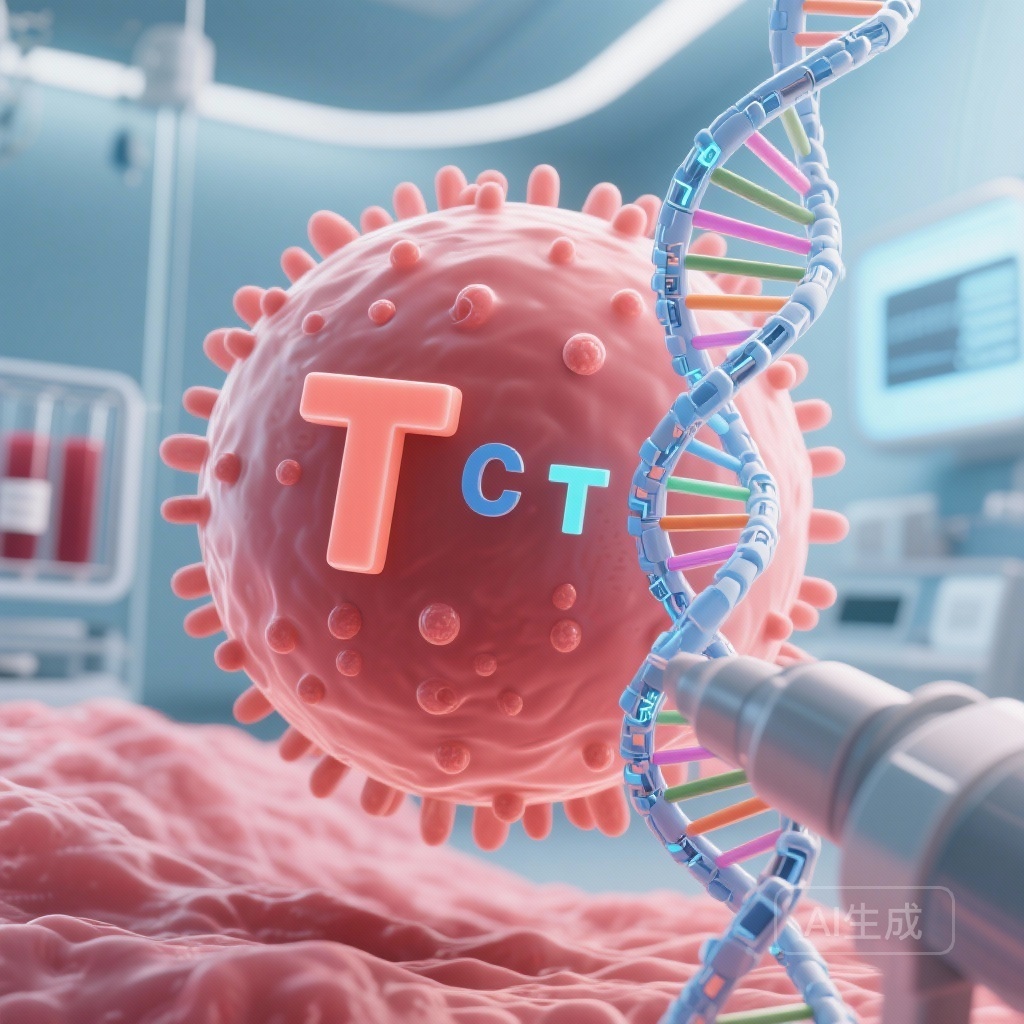
To address the issues of fratricide and GVHD, researchers turned to genomic engineering. The second milestone in this evolution was the development of base-edited CAR7 (BE-CAR7) T cells. Unlike traditional CRISPR-Cas9, which creates double-strand breaks in DNA and increases the risk of chromosomal translocations, base editing allows for the precise conversion of single nucleotides (e.g., cytosine to thymine). This silences specific genes without compromising the structural integrity of the genome.
The Rationale for Triple Gene Knockout
As detailed in the 2023 New England Journal of Medicine (NEJM) report, base editing was used to inactivate three critical genes in healthy donor T cells:
1. CD7: To prevent CAR-T fratricide.
2. TRBC (T-cell receptor beta chain): To eliminate the risk of GVHD, allowing for universal, off-the-shelf use.
3. CD52: To make the cells resistant to alemtuzumab, a lymphodepleting agent used to clear the host immune system.
Early Clinical Proof of Concept
The initial study in three children demonstrated the potential of this technology. The first patient, a 13-year-old girl with R/R T-ALL, achieved molecular remission within 28 days of a single BE-CAR7 infusion. This allowed her to receive a reduced-intensity allogeneic SCT, leading to successful immune reconstitution and ongoing remission. This was a landmark moment, proving that base editing could create a functional, universal therapeutic product.
The Current Standard: Universal Base-Edited CAR7 T Cells
The evolution culminated in a larger phase 1 study (NEJM 2025) which expanded the use of universal BE-CAR7 T cells to 11 patients (9 children and 2 adults). This trial refined the protocol and provided more robust data on long-term durability.
Consistent Remission and Bridging to SCT
In this cohort, all patients achieved complete morphologic remission by day 28. More impressively, 82% achieved deep remission (minimal residual disease negative by flow cytometry or PCR), which facilitated a transition to allogeneic SCT. The transplantation serves a dual purpose: it eliminates the remaining BE-CAR7 cells (which would otherwise cause permanent T-cell aplasia) and restores a healthy, multilineage immune system using donor stem cells.
Survival and Safety Outcomes
At follow-up ranging from 3 to 36 months post-transplantation, 64% of the patients remained in ongoing remission. The safety profile, while intense, was considered manageable within specialized units. CRS was universal but mostly low-grade, though opportunistic infections and viral reactivations (such as CMV and Adenovirus) were frequent complications following the intense lymphodepletion and subsequent transplant.
Expert Commentary: Interpreting the Data
The transition from donor-derived cells to universal base-edited cells represents a paradigm shift in cellular immunotherapy. The Blood 2025 study on donor-derived cells showed us that targeting CD7 is highly effective but biologically dangerous when the T-cell receptor remains intact and the cells are not precisely modified. The 20% non-relapse mortality in that trial is a stark reminder of the limitations of older CAR-T generations.
In contrast, the BE-CAR7 trials illustrate the power of multiplex gene editing. By silencing CD7 and the TCR, the researchers effectively solved the problems of fratricide and GVHD simultaneously. The use of CD52 knockout further allows for a ‘window of opportunity’ where the CAR-Ts can expand while the patient is profoundly immunosuppressed by alemtuzumab.
However, clinicians must remain vigilant regarding the ‘bridge to transplant’ nature of this therapy. BE-CAR7 is not intended as a standalone curative treatment but as a highly effective debulking tool to achieve the deep remission necessary for a successful SCT. The high rate of viral complications post-SCT suggests that the recovery of the immune system after such intensive engineering and lymphodepletion requires meticulous infectious disease management.
Conclusion
The development of universal BE-CAR7 T cells marks a turning point for T-ALL. We have moved from a model where treatment was limited by donor availability and high toxicity to a precision-engineered, ‘off-the-shelf’ solution. While challenges remain—specifically regarding the management of post-transplant infections and the rare occurrence of CD7-negative relapse—the ability to induce deep remission in nearly 90% of refractory patients is an extraordinary achievement in clinical oncology.
Funding and Clinical Trial Information
The studies discussed were supported by the Medical Research Council (UK), Wellcome Trust, and various National Institute for Health Research (NIHR) Biomedical Research Centres. Clinical trial registrations include ISRCTN15323014 (BE-CAR7 studies) and NCT04689659 (Donor-derived study).
References
1. Chiesa R, et al. Universal Base-Edited CAR7 T Cells for T-Cell Acute Lymphoblastic Leukemia. N Engl J Med. 2025; doi:10.1056/NEJMoa2505478.
2. Chiesa R, et al. Base-Edited CAR7 T Cells for Relapsed T-Cell Acute Lymphoblastic Leukemia. N Engl J Med. 2023;389(10):899-910.
3. Pan J, et al. Donor-derived CD7 CAR T cells for pediatric and adult relapsed/refractory T-ALL/LBL: a phase 2 trial. Blood. 2025;146(23):2745-2757.