Introduction: The Intersection of Planetary and Renal Health
Chronic kidney disease (CKD) has emerged as a major global health challenge, affecting approximately 10% of the world’s population and contributing significantly to cardiovascular morbidity and all-cause mortality. As the burden of CKD continues to rise, identifying modifiable risk factors—particularly dietary patterns—has become a priority for clinical research and public health policy. Simultaneously, the global community is increasingly focused on the environmental impact of food systems. In 2019, the EAT-Lancet Commission proposed the “Planetary Health Diet,” a reference diet designed to be both nutritionally optimal and environmentally sustainable. While its benefits for cardiovascular disease and diabetes have been documented, its specific impact on renal health remained insufficiently explored until now.
A landmark multi-cohort study recently published in Mayo Clinic Proceedings by Yang et al. provides critical insights into this relationship. By utilizing data from two large, geographically and ethnically distinct cohorts—the Tianjin Chronic Low-Grade Systemic Inflammation and Health (TCLSIH) cohort and the UK Biobank—researchers assessed how adherence to the Planetary Health Diet Index (PHDI) correlates with the incidence of CKD in middle-aged and older adults. The findings suggest that what is good for the planet may indeed be remarkably good for the kidneys, though the protective effects appear to vary significantly by sex.
The Planetary Health Diet Index (PHDI) Explained
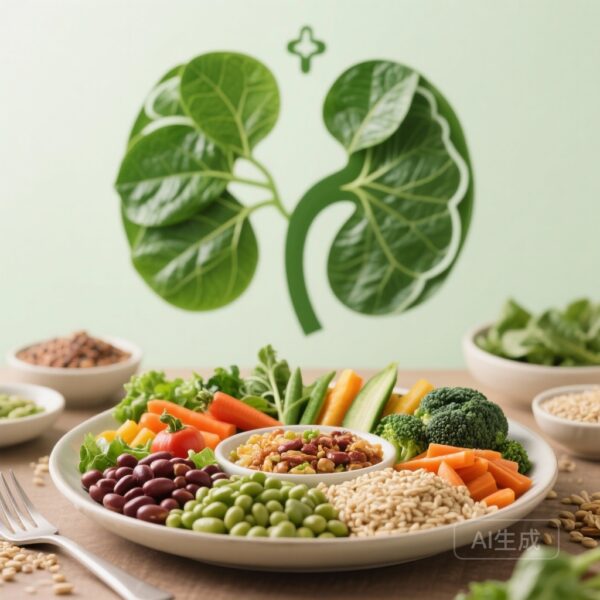
The EAT-Lancet reference diet emphasizes a high intake of plant-based foods, including whole grains, legumes, nuts, fruits, and vegetables, while recommending a substantial reduction in the consumption of red meat, processed meats, and added sugars. The Planetary Health Diet Index (PHDI) is a standardized tool used to quantify adherence to these recommendations. It scores individuals based on their intake across several food groups, rewarding high consumption of “healthy” plant-based foods and low consumption of animal-derived or highly processed products.
From a renal perspective, this dietary pattern is inherently lower in dietary acid load and inorganic phosphorus—two factors known to exacerbate kidney damage—and higher in fiber and antioxidants, which may mitigate systemic inflammation and oxidative stress, both of which are central to the pathogenesis of CKD.
Study Design and Methodology
This prospective multi-cohort study included a total of 188,979 participants who were free of CKD at baseline. The researchers analyzed two separate populations to ensure the generalizability of the findings:
The TCLSIH Cohort
Based in Tianjin, China, this cohort included 12,259 participants. Data collection occurred between May 1, 2013, and December 31, 2018. Dietary intake was assessed via a validated food frequency questionnaire (FFQ). Incident CKD in this cohort was defined using the 4-variable Modification of Diet in Renal Disease (MDRD) Study equation, specifically looking for an estimated glomerular filtration rate (eGFR) below 60 mL/min/1.73 m².
The UK Biobank Cohort
This massive cohort included 176,720 participants from the United Kingdom, recruited between 2006 and 2010. Dietary data were collected through the Oxford WebQ, a web-based 24-hour dietary assessment. Incident CKD was identified through the International Classification of Diseases, Tenth Revision (ICD-10) codes linked to hospital records and death registries. The median follow-up period for this cohort was significantly longer, at 10.48 years, compared to 4.10 years in the TCLSIH cohort.
The primary analysis utilized Cox proportional hazards models to calculate hazard ratios (HRs) and 95% confidence intervals (CIs) for incident CKD across quartiles of PHDI adherence, adjusting for age, smoking status, physical activity, energy intake, and comorbidities such as hypertension and diabetes.
Key Findings: A Tale of Two Cohorts
The results of the study demonstrated a clear inverse relationship between PHDI adherence and CKD risk, although the strength and statistical significance of these associations differed between sexes and cohorts.
The TCLSIH Cohort Results
In the Chinese cohort, a striking sex-based divergence was observed. For females, the risk of incident CKD decreased significantly as adherence to the PHDI increased. The fully adjusted HR for the highest quartile (Q4) versus the lowest quartile (Q1) was 0.38 (95% CI, 0.18 to 0.82; P-trend = 0.01). In contrast, among males in the same cohort, the relationship did not reach statistical significance, with an HR of 0.80 (95% CI, 0.46 to 1.41; P-trend = 0.55).
The UK Biobank Results
The larger UK Biobank cohort corroborated the protective trend. For females, the HR for the highest quartile of PHDI adherence was 0.79 (95% CI, 0.69 to 0.90; P-trend < 0.001). For males, a statistically significant but slightly weaker association was found, with an HR of 0.90 (95% CI, 0.79 to 1.03; P-trend = 0.03). Interactions between sex and the PHDI were statistically significant in both cohorts (P for interaction < 0.10), confirming that females may derive greater renal protection from this dietary pattern than males.
Biological Plausibility: Why Plants Protect the Kidneys
Several physiological mechanisms may explain why high adherence to the Planetary Health Diet reduces the risk of CKD. First, plant-based diets typically have a lower Potential Renal Acid Load (PRAL). High acid loads, often associated with heavy red meat consumption, can lead to metabolic acidosis, which triggers intrarenal mechanisms like the activation of the renin-angiotensin system and endothelin-1, both of which promote renal fibrosis and eGFR decline.
Second, the PHDI is rich in dietary fiber. Fiber fermentation by the gut microbiota produces short-chain fatty acids (SCFAs), which have potent anti-inflammatory properties. Given that CKD is increasingly recognized as a state of chronic systemic inflammation, the anti-inflammatory effects of a plant-rich diet are highly relevant.
Third, the source of phosphorus matters. Phosphorus in plant foods (phytates) is less bioavailable than the inorganic phosphorus additives found in processed meats and sodas. Reducing the intake of these processed items, as the PHDI encourages, prevents the deleterious effects of hyperphosphatemia on renal tubules and the vascular system.
Expert Commentary and Clinical Implications
The sex-specific findings of this study are particularly intriguing. The more pronounced benefit in women could be attributed to several factors, including differences in baseline metabolic profiles, hormonal influences (such as the protective role of estrogen in renal microvasculature), or differences in how men and women report dietary intake. Clinicians should take note that while the Planetary Health Diet is beneficial for most, its impact on renal preservation may be a particularly powerful tool in the preventive care of female patients.
Furthermore, these results align with the broader shift in nephrology toward “plant-dominant” (PLADO) diets. Traditionally, renal diets focused narrowly on restricting potassium and phosphorus. However, modern evidence suggests that the quality of the food source and the overall dietary pattern are more important for slowing CKD progression and preventing its onset.
Study Limitations
Despite the robust sample size and multi-cohort design, certain limitations must be acknowledged. The observational nature of the study precludes a definitive claim of causality. Dietary data were self-reported, which is subject to recall bias. Additionally, the definition of CKD differed between the two cohorts (eGFR-based vs. ICD-10 codes), which may account for some of the variance in the observed effect sizes.
Conclusion
The study by Yang et al. provides compelling evidence that adherence to the Planetary Health Diet is associated with a reduced risk of developing chronic kidney disease in middle-aged and older adults. This association is remarkably consistent across different populations but is notably stronger in women. As healthcare systems grapple with the dual challenges of a rising CKD epidemic and the need for environmental sustainability, the Planetary Health Diet emerges as a dual-purpose intervention that supports both individual longevity and the health of the global ecosystem. Clinicians should consider recommending these plant-forward dietary patterns as part of a comprehensive strategy for renal health and primary prevention.
References
- Yang D, Gu Y, Wu H, et al. Planetary Health Diet Index and Risk of Chronic Kidney Disease in Middle-Aged and Older Adults: Insights From Two Large Prospective Cohorts. Mayo Clin Proc. 2025;S0025-6196(25)00571-3. doi:10.1016/j.mayocp.2025.09.020.
- Willett W, Rockström J, Loken B, et al. Food in the Anthropocene: the EAT-Lancet Commission on healthy diets from sustainable food systems. Lancet. 2019;393(10170):447-492.
- Kalantar-Zadeh K, Joshi S, Schlueter R, et al. Plant-Dominant Low-Protein Diet for Conservative Management of Chronic Kidney Disease. Nutrients. 2020;12(7):1931.