Introduction: The Intersection of Human Health and Planetary Sustainability
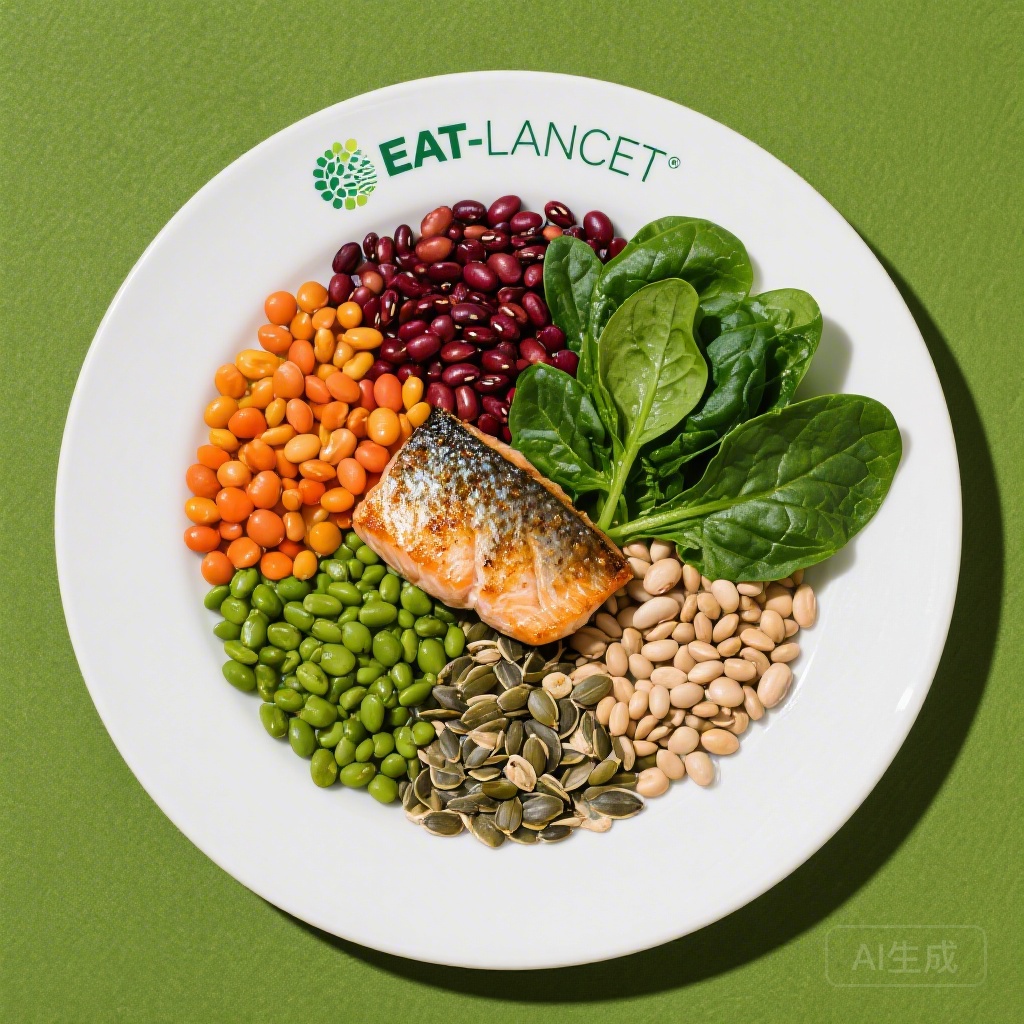
In an era defined by the rapid degradation of our global environment and a rising tide of diet-related chronic diseases, the search for a way of eating that supports both human longevity and the Earth’s ecosystems has never been more urgent. In 2019, the EAT-Lancet Commission on Food, Planet, and Health introduced the concept of the “planetary health diet.” This framework suggests a radical shift toward plant-based foods—fruits, vegetables, legumes, whole grains, and nuts—while significantly reducing the intake of animal products, particularly red meat and sugar.
While the environmental benefits of such a shift are well-documented, a lingering question has persisted among clinicians and the public alike: Is this diet nutritionally adequate for everyone? Skeptics often point to potential deficiencies in vitamins and minerals primarily found in animal products, such as Vitamin B12, iron, and zinc. A groundbreaking Swedish population-based study, recently published in Lancet Planetary Health, provides some of the most comprehensive evidence to date on this very question.
The Case of Sarah: A Modern Nutritional Dilemma
To understand the real-world implications of these findings, consider Sarah, a 34-year-old high school teacher living in a suburban community. Sarah is deeply concerned about climate change and has decided to adopt a diet closely aligned with the EAT-Lancet recommendations. She has replaced her morning bacon with walnuts and oats, and her beef burgers with lentil patties.
Six months into her journey, Sarah feels more energetic and has lost a few unwanted pounds. However, she occasionally feels a slight lightheadedness and wonders if her new habits are meeting her physiological needs. Like many health-conscious individuals, Sarah is caught between her values and her biological requirements. The study by Stubbendorff and colleagues serves as a scientific guide for individuals like Sarah, examining whether the EAT-Lancet diet can truly sustain a population over the long term.
Methodology: Investigating the Malmö Diet and Cancer Cohort
Evaluating the nutritional adequacy of a diet across a large population is a complex undertaking. Researchers utilized data from the Malmö Diet and Cancer cohort, which included 25,970 Swedish participants. The study’s strength lies in its dual approach: it didn’t just look at what people reported eating; it also looked at biomarkers—objective measures in the blood—to see how those dietary choices translated into physiological status.
The researchers used seven different scoring methods to measure how closely participants followed the EAT-Lancet diet. This is a critical detail because “adherence” can be measured in various ways, such as whether a person meets specific gram-per-day targets or how they balance their total energy intake. By comparing these different scoring models, the team aimed to provide a robust picture of nutritional adequacy.
Scientific Evidence: What the Data Tell Us
The findings were generally reassuring. High adherence to the EAT-Lancet diet was associated with an increased intake of several essential nutrients. Specifically, those who followed the diet most closely had higher intakes of Vitamin A, Vitamin E, thiamine (B1), Vitamin B6, folate, Vitamin C, calcium, magnesium, potassium, iron, and zinc.
Crucially, when the researchers adjusted for total energy intake, the likelihood of meeting recommended nutrient levels increased. This suggests that the EAT-Lancet diet is naturally nutrient-dense; if you eat enough calories to meet your energy needs through these healthy food groups, you are likely to get a wide array of vitamins and minerals.
One of the most positive findings was related to folate. Higher adherence to the diet was significantly linked to a reduced risk of folate deficiency. Folate is vital for DNA synthesis and repair and is especially important for women of childbearing age, making this a significant public health win for the planetary health diet.
The Iron Paradox and Anemia Risk
However, the study also uncovered a nuanced challenge regarding iron. While the total intake of iron was actually higher among those following the EAT-Lancet diet, the biological reality was different for women. The researchers observed a slightly increased risk of anemia in women who adhered most strictly to the diet.
This discrepancy is likely due to the type of iron being consumed. Animal products provide heme iron, which is highly bioavailable and easily absorbed by the human body. Plant-based foods provide non-heme iron, which is more difficult for the body to absorb and can be inhibited by other compounds in plants, such as phytates found in grains and legumes. For women like Sarah, who are in their reproductive years and lose iron through menstruation, this finding highlights a critical area where the planetary health diet may need supplementation or more strategic food pairing.
Other Biomarkers: Zinc, Selenium, and Vitamin D
Beyond iron and folate, the study looked at other key markers. For selenium and zinc, there were no significant increases in deficiency risk among women. Interestingly, for one specific scoring method, men showed a slightly lower risk of zinc deficiency.
Vitamin D also showed interesting trends. In the Swedish population, where sunlight is scarce for half the year, Vitamin D levels are a common concern. The study found that men with higher adherence to the EAT-Lancet diet actually had a slightly lower risk of Vitamin D deficiency. This suggests that the moderate amounts of animal-sourced foods allowed in the EAT-Lancet framework—such as fish and dairy—combined with fortified plant-based alternatives, can be sufficient to maintain Vitamin D levels in some populations.
Methodological Differences: Why the Score Matters
One of the most important takeaways for the scientific community from this study is the impact of methodology. The study demonstrated that how we measure adherence can change our conclusions. For instance, when energy adjustment was used in the modeling, the nutrient adequacy appeared much stronger. This suggests that the EAT-Lancet diet is not inherently deficient, but rather that individuals must ensure they are consuming enough total volume of food to meet their micronutrient needs.
This finding calls for a standardized framework in future research to ensure that sustainable diets are assessed accurately across different global populations. Without standardized scoring, it becomes difficult for policymakers to issue clear, evidence-based guidelines.
Expert Insights and Commentary
Dr. James Miller, a specialist in nutritional epidemiology who was not involved in the study, notes the significance of these findings. According to the EAT-Lancet diet, we are essentially moving toward a high-volume, low-calorie-density model, Dr. Miller says. This study proves that for the majority of the population, this shift is not only safe but potentially superior in terms of micronutrient density. However, the anemia findings in women are a call to action for clinicians. We cannot simply tell patients to eat more plants; we must teach them how to optimize iron absorption, perhaps by adding Vitamin C-rich foods to their meals or considering targeted supplementation.
Correct Health Practices: Making the Diet Work for You
For individuals looking to adopt the planetary health diet, the Swedish study suggests several practical strategies to ensure nutritional adequacy:
First, focus on variety. The EAT-Lancet diet is not a restrictive diet in the traditional sense; it is a diverse diet. By consuming a wide range of nuts, seeds, legumes, and colorful vegetables, you ensure a broad spectrum of minerals and vitamins.
Second, optimize iron absorption. Since the study found a risk of anemia in women, those who are menstruating should be particularly mindful. Pairing iron-rich plant foods like spinach, lentils, or fortified cereals with Vitamin C sources—such as bell peppers, citrus fruits, or strawberries—can significantly enhance non-heme iron absorption. Avoiding tea and coffee during meals can also prevent the inhibition of iron uptake.
Third, monitor your energy intake. The study found that adequacy is closely tied to eating enough to meet your daily energy requirements. Switching to a plant-forward diet often means eating a larger volume of food to get the same amount of calories. If you eat too little, you may fall short on micronutrients regardless of how healthy your food choices are.
Conclusion: A Sustainable Future on Our Plates
The research by Stubbendorff and colleagues provides a vital piece of the puzzle in our transition to sustainable food systems. It confirms that the EAT-Lancet diet is a nutritionally viable path for the general population, capable of delivering essential vitamins and minerals while protecting the planet. While the risk of anemia in women requires attention and perhaps more tailored nutritional guidance, the overall message is one of optimism.
We do not have to choose between our health and the health of the Earth. With thoughtful planning, evidence-based adjustments, and a focus on nutrient density, the planetary health diet can support a thriving global population for generations to come.
Funding and Clinical Data
This study was supported by various organizations, including the Swedish Heart-Lung Foundation, the Pålsson Foundation, the Crafoord Foundation, the Agenda 2030 Graduate School at Lund University, the Independent Research Fund Denmark, and the Danish Diabetes Association. The data was derived from the Malmö Diet and Cancer cohort, a long-standing population-based study in Sweden.
Reference
Stubbendorff A, Ericson U, Hallström E, Samuelsson J, Sonestedt E, Ibsen DB. Nutritional adequacy of the EAT-Lancet diet: a Swedish population-based cohort study. Lancet Planet Health. 2027 Feb 9:101416. doi: 10.1016/j.lanplh.2025.101416. Epub ahead of print. PMID: 41692025.