Highlights
Improved Micronutrient Adequacy
Higher alignment with the EAT-Lancet planetary health diet (PHD) significantly increases the odds of meeting nutritional requirements for iron, calcium, and vitamin D in the UK population.
Stable B12 Status
No significant risk of vitamin B12 deficiency was observed with increased planetary health diet scores, suggesting that the diet’s animal-source components and fortified foods are sufficient.
Superiority Over Current Habits
The nutritional profile of the planetary health diet matches or exceeds that of the Mediterranean diet for several key micronutrients of concern, providing a robust framework for public health policy.
Background: The Tension Between Ecology and Nutrition
The EAT-Lancet Commission’s planetary health diet (PHD) was proposed as a transformative framework to feed a projected 10 billion people by 2050 while remaining within planetary boundaries. This diet emphasizes a high intake of whole grains, legumes, nuts, fruits, and vegetables, with significantly limited consumption of red meat, sugar, and refined grains. However, the paradigm shift toward a plant-heavy diet has sparked intense debate among clinicians and nutrition scientists regarding its physiological sufficiency. Critics have voiced concerns that reducing red meat and dairy might exacerbate existing micronutrient gaps, particularly iron, zinc, and vitamin B12, which are highly bioavailable in animal products. This study, published in the American Journal of Clinical Nutrition, provides a robust, evidence-based evaluation of these concerns within the context of the United Kingdom’s population, utilizing over a decade of national dietary data.
Study Design: A Decadal Analysis of UK Dietary Habits
The researchers conducted a cross-sectional analysis using data from the UK National Diet and Nutrition Survey (NDNS) Rolling Programme, spanning from 2008 to 2019. The study population included 9,671 participants aged 15 years and older who completed a rigorous 4-day food diary. To enhance the scientific validity of the findings, nutritional biomarkers (such as serum ferritin and vitamin B12 levels) were analyzed in a subset of ,4622 participants. Alignment with the planetary health diet was quantified using a PHD score ranging from 0 to 140, based on the consumption of 14 specific food groups. The analysis was stratified by age and adjusted for significant confounders, including sociodemographic factors, behavioral habits, and anthropometric measurements. This methodology allowed for a precise comparison between the nutritional adequacy of the PHD and the more traditional Mediterranean diet.
Key Findings: Challenging the Deficiency Narrative
The results of the study provide a compelling counter-argument to the notion that sustainable diets are nutritionally inferior. At the national level, the study first identified that a significant portion of the UK population already suffers from micronutrient inadequacies under current eating habits; approximately 50% of the population showed inadequate intakes for iron, zinc, and calcium. However, as alignment with the planetary health diet increased, the likelihood of nutritional adequacy improved dramatically. For every 20-point increase in the PHD score, the odds of meeting the requirements for iron increased by 140% (OR 2.40; 95% CI 2.10, 2.76). Similar positive associations were found for calcium (OR 1.81) and zinc (OR 1.26). Perhaps most strikingly, the odds of vitamin D adequacy tripled (OR 3.35) with higher PHD alignment, likely due to the inclusion of fortified plant-based alternatives and specific fish consumption patterns recommended by the framework.
The Question of Vitamin B12
One of the most persistent concerns regarding plant-forward diets is the risk of vitamin B12 deficiency, as this nutrient is primarily found in animal products. The study found no overall association between the PHD score and vitamin B12 intake (OR 0.80; 95% CI 0.59, 1.08). Crucially, the nutritional biomarkers corroborated this finding, showing that serum levels of B12 remained stable regardless of the degree of alignment with the planetary health diet. This suggests that the modest amounts of poultry, fish, and dairy permitted in the PHD, combined with the prevalence of B12-fortified foods in the UK market, are sufficient to prevent deficiency at the population level.
Expert Commentary: Clinical and Biological Plausibility
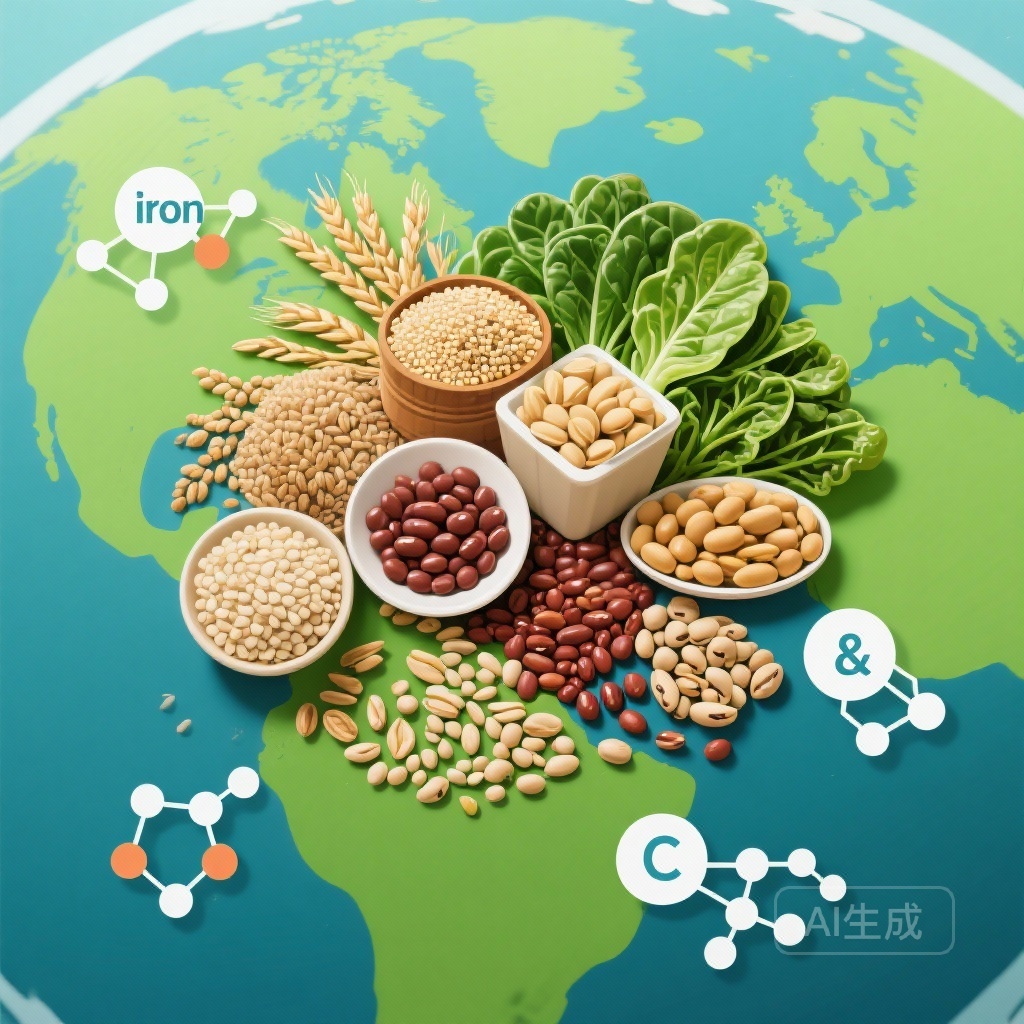
From a clinical perspective, these findings are highly reassuring. The observed improvements in iron and zinc adequacy, despite a reduction in red meat, may be attributed to the high density of these minerals in legumes, whole grains, and leafy greens, which are consumed in much larger quantities in the PHD. While plant-based non-heme iron has lower bioavailability than heme iron, the concurrent high intake of vitamin C-rich fruits and vegetables in the PHD likely enhances its absorption. Furthermore, the comparison with the Mediterranean diet showed that the PHD is at least as effective, if not more so, in ensuring micronutrient sufficiency. This is a critical insight for healthcare providers who often recommend the Mediterranean diet as the gold standard for cardiovascular and metabolic health. The planetary health diet offers a modern alternative that achieves similar health outcomes while significantly reducing the environmental footprint of food production.
Conclusion: A Path Forward for Public Health
The study concludes that nutritional adequacy is either improved or maintained with greater alignment to the planetary health diet. For clinicians and health policy experts, this evidence supports the integration of sustainable dietary guidelines into public health recommendations without the fear of compromising population-level nutrition. The PHD represents a ‘win-win’ scenario: it addresses the urgent need for environmental sustainability while simultaneously tackling the pervasive issue of micronutrient inadequacy in the modern diet. Future research should focus on longitudinal assessments to confirm these cross-sectional findings and explore the long-term health outcomes of strict PHD adherence across different life stages.
References
Braithwaite VS, Sowah SA, Imamura F, Forouhi NG. Nutritional adequacy of the EAT-Lancet planetary health diet: cross-sectional analyses of the United Kingdom National Diet and Nutrition Survey. Am J Clin Nutr. 2026 Jan;123(1):101113. doi: 10.1016/j.ajcnut.2025.11.004. Epub 2025 Nov 13. PMID: 41241004.