Highlight
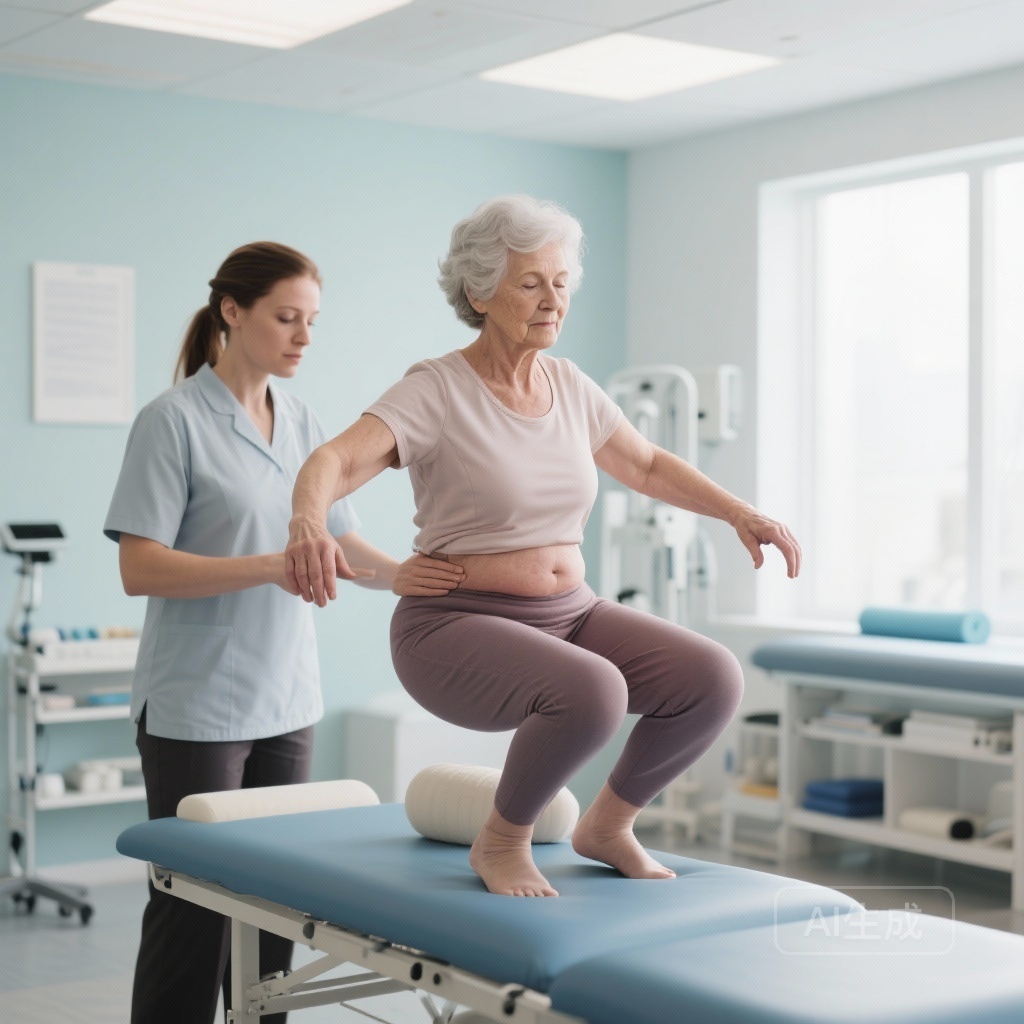
- Physical therapies—including pelvic floor muscle training—may be most effective for curing urinary incontinence in older women, though evidence certainty is low.
- Pharmacological treatments, such as β3-adrenergic agonists and antimuscarinics, offer potential improvement but carry some risk of adverse events.
- Conservative approaches showed no serious adverse events, underscoring their safety profile.
- Evidence is insufficient to identify a definitive optimal treatment, indicating an urgent need for larger, high-quality trials.
Background
Urinary incontinence is a common and often under-recognized condition among women aged 60 years and older. It affects quality of life, leading to physical discomfort, social withdrawal, emotional distress, and increased healthcare utilization. Despite its prevalence, many older women do not receive effective treatment. Management options range from conservative strategies, such as pelvic floor muscle training, to pharmacological interventions, including β3-adrenergic agonists and antimuscarinics, and surgical solutions. However, robust comparative evidence on efficacy and safety in this specific population has been lacking.
Study Design
This Cochrane systematic review and network meta-analysis assessed randomized controlled trials (RCTs) investigating conservative, pharmacological, and surgical treatments for urinary incontinence in women aged 60 years or older. The review included 43 RCTs with 8,506 participants. Primary outcomes were ‘cure’ and ‘cure or improvement’ of urinary incontinence symptoms. Secondary outcomes evaluated serious adverse events (SAEs). Searches were exhaustive, covering major medical databases, trial registries, and conference proceedings as of March 23, 2025. Trials were assessed using Cochrane’s Risk of Bias 2 tool.
Key Findings
Efficacy – Outcome: Cure
After excluding surgical trials to ensure connected network analysis, results favored conservative interventions, especially physical therapies:
- Physical therapies + complementary therapies: OR 17.79 (95% CI 2.97–106.46; 1 study, 71 participants; very low-certainty evidence).
- Physical therapies alone: OR 7.20 (95% CI 2.59–20.03; 4 studies, 310 participants; very low-certainty evidence).
- Physical therapies + education: OR 3.25 (95% CI 1.19–8.84; 4 studies, 364 participants; very low-certainty evidence).
- Complementary therapies alone: OR 4.65 (95% CI 0.74–29.37; 1 study, 37 participants; very low-certainty evidence).
- Education alone: OR 2.68 (95% CI 0.61–11.73; 2 studies, 180 participants; low-certainty evidence).
SUCRA rankings suggested that physical therapies—particularly when combined with complementary interventions—were likely to be most effective, though certainty was low due to small sample sizes and imprecision.
Efficacy – Outcome: Cure or Improvement
- Physical therapies: OR 3.98 (95% CI 2.02–7.82; 3 studies, 197 participants; very low-certainty).
- Physical therapies + education: OR 3.20 (95% CI 1.45–7.02; 3 studies, 236 participants; very low-certainty).
- β3-adrenergic agonists: OR 2.44 (95% CI 1.28–4.62; 1 study, 360 participants; very low-certainty).
- Education: OR 2.09 (95% CI 1.05–4.17; 2 studies, 213 participants).
- Antimuscarinics: OR 1.90 (95% CI 1.19–3.03; 2 studies, 1469 participants).
Physical therapy interventions achieved higher SUCRA scores (90% for physical therapies, 77% for physical therapies + education) than pharmacologic options (β3-adrenergic agonists: 63%), reinforcing their relative efficacy in improving symptoms.
Safety – Serious Adverse Events
No serious adverse events were reported for conservative treatments. Pharmacological treatments showed occasional SAEs, but differences between active and control arms were not statistically significant:
- Serotonin-noradrenaline reuptake inhibitors: OR 0.40 (95% CI 0.10–1.59).
- β3-adrenergic agonists: OR 0.61 (95% CI 0.04–10.19).
- Antimuscarinics: OR 0.81 (95% CI 0.46–1.42).
- Physical therapies + education: OR 0.99 (95% CI 0.10–9.80).
Expert Commentary
The findings underscore the potential superiority of physical therapies in achieving continence or significant symptom improvement among older women, with favorable safety profiles. The biological plausibility of pelvic floor muscle training relates to strengthening the levator ani and urethral support structures, thereby improving urethral closure pressure during stress events. However, the very low to low certainty of evidence demands caution in interpreting these rankings. The limitations were substantial: heterogeneous interventions, small study populations, poor reporting quality, and exclusion of surgical data. Current guidelines endorse pelvic floor training as first-line therapy for urinary incontinence, and these results harmonize with that recommendation while highlighting the need for robust head-to-head trials.
Conclusion
Physical therapies, particularly pelvic floor muscle training with or without complementary approaches, appear most promising for managing urinary incontinence in women aged ≥60 years. Pharmacological options offer benefits but with some safety concerns. Given the weak certainty of evidence, clinicians should personalize treatment decisions based on patient preferences, comorbidities, and accessibility. Future research should prioritize larger, high-quality RCTs with standardized outcome reporting to decisively guide practice.
Funding and Registration
Study registered in the Cochrane Database of Systematic Reviews.
Reference
Vesentini G, O’Connor N, Le Berre M, Nabhan AF, Wagg A, Wallace SA, Dumoulin C. Interventions for treating urinary incontinence in older women: a network meta-analysis. Cochrane Database Syst Rev. 2025 Nov 27;11(11):CD015376. doi: 10.1002/14651858.CD015376.pub2 IF: 9.4 Q1 . PMID: 41307301; PMCID: PMC12658956.