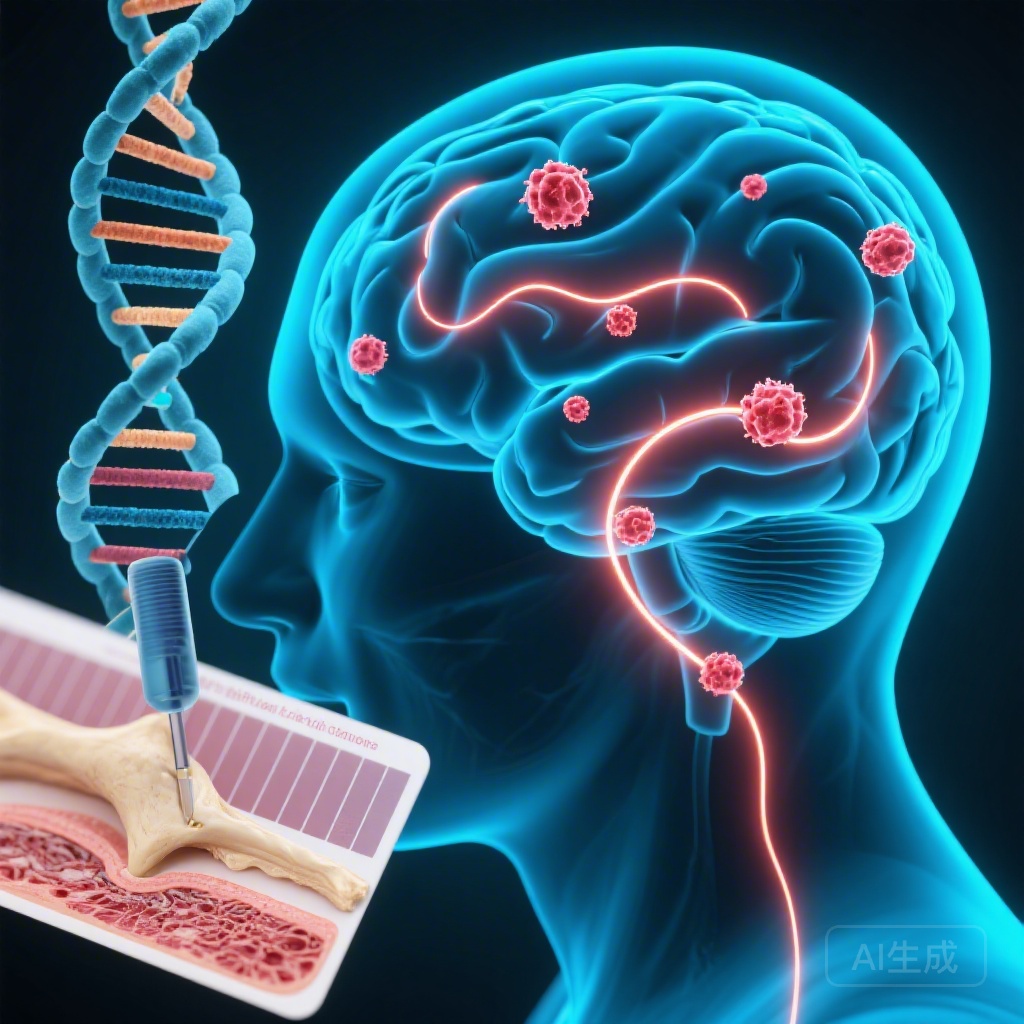
Highlights
- CNS relapse occurred in 5.1% of adult ALL patients post-allo-HCT, with a median onset of 10.6 months.
- The Philadelphia (Ph) chromosome is a dominant risk factor, accounting for 84.2% of all CNS relapses observed.
- Hyperleukocytosis at diagnosis significantly correlates with increased risk of neuro-recurrence.
- Pre-transplant MRD negativity and TBI-based conditioning regimens are vital for reducing CNS relapse, particularly in Ph-negative cohorts.
- Isolated CNS relapse demonstrates significantly better 5-year overall survival (30.4%) compared to systemic relapse (7.6%).
Introduction: The Challenge of Central Nervous System Recurrence
Central nervous system (CNS) involvement has long been a formidable challenge in the management of acute lymphoblastic leukemia (ALL). While advancements in multi-agent chemotherapy and allogeneic hematopoietic cell transplantation (allo-HCT) have drastically improved systemic control, the CNS remains a notorious ‘sanctuary site’ where leukemic cells may evade both the immune system and conventional therapeutic agents. In adult populations, the patterns and risk factors for CNS relapse following the curative intent of allo-HCT remain insufficiently characterized compared to pediatric cohorts. Understanding these patterns is critical for refining prophylactic measures and improving the long-term survival of high-risk patients.
Study Methodology and Patient Population
To address this knowledge gap, researchers conducted a retrospective analysis of 748 adult patients with ALL who underwent allo-HCT between 2009 and 2022. The study population was treated according to a standardized clinical protocol involving a modified hyper-CVAD (cyclophosphamide, vincristine, adriamycin, and dexamethasone) regimen. A key component of the pre-transplant phase included six planned doses of intrathecal (IT) chemoprophylaxis to mitigate CNS risk. For conditioning, the majority of patients received total body irradiation (TBI)-based regimens, which are traditionally favored for their ability to penetrate the blood-brain barrier better than many chemotherapy-only conditioning protocols.
The primary endpoints of the study were the incidence of CNS relapse, the identification of clinical and biological risk factors associated with such relapses, and the subsequent overall survival (OS) of patients who experienced recurrence.
Detailed Results: Risk Stratification and Survival Outcomes
Over the study period, CNS relapse was documented in 38 patients, representing 5.1% of the total cohort. The median time from transplantation to the detection of CNS involvement was 10.6 months. While the overall percentage might appear low, the distribution of these relapses across patient subgroups revealed striking disparities.
The Dominance of Philadelphia Chromosome Positivity
One of the most significant findings was the overwhelming association between the Philadelphia chromosome (Ph+) and CNS recurrence. Patients with Ph+ ALL exhibited a CNS relapse rate of 9.7%, compared to a mere 1.4% in those with Ph-negative ALL (p < 0.001). In fact, 84.2% of all CNS relapses in the study occurred within the Ph+ subgroup. This suggests that the BCR-ABL1 fusion protein may confer a biological predisposition for CNS infiltration or that the current standard of care—even with tyrosine kinase inhibitor (TKI) integration—requires further optimization for neuro-prophylaxis.
Hyperleukocytosis and Tumor Burden
Initial tumor burden, measured by white blood cell (WBC) count at diagnosis, also served as a potent predictor. Patients presenting with hyperleukocytosis (defined as WBC ≥ 30 x 10^9/L for B-ALL or ≥ 100 x 10^9/L for T-ALL) had a significantly higher incidence of CNS relapse (8.1%) compared to those with lower counts (2.5%, p < 0.001). This correlation underscores the theory that high circulating leukemic cell density increases the probability of early CNS seeding before therapeutic interventions can take full effect.
The Role of MRD and Conditioning Regimens
The study highlighted the clinical importance of Measurable Residual Disease (MRD) status prior to transplantation. In the Ph+ cohort, achieving MRD negativity before HCT was associated with a reduced risk of CNS relapse. For Ph-negative patients, the choice of conditioning regimen played a decisive role; prophylactic intrathecal therapy combined with TBI-based conditioning was significantly associated with a lower risk of CNS recurrence compared to non-TBI or less intensive protocols.
Survival Analysis after Relapse
The prognosis for patients following post-HCT relapse remains generally poor, but the study noted a divergence based on the site of recurrence. The 5-year overall survival for patients with CNS relapse was 30.4%, which was notably higher than the 7.6% survival rate observed in patients with other forms of relapse (systemic or bone marrow). Specifically, those with isolated CNS relapse—where the disease had not yet returned to the marrow—showed the most favorable outcomes, likely due to the feasibility of localized salvage therapies such as cranial irradiation and intensified intrathecal dosing.
Expert Commentary: Biological Insights and Clinical Implications
The findings of this study provide a clear mandate for clinicians to re-evaluate how we approach CNS prophylaxis in adult ALL. The heavy concentration of CNS relapses in the Ph+ population is particularly telling. While TKIs like imatinib, dasatinib, and ponatinib have revolutionized systemic outcomes, their varying ability to cross the blood-brain barrier remains a therapeutic hurdle. Dasatinib and ponatinib, for instance, show better CNS penetration than imatinib, but this study suggests that even with these agents, the CNS remains a significant site of failure for Ph+ patients.
Furthermore, the data regarding MRD status suggests that the biological depth of response before the ‘reset’ of a transplant is the strongest predictor of whether sanctuary sites like the brain and spinal cord have been cleared. For patients who remain MRD-positive or those presenting with massive hyperleukocytosis, there may be a case for intensifying CNS-directed therapy, such as increasing the frequency of intrathecal injections or considering prophylactic cranial irradiation in specific high-risk scenarios, despite the potential for long-term neurotoxicity.
The study also reinforces TBI as a cornerstone of conditioning in ALL. Its ability to provide uniform dose distribution to the entire CNS makes it difficult to replace with purely chemotherapy-based conditioning (like busulfan/cyclophosphamide) without potentially compromising the neuro-protection of the transplant procedure.
Conclusion: Toward Precision CNS Prophylaxis
In conclusion, CNS relapse after allo-HCT in adult ALL is a distinct clinical entity driven largely by Philadelphia chromosome status and initial tumor burden. While the survival of patients with isolated CNS relapse is superior to those with systemic recurrence, the goal must remain prevention. Future strategies should focus on novel CNS-directed preventive measures for the Ph+ subgroup, including the use of newer-generation TKIs with superior CNS penetration and the potential integration of immunotherapy (such as blinatumomab) which may provide more effective clearance of MRD. This study serves as a critical baseline for designing prospective trials aimed at eliminating the CNS as a site of treatment failure in adult ALL.
References
- Lee JH, Ahn J, Kwag D, et al. Relapse patterns focusing on central nervous system involvement after allogeneic hematopoietic cell transplantation in adult patients with acute lymphoblastic leukemia. Bone Marrow Transplant. 2026; PMID: 41832229. URL: https://pubmed.ncbi.nlm.nih.gov/41832229/
- Giebel S, Marks DI. Allogeneic hematopoietic cell transplantation for adults with acute lymphoblastic leukemia. Hematol Oncol Clin North Am. 2020;34(6):1107-1124.
- Aldoss I, Stein AS. Advances in adult acute lymphoblastic leukemia therapy. Leuk Lymphoma. 2018;59(5):1033-1050.