Highlights
- Qualitative evidence indicates a significant divergence between medical gynaecological nomenclature and patient-preferred descriptive language, such as the frequent use of ‘cysts’ to describe diverse pathologies including fibroids.
- Natural Language Processing (NLP) techniques, including lemmatization and sentiment analysis, are increasingly utilized to map patient experiences and identify communication breakdown points.
- Communication failures are a primary driver of medical mistrust and perceived lack of dignity, particularly in conflict-affected regions and among minority populations.
- Patient-centered assessment tools, such as the ENDOPAIN-4D for endometriosis, offer validated frameworks to align clinical evaluation with the patient’s subjective experience.
Background
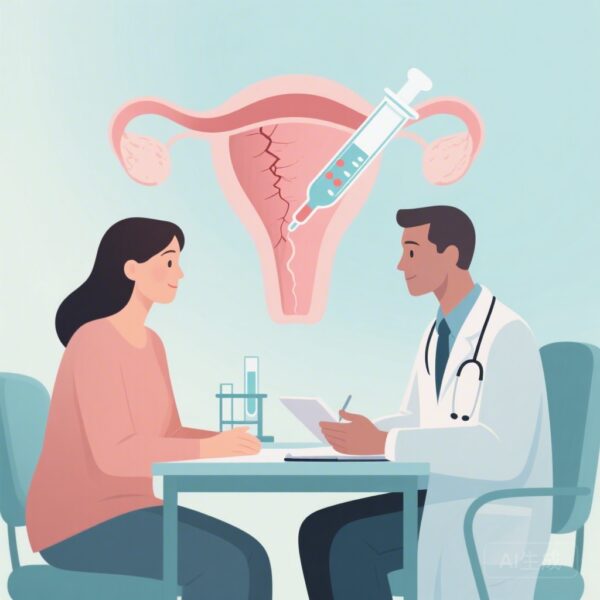
Effective clinical gynaecology relies not only on diagnostic accuracy but also on the successful transmission of health information between provider and patient. However, a systemic ‘semantic gap’ exists where medical nomenclature often fails to resonate with the descriptive, symptom-based language patients use to describe their lived experiences. This disconnect is particularly consequential in gynaecology due to the sensitive nature of pelvic health, the historical stigmatization of reproductive conditions, and the potential for cancer-related anxiety. Recent studies, notably by Iyer et al. (2026), have begun to employ qualitative methodologies and natural language processing (NLP) to systematically decode what patients call their conditions and how these linguistic choices reflect their health literacy, cultural background, and emotional state.
Key Content
1. Mapping Patient Nomenclature: Symptoms vs. Diagnosis
Research led by Iyer et al. (PMID: 41822994) at an urban academic hospital utilized structured interviews and NLP techniques to investigate gynaecological terminology across a diverse cohort (40% Black, 30% White, 13.3% Hispanic, and 10.3% Asian). A core finding was that patients often bypass specific medical diagnoses in favor of symptom-specific common terms that are more descriptive of their experience. Interestingly, the term ‘cysts’ was used much more frequently than ‘fibroids’ by patients to describe pelvic masses. This suggests that the lay understanding of pelvic pathology is often grouped under broad, familiar terms, regardless of the biological distinction between a fluid-filled sac (cyst) and a muscular tumor (fibroid). This study also highlighted a pervasive concern about malignancy; when patients use vague terminology, it often masks deep-seated anxieties about cancer that providers may miss if they focus solely on the technical accuracy of the terms.
2. Methodological Advances: NLP and Sentiment Analysis
The integration of NLP in qualitative studies marks a significant methodological shift. By applying lemmatization (grouping together different inflected forms of a word) and text similarity algorithms, researchers can identify ‘theoretical saturation’—the point at which no new linguistic themes emerge. This allows for a more rigorous quantification of qualitative data. Iyer et al. demonstrated that sentiment analysis can uncover the underlying ‘sentiment’ of patient language, which often skews toward frustration or mistrust when clinical terminology feels exclusionary or overly technical.
3. Validation of Patient-Centered Tools
The need for alignment between patient language and clinical assessment is further evidenced by the development of specialized questionnaires. Valadares et al. (PMID: 41816966) conducted the translation and validation of the ENDOPAIN-4D questionnaire for European Portuguese. This instrument is designed to assess the multidimensional nature of endometriosis-related pain—a condition frequently misunderstood by patients and misdiagnosed by clinicians. The study’s identification of a novel three-factor structure for ‘worst pain’ underscores the importance of capturing the patient’s specific vocabulary of pain to guide individualized management. Such tools act as a bridge, translating subjective patient reports into validated data that can inform surgical and psychosomatic care.
4. Cultural and Global Perspectives on Communication
The impact of communication goes beyond vocabulary; it encompasses the ‘sense of belonging’ and ‘cultural safety.’ In Kalaallit Nunaat (Greenland), qualitative research by Høy-Petersen et al. (PMID: 41680968) revealed that the centralization of delivery services disrupts Inuit birth culture. When patients are forced away from their communities, the lack of familial support and the shift to a Western medicalized environment lead to significant emotional distress. Similarly, a phenomenological study by Ige et al. (PMID: 41793283) in conflict-affected regions of Nigeria and the Democratic Republic of Congo found that women experiencing stillbirth reported profound violations of dignity and a lack of clarity regarding the reasons behind healthcare decisions. In these contexts, ‘poor communication’ is not just a misunderstanding of terms but a failure to provide empathetic, culturally sensitive care, resulting in a total breakdown of the patient-provider relationship.
5. Clinical Context: Why Literacy and Terminology Matter
The stakes for clear communication are high in complex gynaecological and obstetric scenarios:
- Hypertensive Disorders of Pregnancy (HDP): With the burden of HDP rising among older women (AMA ≥35 years), particularly in China (PMID: 41749422, 41805164), clinicians must clearly communicate the long-term cardiovascular risks associated with preeclampsia. Current research into biomarkers like GPR120 (PMID: 41742763) and Cadherin-11 (PMID: 41712367) provides new predictive power, but this information must be translated for patients to ensure adherence to monitoring protocols.
- PCOS and ART: Patients undergoing assisted reproductive technology (ART) for Polycystic Ovary Syndrome (PCOS) face unique risks, such as ectopic pregnancy (PMID: 41851920). Effective communication of these risks requires moving beyond abstract statistics to clear, descriptive education.
- Pain and Psychological Outcomes: Studies on continuous analgesia during labor (PMID: 41805220) show that better pain relief is significantly correlated with reduced anxiety and depression. Understanding how a patient describes her pain is the first step toward providing this relief.
Expert Commentary
The synthesis of current evidence suggests that medical gynaecology is facing a communication crisis that Natural Language Processing and qualitative research are only beginning to quantify. Experts emphasize that the use of medical jargon often serves as a barrier that prevents patients from asking critical questions, thereby fostering a lack of trust. For instance, while a clinician may view a ‘fibroid’ as a benign finding, a patient hearing the word ‘tumor’ or calling it a ‘growth’ or ‘cyst’ may internalize a fear of cancer that persists even after reassurance.
From a health policy perspective, the evidence from Greenland and Nigeria suggests that ‘quality of care’ must be redefined to include cultural safety and patient-centric nomenclature. Guidelines should encourage ‘patient-first’ terminology—starting with the words the patient uses and then gently layering in medical concepts. Furthermore, the rising incidence of conditions like HDP and the complexity of PCOS treatments in aging populations require a more sophisticated approach to health literacy that accounts for age-related and culturally specific linguistic preferences.
Conclusion
Effective gynaecological care is predicated on a shared understanding of pathology and symptoms. The qualitative study by Iyer et al. provides a roadmap for clinicians to improve this understanding by identifying specific patient-preferred terms and addressing the underlying sentiments of fear and mistrust. By integrating validated patient-reported outcome measures and respecting the cultural dimensions of health—from the urban academic hospital to the rural communities of Greenland—the gynaecological community can move toward a more inclusive, empathetic, and effective model of care. Future research should focus on longitudinal studies that evaluate whether ‘terminology-matched’ patient education can improve diagnostic adherence and clinical outcomes in high-risk populations.
References
- Iyer S, Badillo-Goicoechea E, Glass D, Huepfel B. What Patients Call Gynaecological Conditions: A Qualitative Study. BJOG. 2026. PMID: 41822994.
- Valadares M, et al. Translation, cultural adaptation, and validation of the Portuguese version of ENDOPAIN-4D questionnaire. J Psychosom Obstet Gynaecol. 2026. PMID: 41816966.
- Ige ET, et al. The quality of intrapartum care during stillbirth deliveries in conflict-affected Nigeria and Democratic Republic of Congo: A phenomenological study. Glob Public Health. 2026. PMID: 41793283.
- Høy-Petersen N, et al. Inunngorfik – connection to land, inuit culture and giving birth in Kalaallit Nunaat. Int J Circumpolar Health. 2026. PMID: 41680968.
- Yang J, et al. Comparison of the burden of maternal hypertensive disorders between China and the globe from 1990 to 2023. Hypertens Pregnancy. 2026. PMID: 41749422.
- Wang X, et al. Unveiling risk factors and developing a predictive nomogram for ectopic pregnancy in polycystic ovary syndrome patients undergoing assisted reproductive technology. Gynecol Endocrinol. 2026. PMID: 41851920.
- Iyer S, et al. The GPR120 as a novel predictive and diagnostic marker for preeclampsia in the first trimester. Gynecol Endocrinol. 2026. PMID: 41742763.